
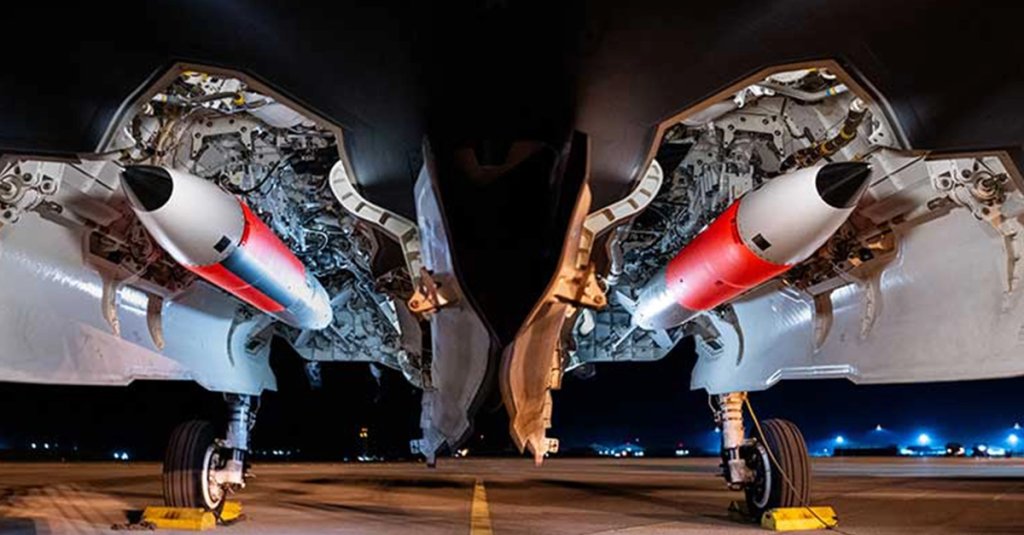
When it comes to nuclear weapons, we hear a lot about ICBMs and SSBNs, but what is likely America’s most common nuke isn’t a fired missile, it’s dropped from a plane. We’re talking, of course, about the B61 gravity bomb, which has been around for a while—and is going to be around for a long time.
Also Read: These specialized soldiers train to neutralize enemy nuclear weapons
The B61 gravity bomb has been in the U.S. arsenal since 1968. It has outlasted the Soviet Union, the B-52’s original crews, and every other weapon in the enduring stockpile.
This is perhaps one of America’s most versatile nuclear weapon. Not only has America built over 3,000 of these bombs, but it was the basis for the W80, W84, and W85 warheads, the key ingredient in nuclear missiles, like the BGM-109A Tomahawk Land Attack Missile—Nuclear, the BGM-109G Gryphon Ground-Launched Cruise Missile, and the MGM-31C Pershing II intermediate-range ballistic missile.
Quite an impressive lineage, isn’t it?
In the span of about a year and a half, it produced two new variants—one that took 17 years to build, and one that took less than two. The difference between them says a lot about how Washington thinks about nuclear weapons right now.
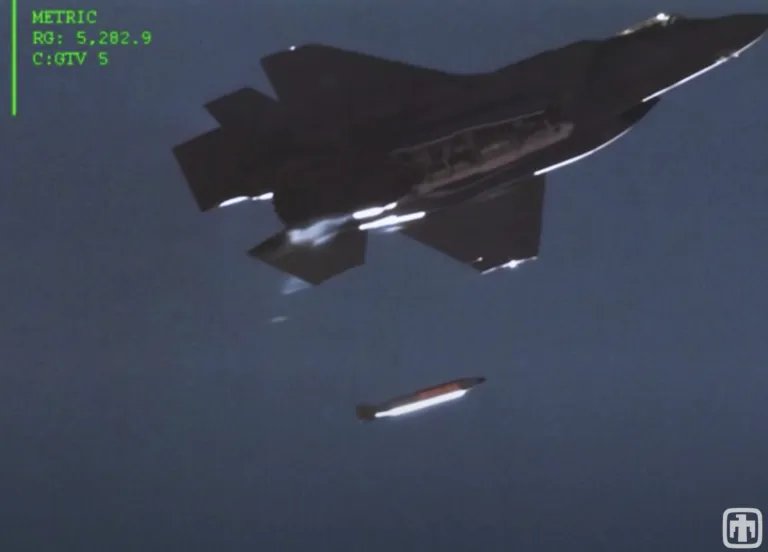
The B61 came about as the result of a need for weapon that could be delivered by high-performance jets. When it was being developed, the F-4 Phantom and other jets capable of hitting Mach 2 were starting to enter service. The earlier nukes, like the Mk 7 and B28, had been designed for use on slower planes, like the F-86 Sabre, F-100 Super Sabre, and the F-105 Thunderchief.
What emerged was a bomb that came in at roughly 700 pounds, a lightweight compared to the 1,700 pounds of the B28 or the 1,600 pounds of the Mark 7.
In addition, the bomb had what was known a “dial-a-yield” capability, allowing for the selection of explosive yield, ranging from three-tenths of a kiloton to 340 kilotons.
The 17-year project: B61-12
The B61-12 Life Extension Program started in 2008 to fix a specific problem: Components in the existing bombs were aging out, and the stockpile had sprawled into a maintenance headache: the B61-3, -4, -7, and -10 were all separate variants, each with its own parts, procedures, and surveillance requirements.
They needed to be consolidated so one variant could replace all four.
But the B61-12 was more than a parts swap. Boeing built a new guided tail kit assembly with an inertial guidance unit, giving the bomb a tightened impact radius and limited glide capability. That change carried a doctrinal argument inside it: if a bomb lands closer to the target, it needs less explosive power to destroy it. The B61-12 tops out at a reported 50 kilotons across four selectable yield settings, beginning around 0.3 kilotons—considerably less than the weapons it replaced. Accuracy was supposed to make up the difference.
The physical package stayed compatible with existing infrastructure: roughly 12 feet long and about 825 kilograms, so the same vaults, handling equipment, and aircraft interfaces still worked.
The first production unit came off the line in November 2021. The last one was completed on December 18, 2024 — 17 years after design work began, at a program cost NNSA put at roughly $9 billion.
Enter the B61-13
You might have heard of the B61-13. But as confusing as it might sound, it’s important to note that the 13 is not an upgraded 12. It’s a parallel variant, and it exists because Congress objected to the logic of the B61-12.
Consolidating the gravity-bomb stockpile onto a single variant also meant consolidating it onto that variant’s yield ceiling. The B61-7 that the -12 was meant to replace is a strategic weapon with a reported maximum in the 340-to-360-kiloton range. The B61-12 caps out around 50. The loss of kilotonnage was too much for many, many members of Congress.
The Pentagon announced the B61-13 on Oct. 27, 2023. Engineers took the B61-7’s existing warhead and put it inside the B61-12’s bomb assembly, with the same guided tail kit and the same modern safety, security, and use-control features.
Boom, B61-13.
What they got is variable-yield weapon with the accuracy of the -12 and the punch of the -7, intended for deeply buried facilities and targets across large areas. The most critical aspect, however, is that the stockpile does not grow: the B61-13 replaces some B61-7s, and the number of B61-12s produced was cut by the same amount as the number of -13s built.
The 24-Month Bomb
The B61-13’s schedule is genuinely remarkable. Because the -13 reuses B61-12 production capability, NNSA never had to stand up a new line. When the -12 finished in December 2024, the tooling at Pantex was already configured for what came next. The first B61-13 unit was assembled in May 2025, roughly a year ahead of the internal target date, and less than two years after the program was publicly announced.
NNSA called it one of the fastest nuclear weapon development cycles since the Cold War.
In July 2026, the program cleared its next threshold: “diamond stamping” of components, NNSA’s certification that a part has met every requirement and is approved as war-reserve quality. Program completion is targeted for fiscal 2028, which is just in time. The B8the last megaton-class gravity bomb in the stockpile, slated for retirement. The B61-13 is increasingly the residual high-yield air-delivered option, which raises the stakes on its completion schedule.
Don’t Miss the Best of Mighty History
We Are The Mighty is a celebration of military service, with a mission to entertain, inform, and inspire those who serve and those who support them. We are made by and for current service members, veterans, spouses, family members, and civilians who want to be part of this community. Keep up with the best in military culture and entertainment: subscribe to the We Are The Mighty newsletter.
- The US ‘misplaced’ these nuclear weapons
- The 9 most devastating nuclear weapons in the world
- How the US Air Force handled its first-ever ‘Broken Arrow’




Loading comments…
Comments couldn’t be loaded. Please refresh the page.