
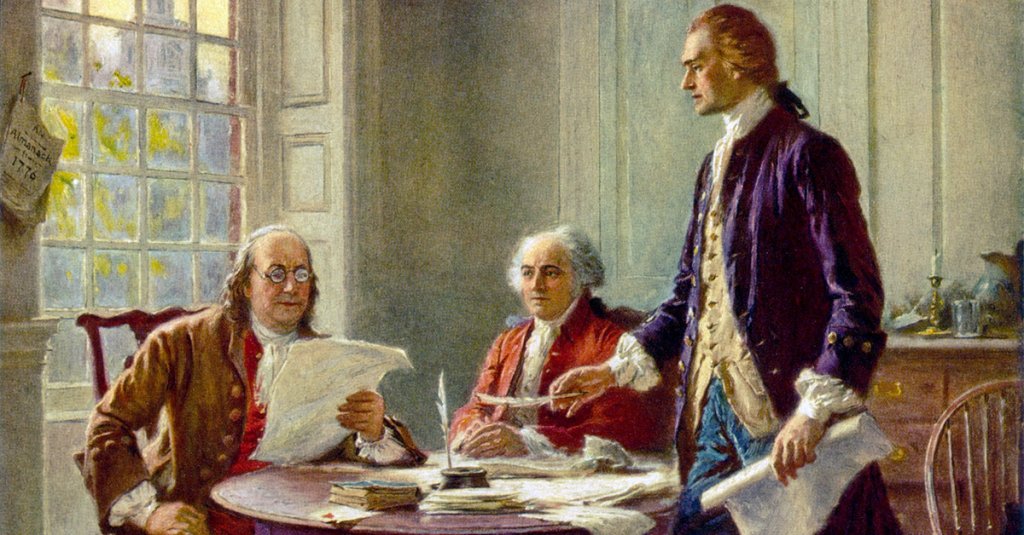
Archibald MacLeish didn’t have much downtime to enjoy the holidays in 1941.
As the United States’ ninth Librarian of Congress, MacLeish was too preoccupied with work. A few weeks after Japan’s surprise attack at Pearl Harbor, MacLeish was among those tasked with making the final arrangements to safeguard the nation’s most important documents from enemy attack or sabotage.
Related: 6 things you didn’t know about the Declaration of Independence
This initiative was on such a need-to-know basis that MacLeish did the packing himself, according to a 2016 article on History.com. With extreme care, he handled the U.S. Constitution, Declaration of Independence, Articles of Confederation, some of Abraham Lincoln’s speeches (including the Gettysburg Address), and three volumes of the Gutenberg Bible. A copy of Britain’s Magna Carta—which remained in America after its display at the 1939 New York World’s Fair—also sat before MacLeish.
He divided those historic papers and books into four bronze containers, which then went into a wooden case. MacLeish padlocked them and sealed them with lead, History.com reported, before the Secret Service transported them to Union Station in Washington, D.C. A train took them on a 20-hour trip to Fort Knox in Kentucky.
“No shipment of a value even remotely approaching the value of this shipment was ever made in this country,” MacLeish wrote.
Those documents, which tell a large part of the story of our nation’s founding, remained in the recently constructed gold bullion depository at Fort Knox for most of World War II.
Safeguarding What America Holds Dear
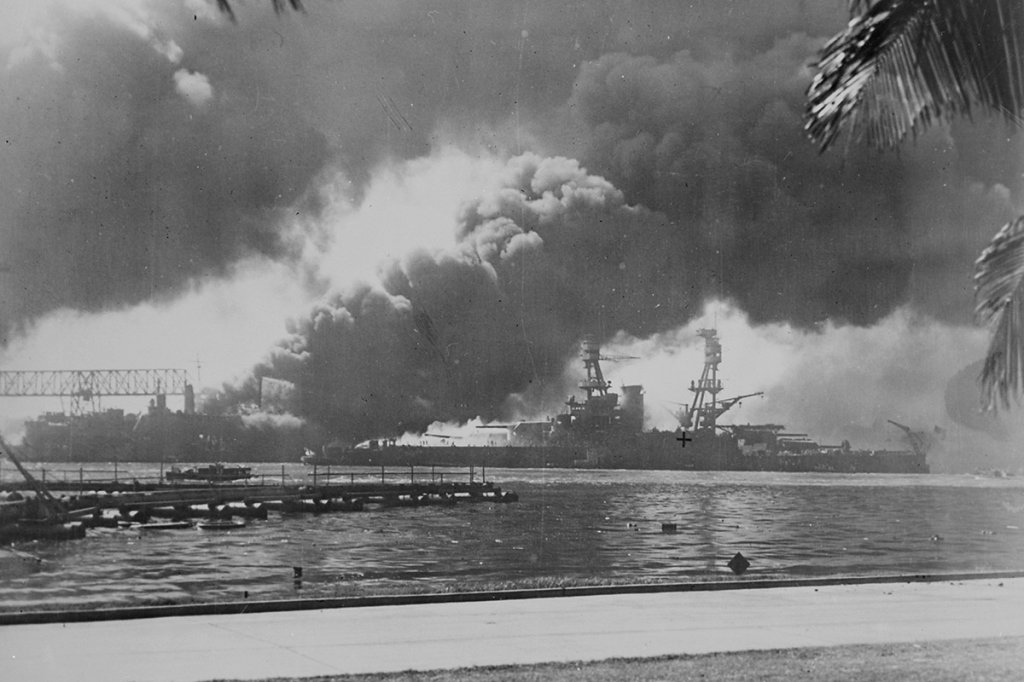
As anybody who saw the 2014 movie “The Monuments Men” knows, the Nazis took perverse pleasure in trying to destroy anything that their enemies held dear.
After the U.S. officially entered the war, its leaders feared an attack on America’s capital. The potential of an imminent strike prompted the installation of blackout shutters on the White House. During this uncertain period, President Franklin D. Roosevelt also carried a gas mask around with him on his wheelchair.
To be clear, concern about historic national papers, works of art, and the like being destroyed or stolen didn’t begin with the first bomb that exploded at Pearl Harbor. In the spring of 1941, hundreds of Library of Congress workers and volunteers began the laborious task of cataloging the documents, books, music, maps, artwork, etc.— anything that might require special protection as the war in Europe escalated.
They worked for 10 weeks, History.com reported, trying to compile a detailed inventory and prioritize those things they most wanted to keep beyond the enemy’s reach.
In the end, their efforts produced a backbreaking total of nearly 5,000 boxes of precious works. With extremely limited space available at Fort Knox, the Library of Congress shipped only the most precious documents there. After detailed analysis of other potential sites, the others were divided among three universities in nearby Virginia. They were the University of Virginia, Virginia Military Institute, and Washington and Lee University. (A fourth college, Denison University in Ohio, was later added.)
As head of the Library of Congress, MacLeish didn’t distinguish between the various items. They were, for the most part, of equal importance to him. Just like his three children, MacLeish wasn’t about to pick favorites. These cultural touchstones were all “utterly irreplaceable.”
“Our Nation Differs from All Others”
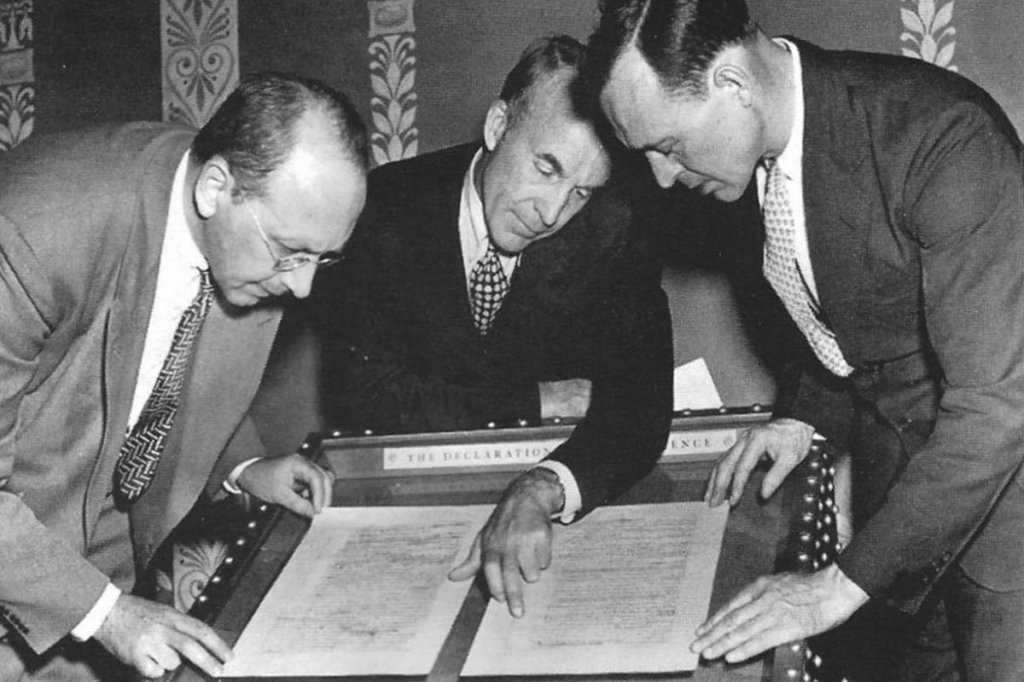
The U.S. Army and U.S. Mint Service protected the Declaration of Independence, Constitution, and the other priceless items at Fort Knox. As one would expect, they kept their mouths shut about their top-secret assignment. In fact, word never leaked to the media or public about the historic documents’ new location.
For the most part, all documents remained at the fort for almost three years. On September 19, 1944, according to History.com, the Declaration of Independence, Constitution, and the Gettysburg Address left the highly secure facility for the return trip to Washington. At that point during World War II, government leaders rated the risk of an enemy attack on the mainland as highly unlikely.
The Library of Congress made them available for public viewing two weeks later. Marines guarded them around the clock. MacLeish’s words to them served as a constant reminder of their job’s importance.
“Our nation differs from all others in this—that it was not created by geographic or by racial accident, but by the free choice of human spirit, conceived and founded by men who chose to live under one form of government rather than under another,” MacLeish said in his address to the Marines. “The sheets of vellum and the leaves of ancient paper in those cases which you guard are the very sheets and leaves on which [our] form of government [was] brought to being. Nothing that men have ever made surpasses them.”
Since 1952, the Declaration of Independence and Constitution have resided in the National Archives.
Don’t Miss the Best of We Are The Mighty
• These were the last surviving veterans of every major American war through World War I
• A former violinist singlehandedly cleared a mountain fortress during World War II
• An Army vet honored a fallen comrade with a historic Appalachian Trail hike
Featured
Loading comments…
Comments couldn’t be loaded. Please refresh the page.