
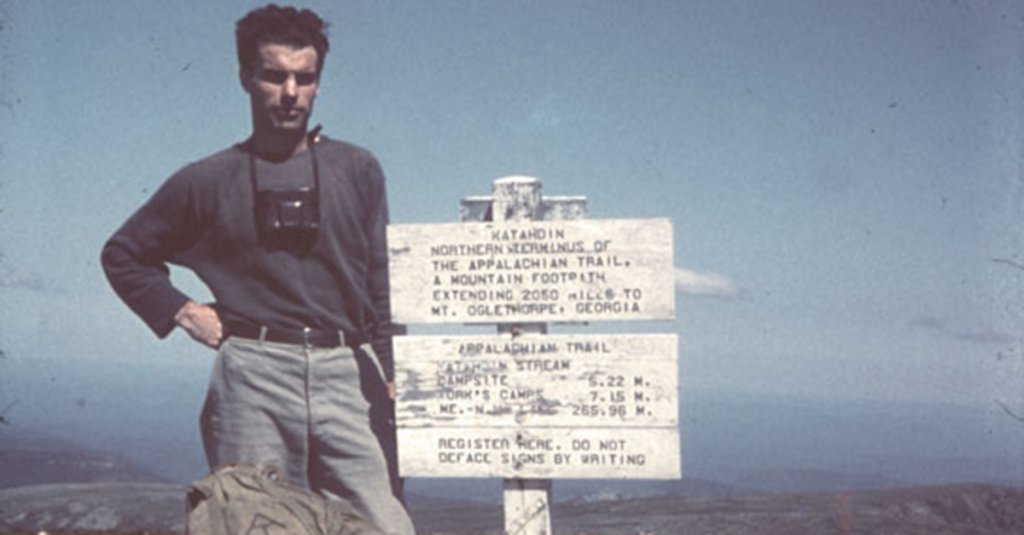
Earl Shaffer never wanted to hike the Appalachian Trail alone.
He always saw the adventure as a tag-team effort with Walter Winemiller. The two men formed an inseparable bond while growing up in Pennsylvania and went off to serve their country during World War II.
Also Read: Mike Vining on Vietnam, Delta Force, and the sardines he never ate
Winemiller died at Iwo Jima in February 1945, leaving Shaffer adrift without his best friend. His death understandably affected Shaffer deeply, as did what else he saw overseas while serving in the United States Army Signal Corps for 4½ years.
“Earl’s experiences left him feeling both disturbed and discouraged,” said David Donaldson, a co-author on Shaffer’s biography, told History.com in 2025. “He served on over 20 different islands in the Pacific theater and never had a furlough during that time. He saw many dead bodies, especially of the Japanese, often burned beyond recognition. As Earl put it, he ‘couldn’t get back into society.’”
Shaffer battled post-traumatic stress disorder and sought a means to help himself cope. He also wanted to honor Winemiller’s memory. Shaffer hit upon the perfect solution. He planned to “walk the Army out of my system” and take on the Appalachian Trail himself.
Packing Lightly
Stretching from Georgia to Maine, the Appalachian Trail covers nearly 2,200 miles and was relatively new at that time. Those in the know then didn’t figure anyone had the stamina and willpower to walk the Appalachian Trail in its entirety.
The long odds of completing what he started didn’t faze Shaffer.
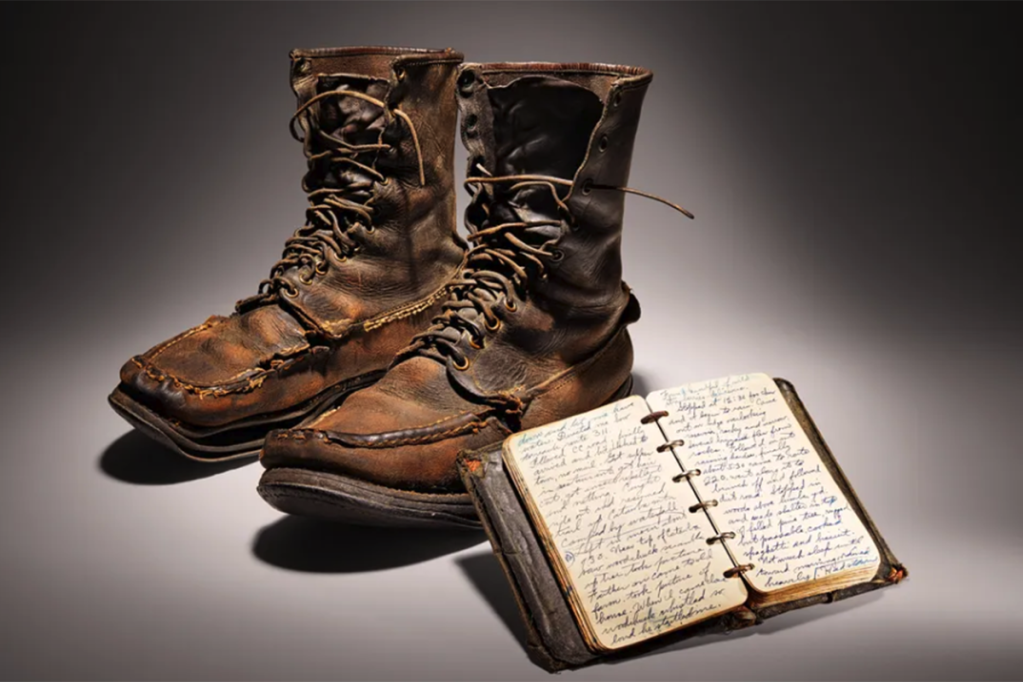
He began his journey at Mount Oglethorpe in Georgia on April 4, 1948, with very few items. Shaffer took along a backpack, a six-ring notebook to jot down thoughts, and a camera to take pictures for confirmation of his travels. He also had a tent but ditched it shortly into his hike. Shaffer slept in a poncho, a lighter alternative for the many miles that awaited him.
During the war, Shaffer chronicled his military experience in writing. He did the same along the Appalachian Trail as he walked through parts of North Carolina and Tennessee, then on into the Mid-Atlantic and New England. Shaffer wrote about anything that inspired him to words, including wildcats, whip-poor-wills, snakes, and a raccoon that approached his frying pan. Nothing was too mundane, not even washing his underwear.
Although Shaffer traveled alone, he encountered other veterans along his route. He also started a conversation with a man whose son served in the Army and, he said, went “psycho” because of his military service.
For the most part, though, Shaffer was by himself. Walking an average of at least 16 miles a day, he was determined to keep moving.
No Guidebooks
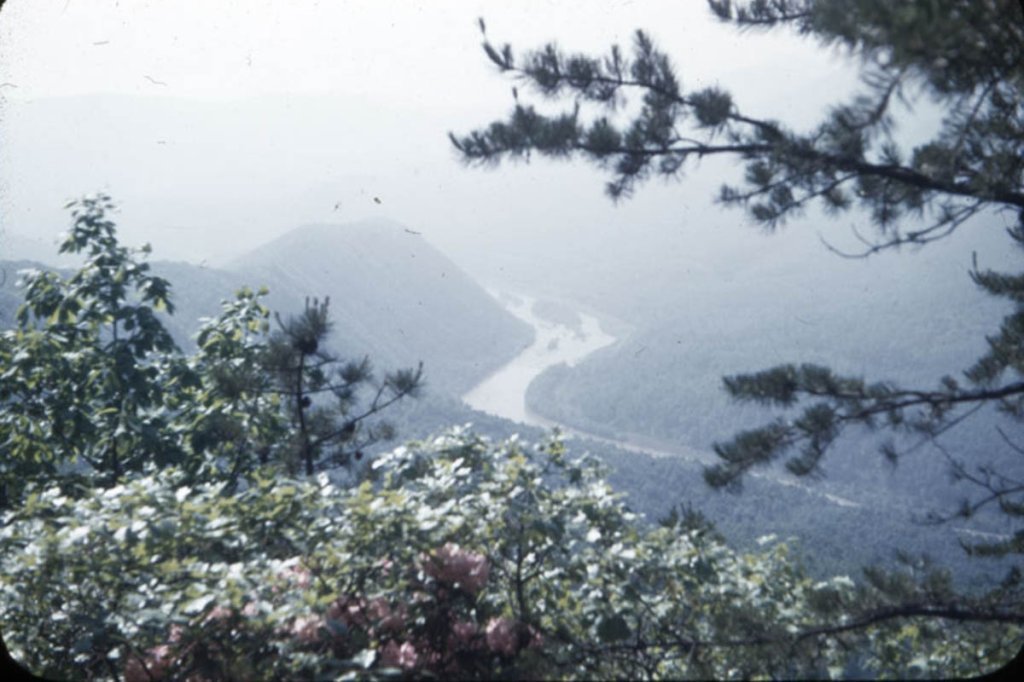
Shaffer walked the entire Appalachian Trail in the same pair of brown boots. They twice required new soles, and Shaffer sewed and polished the smelly footwear to ward against the inevitable wear-and-tear.
The Army veteran also paid special attention to his feet. He often did not wear socks and opted to pour a layer of sand into his boots so blisters wouldn’t develop.
Because Shaffer didn’t take any guidebooks with him—he only had maps purchased from gas stations—it was not uncommon for him to get lost. The time spent retracing his steps only added to his fatigue. Although undoubtedly tired, Shaffer never forgot to appreciate the uniqueness of his journey.
“Most people never in all their lives sleep under the open sky, and never realize what they are missing,” he wrote in his journal.
An experienced outdoorsman, Shaffer embraced his surroundings. After all, nothing he encountered was likely to match what he saw in the Pacific. Shaffer’s mission of healing ended 124 days after it began, when he reached the northernmost point of the Appalachian Trail.
On August 5, 1948, Shaffer stepped foot on Mount Katahdin in Maine.
The Appalachian Trail Became His Sanctuary
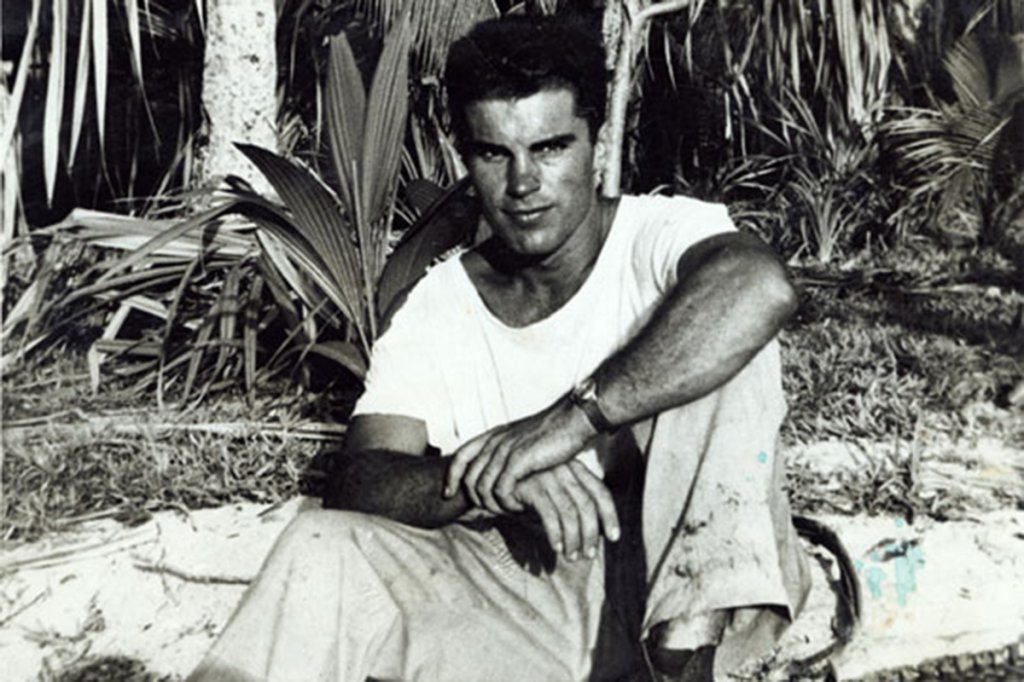
Shaffer was 29 years old when he became the first hiker ever to complete the Appalachian Trail continuously. He went on to hike the trail twice more, in 1965 and again as a 79-year-old in 1998.
He died in 2002, the same year that the nonprofit Earl Shaffer Foundation started with a goal of preserving the Appalachian Trail and its history. Throughout most of his adult life, the trail became Shaffer’s sanctuary. It helped him cope with his considerable grief after Winemiller, the best friend he ever had, died.
Shaffer’s fallen comrade inspired every step of his historic hike in 1948.
“From him, I learned most of my woodcraft and my abiding love of all outdoors,” Shaffer wrote in 1949. “Walter Winemiller was a pardner such as one may have only once in life, and no incentive could have been stronger to carry me over the long high Trail than remembering we always wanted to hike it together.”
Don’t Miss the Best of We Are The Mighty
• What went wrong when the Navy first attempted to fly nonstop to Hawaii
• How his father’s time in a Japanese POW camp influenced Bill Nye
• 10 life lessons that William McRaven learned in Navy SEAL training
Featured
Loading comments…
Comments couldn’t be loaded. Please refresh the page.