
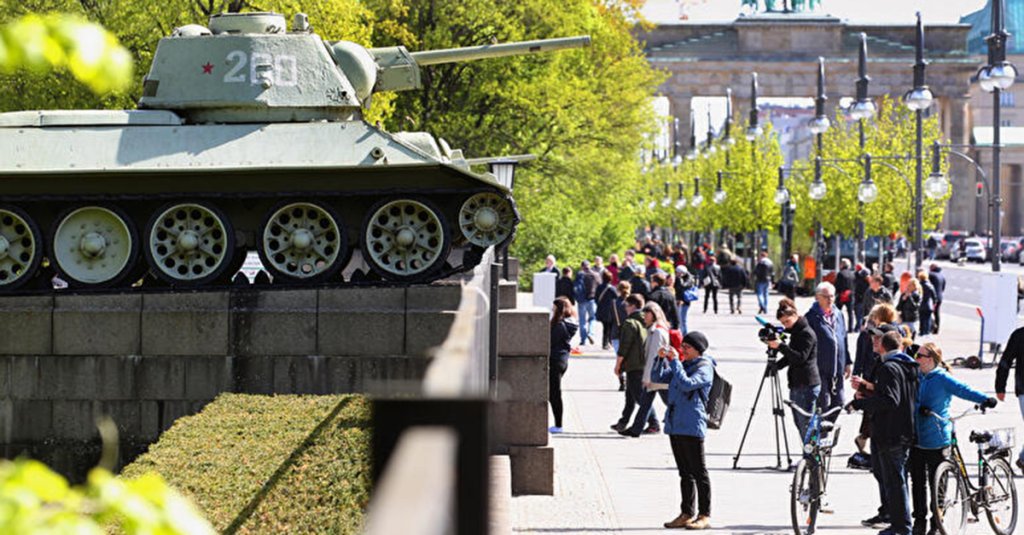
One of the largest memorials for Soviet soldiers isn’t in Russia—or on former Soviet ground. It’s in Berlin, Germany, where more than 80,000 Soviet soldiers died during the Battle of Berlin in 1945. The memorial was built just months after the Soviets captured the city, put together while the rest of Berlin remained in ruins.
Located in the Tiergarten—a massive public garden of 520 acres—much of the area was in ruins due to incendiary bombs. The Tiergarten was in the British sector of Berlin; however, all Allied powers agreed to its construction. East Berlin even sent guards to protect the area throughout the Cold War.
Also Read: How a Holocaust survivor saved 40 POWs in Korea
Berlin is actually home to three Soviet memorials, though Tiergarten was the first. It was built in remembrance of the absolute bloodbath that was the Battle of Berlin.
Laying Waste to Berlin
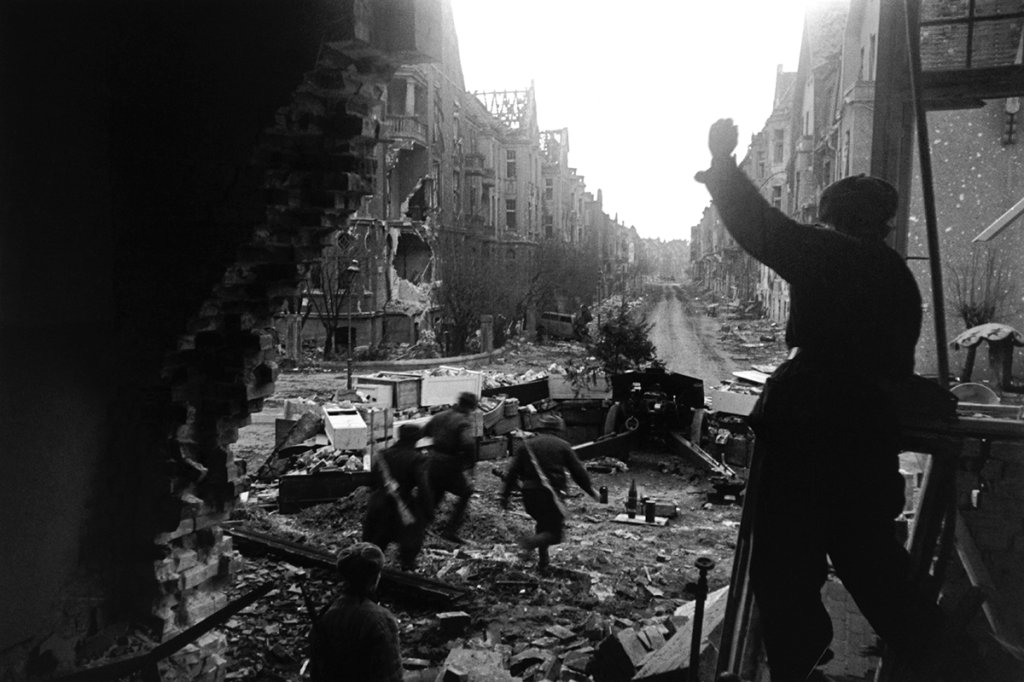
Germany and the Soviet Union signed a non-aggression pact in late August 1939, about a week before the Nazis invaded Poland to start World War II.Two years later, in yet another example of Adolf Hitler’s untrustworthiness (to put it lightly), more than 3 million German troops stormed into Russia during Operation Barbarossa.
Soviet leader Joseph Stalin, no paragon of virtue himself, exacted ruthless revenge during the Battle of Berlin. In a final death blow to the Nazi regime, the Soviets began their invasion of the German capital on April 16, 1945.
Until the city fell more than two weeks later on May 2, the Soviets attacked with an overwhelming force of more than 1.5 million soldiers. Severely outmanned and outgunned, the Germans could hold out only so long.
They had no match for the roughly 2 million artillery shells that Stalin’s forces fired in their assault on Berlin. The Soviets were no good guys, either. They took no mercy on the city’s residents.
“Berlin was razed to rubble as women were targeted for gang rapes, businesses and stores were looted, and civilians carved up the corpses of dead horses killed in the streets for meat,” according to a 2020 article from the National World War II Museum.
During the brutal battle, Hitler and his mistress, Eva Braun, hid in a bunker under the Reich Chancellery. The Russians tried to get to the Führer but couldn’t. Hitler married Braun on April 29, then he and his new bride died by suicide the following day.
Two days later, the battle ended with an estimated 300,000 Berliners dead.
About the Memorial
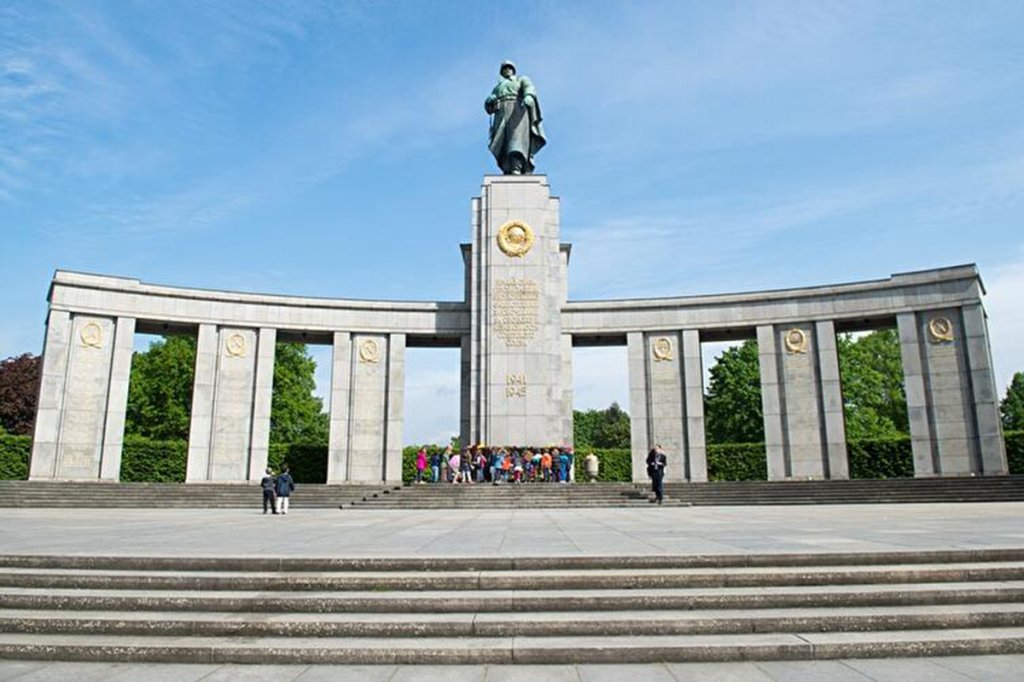
Officials dedicated the Soviet War Memorial in Tiergarten on November 11, 1945. (The two others opened in 1949.)
Designed by sculptors Lev Kerbel and Vladimir Tsigal, along with architect Nikolai Sergiyevski, the memorial at Tiergarten includes massive structures and two Soviet T-34 tanks. These symbolize the first vehicles to reach Berlin. The memorial also displays two artillery guns, along with the names of each fallen soldier on large stone pillars.
Large letters in Russian on the memorial spell out, “Eternal glory to heroes who fell in battle with the German fascist invaders for the freedom and independence of the Soviet Union. 1941-1945.”
Despite containing huge structures and an incredible amount of stone, builders completed the memorial in just a few months. They used materials from nearby ruins, specifically marble and stone from the Reich Chancellery. From 1939 until it was destroyed in the war, the Chancellery was Hitler’s office and living quarters alike, along with Nazi headquarters.
A Final Indignity for Hitler
That winter, extremely cold weather completely stripped the garden of trees and bushes. Locals cut down anything they could burn, leaving the memorial visible for miles away. This caused Britain to donate more than 5,000 trees and shrubs to repopulate the park.
Just imagine a memorial in the U.S. that not only honored fallen enemy soldiers, but also insulted Uncle Sam. In stone. Wethinks not.
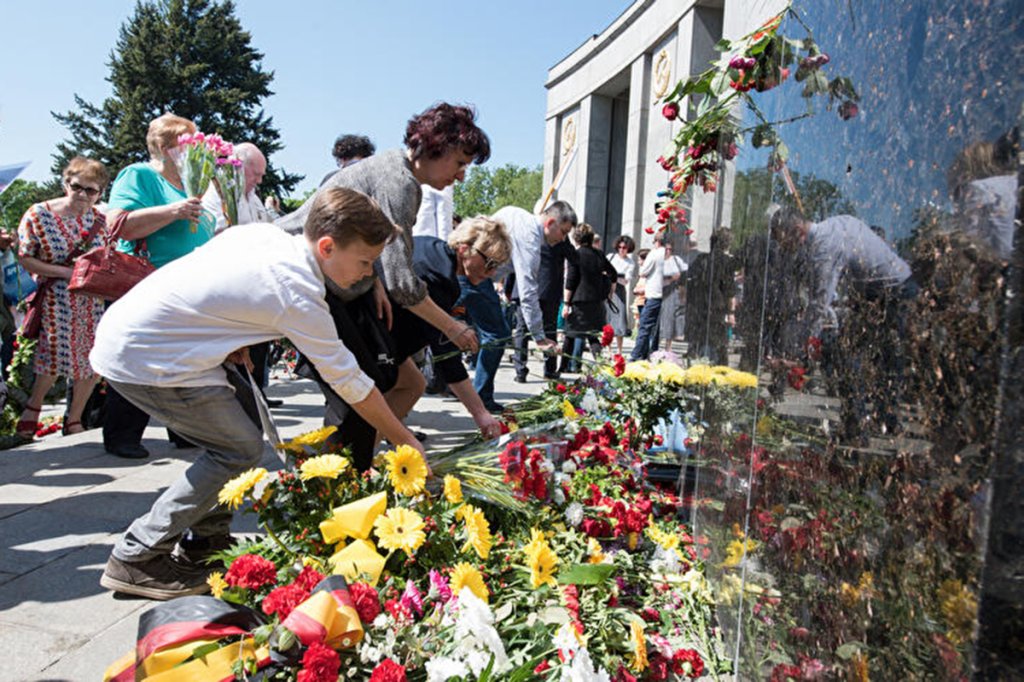
Meanwhile, there’s a massive soldier standing more than 26 feet tall. He signals toward an on-site cemetery of more than 2,000 graves.
To add insult to injury, the Soviets put their memorial in a spot earmarked by Hitler himself. He planned to turn the park into a spot honoring Germany’s war victory. Instead, the spot lay in ruins and was made to honor an enemy with the very materials that had sheltered the fallen Führer.
Don’t Miss the Best of We Are The Mighty
• The sensational defection of Stalin’s daughter to the US during the Cold War
• Two legendary Vietnam War Marines and a GWOT Green Beret received the Medal of Honor
• Meet the one-legged spy who helped rid the world of the Nazis
Featured
-
Sponsored Content
Fuel to Serve: The mission starts at the meal

Loading comments…
Comments couldn’t be loaded. Please refresh the page.