
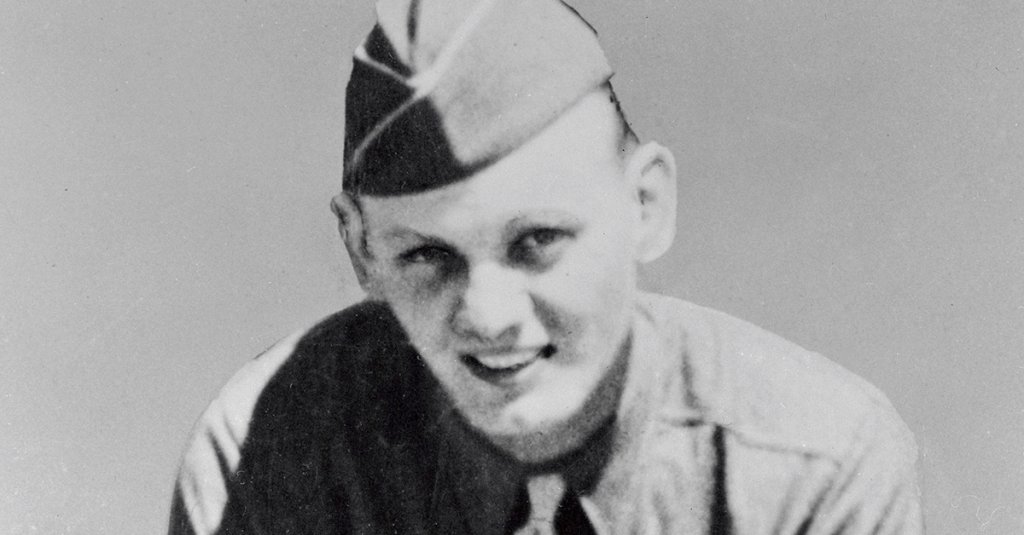
Eddie Slovik didn’t have an idyllic childhood.
He consistently found trouble while growing up in Detroit, bouncing between reform schools and serving time in jail. His prison record initially disqualified Slovik from serving during World War II, but his status changed when the United States Army reclassified him.
Also Read: This American flag survived D-Day, then was returned to the US 75 years later
Slovik was drafted into service. Despite Slovik’s rough upbringing, the unrelenting demands of combat overwhelmed the nearly 24-year-old soldier. Slovik was part of a regiment in France in August 1944 when it came under artillery fire. Slovik and another soldier, Pvt. John Tankey, hid during the attack. They subsequently lost contact with their unit before they found a group of Canadian military police. Slovik and Tankey stayed with the MPs for six weeks.
After they returned to their regiment, they escaped any charges that time. Slovik asked his company commander whether another absence would qualify as desertion. The commander said it would, but that did not stop Slovik. He left his unit again.
Slovik’s Desertion Letter

Why Eisenhower Ordered the Execution of the Only American Soldier in WWII
On October 9, 1944, Slovik handed a letter to a cook in a field kitchen. In the note, as reported by AmericanHeritage.com—a history website—Slovik detailed the incident in which he abandoned his unit with Tankey and how that affected him.
“They were shilling [sic] the town and we were told to dig in for the night,” Slovik wrote. “The [following] morning they were shilling [sic] us again. I was so scared[,] nerves [sic][,] and trembling that at the time the other replacements moved out[,] I couldn’t move. I stayed their [sic] in my fox hole till it was quite [sic] and I was able to move….
“I told my commanding officer my story. I said that if I had to go out their [sic][,] I’d run away. He said their [sic] was nothing he could do for me so I ran away again. AND ILL [sic] RUN AWAY AGAIN IF I HAVE TO GO OUT THEIR [SIC].”
Slovik didn’t get the chance to run away again. The cook reported Slovik’s letter to the proper channels, and they arrested him. Slovik might not have fully realized it then, but he faced serious repercussions. His petty crimes as a civilian never exposed Slovik to the type of punishment he now faced.
Court-Martial Took Less Than 2 Hours
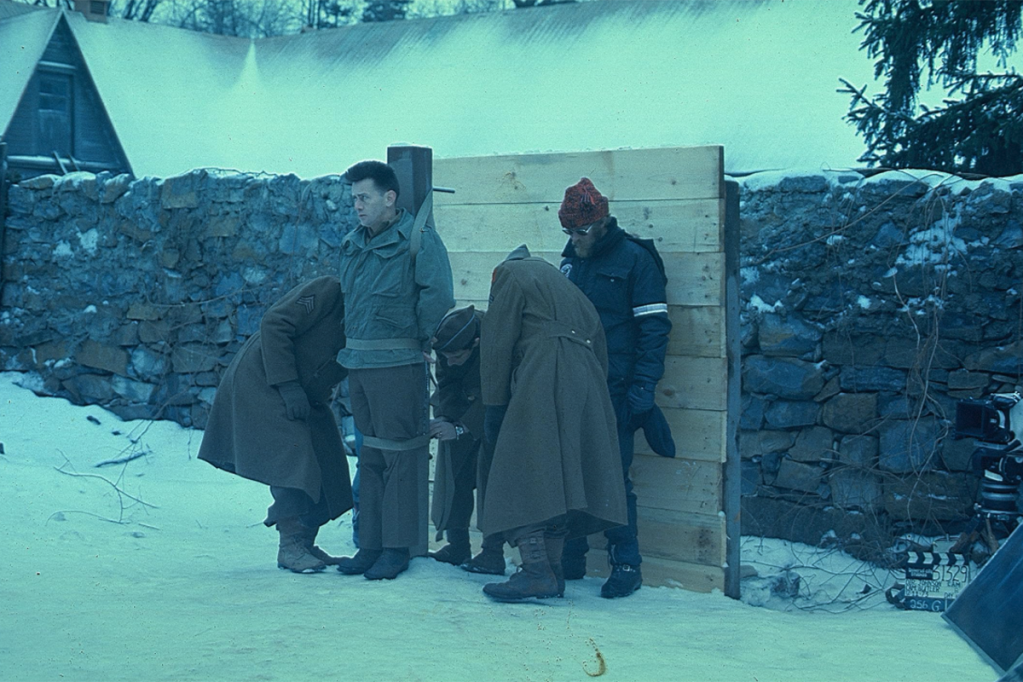
Benedict B. Kimmelman was one of nine officers who unanimously convicted Slovik of desertion at his court-martial in Rötgen, Germany, on November 11, 1944. He detailed the proceedings for AmericanHeritage.com in 1987.
Kimmelman, whose byline is atop the article, said the proceedings started at 10 a.m. and were completed before lunchtime. Slovik’s lawyer entered a not-guilty plea for the defendant, his letter was submitted as evidence, and five witnesses testified.
Slovik even had a chance to save himself, Kimmelman said.
“I recalled at one point some member of the court suggested that Slovik might withdraw his statement about refusing to go out there in the future in return for our dismissing the charges and removing the risk of his receiving the ‘full penalty,’” Kimmelman wrote. “The scene in my mind is Slovik’s turning silently to his defense counsel, who declared, ‘Let it stand,’ which seemed to satisfy Slovik.”
The defense rested without giving a closing argument. By 11:40 a.m., the officers reached a guilty verdict. In accordance with Slovik’s sentence, the disgraced soldier was dishonorably discharged, forfeited all pay, and received the death penalty.
As Kimmelman recounted, the officers chose a firing squad over hanging Slovik for his offense. They considered it “the less dishonorable means.”
Fighting His Execution
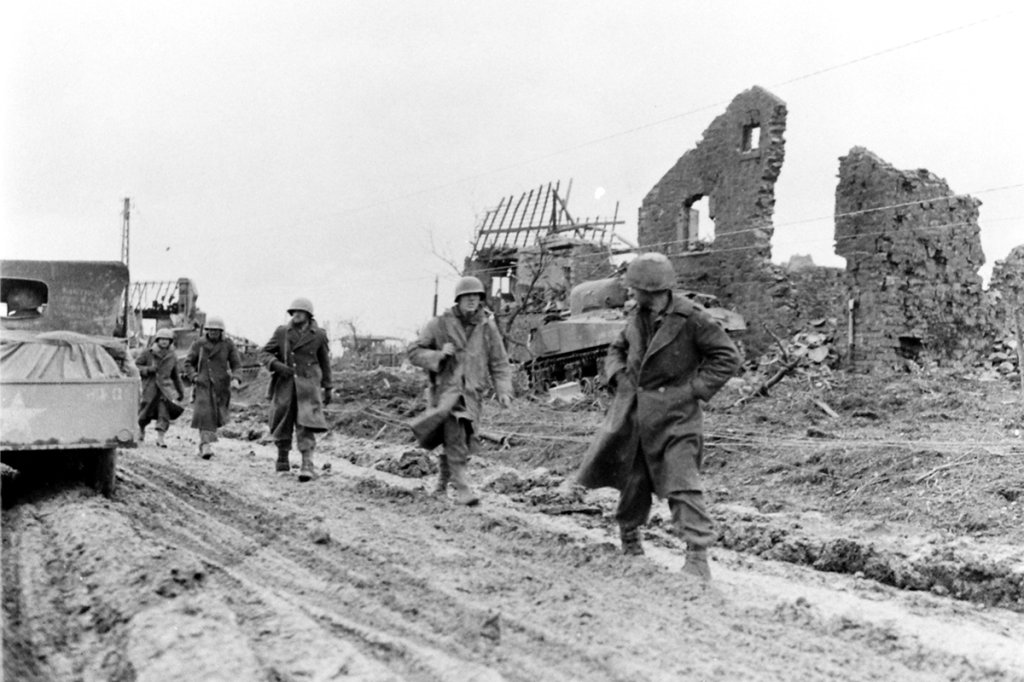
Approximately 50,000 American service members deserted in Europe during World War II. Of those, 49 received a death sentence. Only one, though, lost his life, becoming the first person that the U.S. military executed for desertion since the Civil War.
The division commander approved Slovik’s sentence. Slovik appealed to Supreme Allied Commander Gen. Dwight D. Eisenhower, touting his “good record.” Kimmelman wrote that Ike likely was too busy to even read Slovik’s plea before signing the execution order. With the court-martial and its aftermath coming around the time of the Battle of Hürtgen Forest and the Battle of the Bulge, Eisenhower had bigger concerns.
As his execution date approached, Slovik tried to get others to see things his way.
“They’re not shooting me for deserting the United States Army; thousands of guys have done that,” Slovik proclaimed. “They just need to make an example out of somebody, and I’m it because I’m an ex-con. I used to steal things when I was a kid, and that’s what they are shooting me for. They’re shooting me for the bread and chewing gum I stole when I was 12 years old.”
A firing squad killed Slovik on January 31, 1945, in France.
Reconsidering the Verdict
Slovik’s death caused some second-guessing about whether the decision was righteous. For his part, Kimmelman later admitted to doubting whether Slovik deserved to die.
Author William Bradford Huie’s 1954 bestselling book, “The Execution of Private Slovik,” restored the controversial case in the public consciousness. So did a 1974 television movie based on Huie’s book.
Kimmelman’s outlook regarding Slovik changed after the Germans imprisoned him during the Battle of the Bulge. He came to believe that Slovik was unjustly and tragically punished.
“OK, Slovik alone got the book thrown at him,” others told Kimmelman. “He was dumb, his defense counsel was dumb, and the court was a bunch of Boy Scouts. What can you or anybody do about it now?”
On that point, everyone was in agreement. The time for saving Slovik passed.
Don’t Miss the Best of We Are The Mighty
• Tom Hanks’ new 20-part docuseries takes a new look at World War II
• Kurt Vonnegut’s ‘Slaughterhouse-Five’ comes to life in a new Tralfamadore exhibit
• What ‘Duty, Honor, Country’ meant to Douglas MacArthur
Featured

Sponsored Content
Automated vs. self-directed investing: A guide for military families

Loading comments…
Comments couldn’t be loaded. Please refresh the page.