
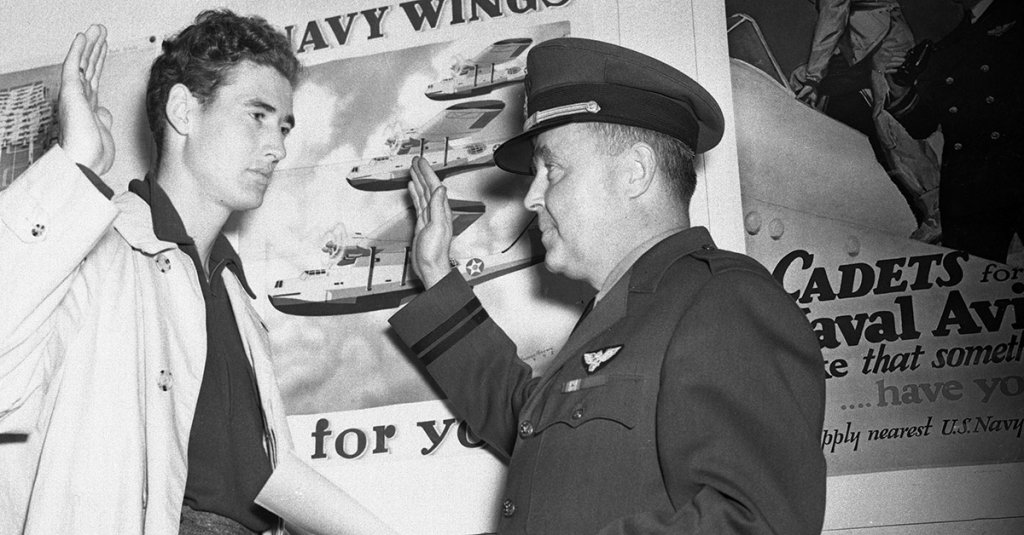
Early in his historic baseball career, Ted Williams lost three full years while serving in the military during World War II.
Williams joined the United States Naval Reserve in 1942. Given a chance to fulfill his commitment by playing on a service baseball team, Williams declined. The well-known athlete didn’t want any special treatment from the military. He studied to become a pilot and was commissioned as a Marine Corps second lieutenant in 1944.
Also Read: What John Glenn did to save his famous wingman’s life in Korea
Williams served as a flight instructor in Florida during the war, “teaching young kids how to stay alive in the clouds.” After he received an honorable discharge in January 1946, Williams returned to the Boston Red Sox and hit as if he never stopped playing.
On a baseball field, Williams was almost always the best player. But even among a constellation of stars, Williams stood out at the 1946 All-Star Game at Fenway Park. Playing before his home fans, he delivered arguably the best performance in the Midsummer Classic of all time.
A Night to Remember
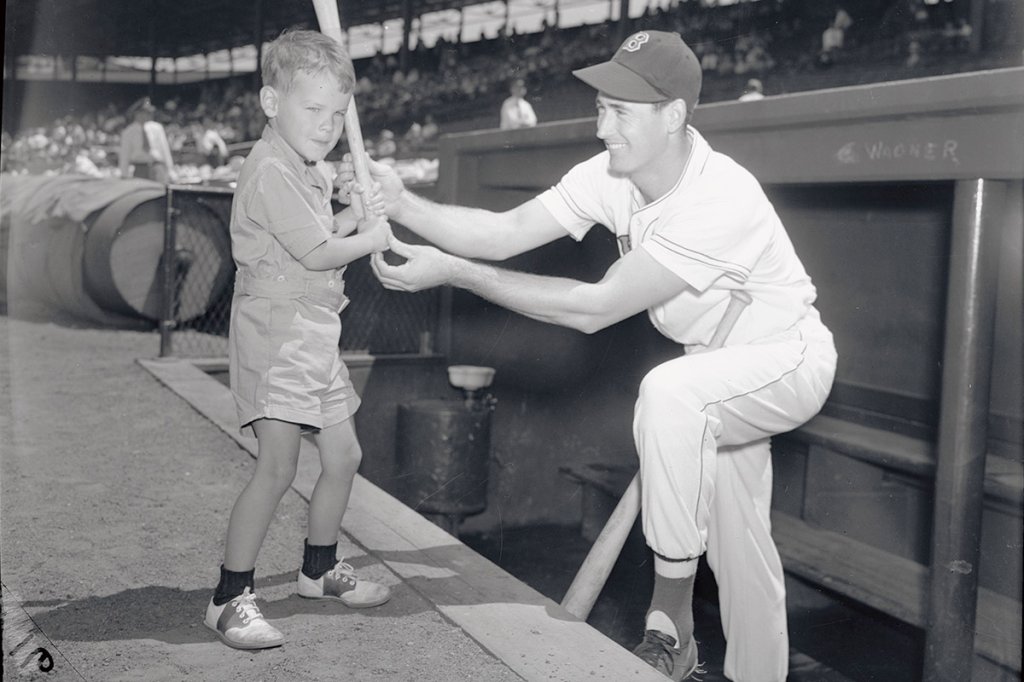
Thirty-nine Hall of Fame baseball players served during WWII.
A few excelled during the 1946 All-Star Game. Navy veteran Bob Feller, the first professional athlete to enlist after the Japanese bombed Pearl Harbor on December 7, 1941, started for the American League, pitched three scoreless innings, and earned the victory. Army vet Joe Gordon of the Cleveland Indians drove in two runs.
No player came close to Williams’ otherworldly night.
Five years after Williams’ three-run home run lifted the AL to victory in the 1941 All-Star Game in Detroit, the National League team literally couldn’t retire him. Williams started his big night with a first-inning walk, then connected for a solo homer against Army veteran Kirby Higbe in the fourth. The player whose nicknames included “Teddy Ballgame” and “the Splendid Splinter” singled in his next two at-bats. Williams capped his evening with a three-run homer to right field in the eighth.
He finished with five RBIs and the American League won 12-0—the biggest blowout in All-Star Game history. The headlines afterward centered around Williams.
“He studied hitting the way a broker studies the stock market and could spot at a glance mistakes that others couldn’t see in a week,” another Red Sox legend, Carl Yastrzemski, once gushed about Williams’ talent at the plate.
“One of the Guys”

After his 1946 MVP season, Williams played five more full seasons before he flew 39 combat missions during the Korean War. Williams often had John Glenn—who later became the first American to orbit the Earth in 1962—as his wingman.
“He didn’t shirk his duty at all,” Glenn once said of Williams’ military service. “He got in there and dug ’em out like everybody else. He never mentioned baseball unless someone else brought it up. He was there to do a job. We all were. He was just one of the guys.”
The military assigned Williams to the Marine Fighter Squadron 311, which was attached to the Third Marine Air Wing. He flew the Grumman F9F Panther over Korea and usually did it very well. However, Williams encountered some trouble.
Enemy fire struck Williams’ aircraft three times. In one instance, it disabled the F9F Panther’s hydraulics and radio, and it caused the fuselage to catch fire. With flames around him, Williams somehow belly-landed the jet fighter.
“The canopy wouldn’t open,” Williams recalled. “I thought that was it. I thought I was going to burn to death in a piece of scrap metal. I managed to blow the canopy and crawl out just before the tanks blew.”
Williams later described the incident to his mistress.
“I had holes all over the plane, and I was riding on all the prayers people say to me, ’cause I was awfully lucky,” Williams wrote to her. “My plane was burning like hell when I crash landed. Everybody around here now is calling me lucky.”
A Hall of Famer in 2 Wars
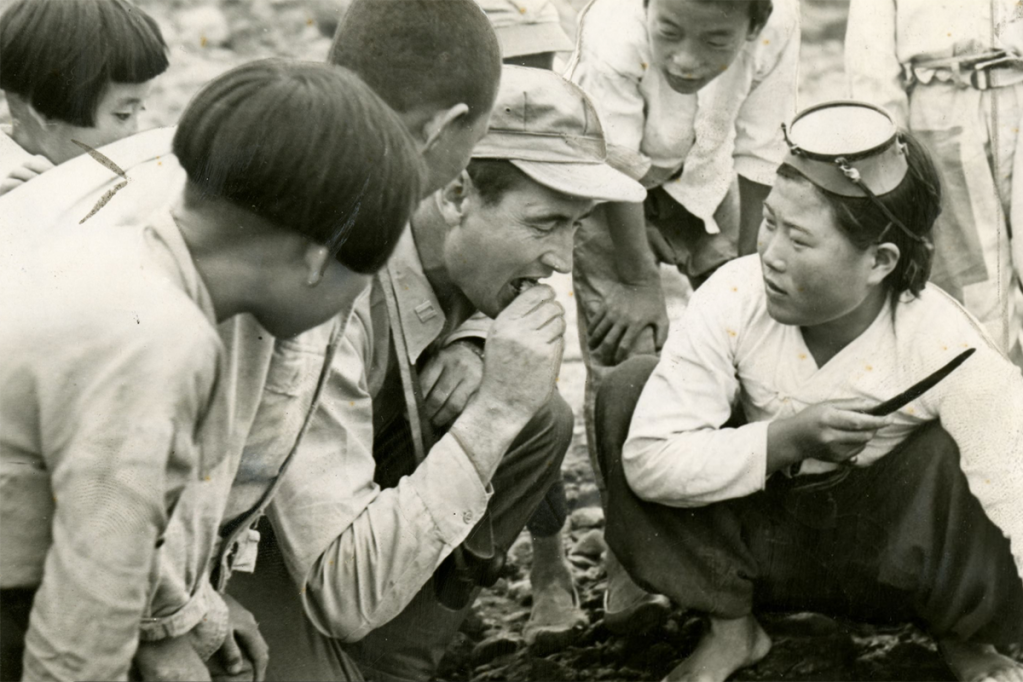
Williams served in the Marines for 1½ years during the Korean War. His service ended when he developed pneumonia. That caused an inner ear infection, which prohibited Williams from flying.
He played his first game back with the Red Sox on August 6, 1953, against the St. Louis Browns. Then a few weeks before his 35th birthday, Williams went on to play seven more full seasons. Fittingly, he homered against the Baltimore Orioles in his final major-league at-bat in 1960.
The National Baseball Hall of Fame inducted Williams in 1966. He is the sport’s only Hall of Fame player to serve in two wars.
“There was no one more dedicated to this country and more proud to serve his country than Ted Williams,” Glenn said of his longtime friend.
Williams died in 2002 at the age of 83.
Don’t Miss the Best of We Are The Mighty
• That time Neil Armstrong survived ejecting from his fighter jet in Korea
• Here’s what happened when North Korea actually hit an American battleship
• What happened on the final flight of the namesake for Edwards Air Force Base
Featured

Loading comments…
Comments couldn’t be loaded. Please refresh the page.