
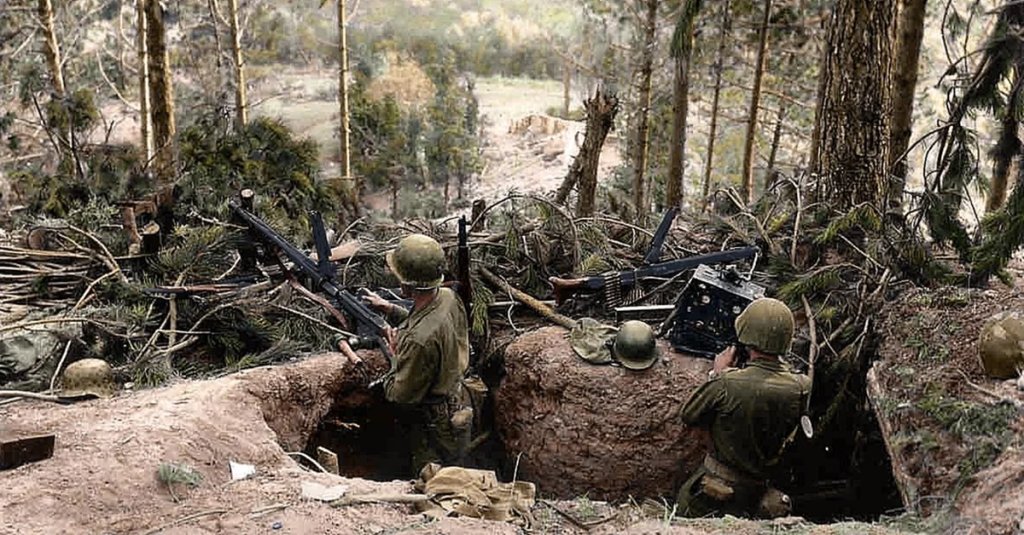
In the last moments of his life, Friedrich Lengfeld only saw a wounded soldier.
A lieutenant fighting for the Germans during World War II, Lengfeld noticed a wounded American service member in distress. The Nazi officer followed his instincts, not regarding the man as the enemy but as someone who desperately required assistance.
Also Read: A former violinist singlehandedly cleared a mountain fortress during World War II
Lengfeld reacted, leading a team of medics to where the American lay. They almost got there until Lengfeld stepped on a land mine. He died shortly after from his injuries.
Lengfeld’s final actions occurred during the Battle of Hürtgen Forest in late 1944. The engagement was so brutal that the Americans and Germans agreed to three short cease-fires during a five-day span in November of that year.
While countries involved in wars reach temporary truces for myriad reasons, those negotiated in Hürtgen Forest happened so each side could retrieve incapacitated soldiers from the battlefield and tend to their wounds.
Meeting Fierce Resistance
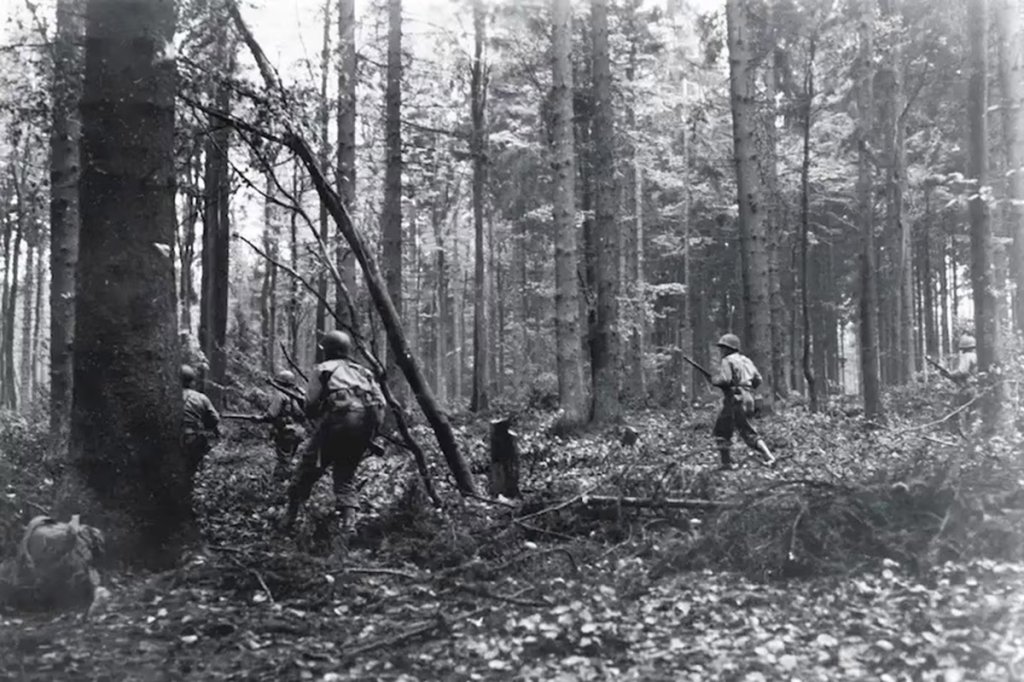
Situated on Germany’s border with Belgium, the Hürtgen Forest represented an area of strategic importance. As Sloan Auchincloss explained in World War II magazine in 1999, dams on the Roer River were located there. Concerned that the Germans might open them to stymie their advance, the Allies strived to prevent that.
The U.S. First Army compiled a force of approximately 250,000 soldiers toward that objective, Auchincloss wrote. Its commander, Lt. Gen. Courtney H. Hodges, sought a quick victory but soon realized that wasn’t possible. At times, the Americans confronted rain or snow as they attempted to navigate the heavily covered, unrelenting terrain. Many of their tanks were in need of repairs, Auchincloss noted.
The Americans deployed considerable manpower, including from the 3rd Armored Division, 9th Infantry Division, the VII Corps, and the V Corps. After a couple of months of fighting, they hadn’t gained much traction. Hodges and his superior, Gen. Omar Bradley, changed their strategy.
For that, they needed the Pennsylvania National Guard’s 28th Infantry Division, Auchincloss wrote. Despite its commander, Maj. Gen. Norman “Dutch” Cota, having some concerns, the 28th moved to replace the battle-worn and -depleted 9th Division.
On November 2, the 28th Infantry Division went on the attack. It did not go well. Over the next 11 days, the Germans inflicted an incomprehensible 6,184 casualties on the 28th’s soldiers. Few in the division escaped unscathed.
When the Fighting Briefly Stopped

The Longest Battle Ever Ever Fought by the US Army – Hürtgen Forest
The first temporary cease-fire began on November 7 on the Kall Trail near the Kall River. According to Auchincloss, a sergeant in Company M, 112th Infantry, 28th Division and two other soldiers went into enemy-occupied territory while trying to evacuate the wounded. As a show of faith, they went unarmed.
After a German sentry confronted them, the sergeant overcame the language barrier and eventually told the Nazi that the Germans had OK’d the GIs to continue on for help. The sentry resisted, though, and attempted to divert the Americans. Then one soldier cleverly offered the German a cigarette, a gesture that provided enough of a distraction for the U.S. service members to keep going, Auchincloss wrote.
Auchincloss also detailed the experience of Maj. Albert Berndt, a regimental surgeon of the 112th Infantry. Upon learning some soldiers were evacuated to an aid station near Kommerscheidt, Berndt and his driver went there to find out more and negotiate a brief halt to the fighting.
After Berndt and his driver’s arrival, the Germans inquired about whether they had guns. Berndt replied they did not. When they heard a wounded soldier’s anguished cries, a couple of American medics aided him.
Berndt then turned to the German lieutenant, Auchincloss wrote.
“Can we have a truce to get the wounded out of Kommerscheidt?” Berndt asked.
Replied the Nazi: “They have already left.”
Berndt didn’t know it at the time, but the Americans and Germans already agreed to the second truce.
The Final Cease-Fire
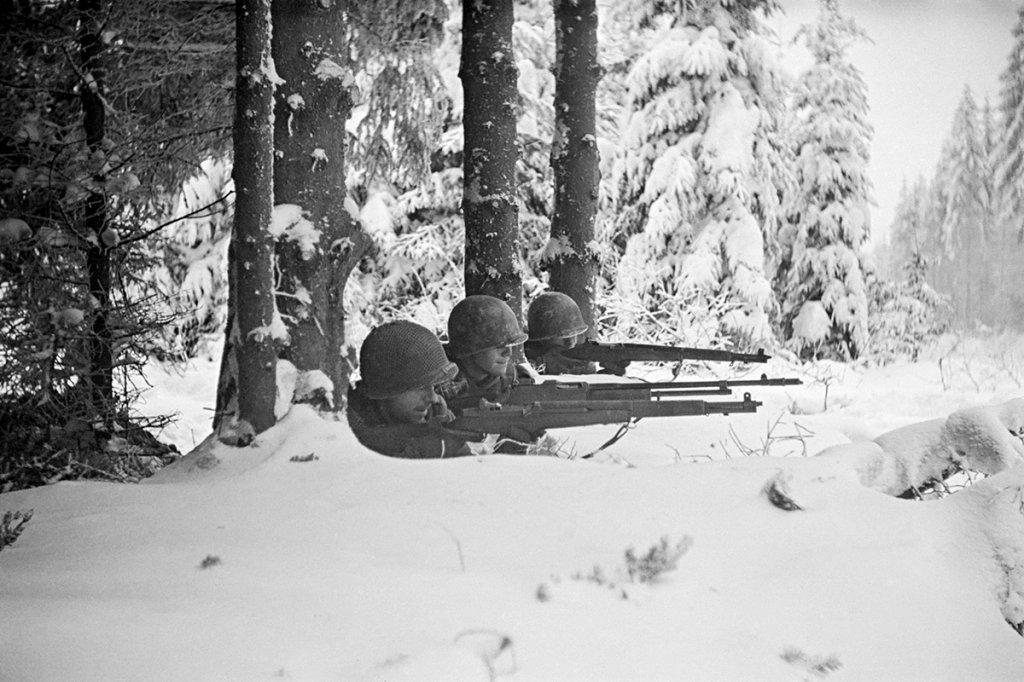
For the third truce on November 12, Auchincloss wrote, German medical officer Gënter Stëttgen appealed directly to the Americans. Accompanied by First Lt. Heinz Munster and a medic, Stëttgen walked without any weapons to begin negotiations. Munster couldn’t avoid the carnage all around him.
“The situation in this front sector was much more serious, however, than anticipated,” Munster said, according to Auchincloss. “Between deserted and destroyed tanks [lay] dead and wounded from both sides. Friend and foe hid in their foxholes, totally wet, hungry, and demoralized.”
The final cease-fire didn’t last long once the Germans learned of an American offensive. Although the fighting resumed, Munster recalled that the sides parted on a friendly note.
“The American officer still shook hands in parting with us and expressed his hope that we may see each other again someday under less threatening circumstances,” Munster said.
34,000 US Casualties
The Battle of Hürtgen Forest lasted from September 1944 to February 1945. It is the longest single battle in U.S. Army history.
The toll was costly for both sides. Approximately 34,000 U.S. service members were either killed, wounded, or captured. That’s about 6,000 more than the German total.
Tech. Sgt. George Morgan was one of the survivors. After the fighting stopped at Hürtgen Forest, Morgan couldn’t forget the awful memories of how he and others suffered.
“The forest up there was a hell of an eerie place to fight,” Morgan said, according to a 2019 article from the Warfare History Network. “Show me a man who went through the battle and who says he never had a feeling of fear, and I’ll show you a liar. You can’t get all of the dead because you can’t find them, and they stay there to remind the guys advancing as to what might hit them.”
Don’t Miss the Best of We Are The Mighty
• How an American Nazi became the World War II propagandist ‘Lord Haw-Haw’
• How the US protected ‘utterly irreplaceable’ documents during World War II
• The Marines and the rare rifles you didn’t know were at D-Day
Featured


Loading comments…
Comments couldn’t be loaded. Please refresh the page.