'Sheep Dipping' is the worst name for the military's best job - We Are The Mighty
MIGHTY CULTURE

‘Sheep Dipping’ is the worst name for the military’s best job

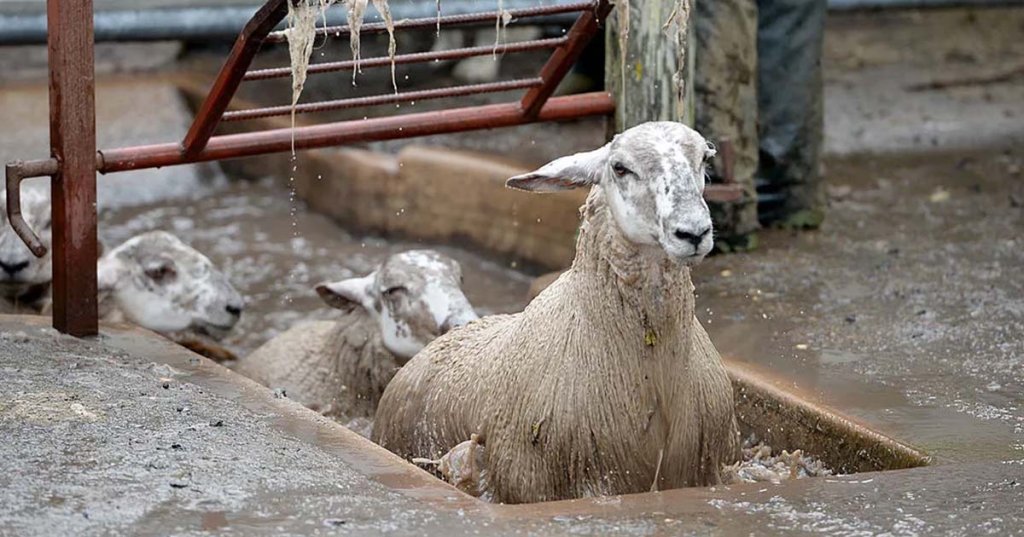
If you’re a sheep farmer, dipping your sheep means you’re literally dipping sheep in a bath made to kill insects and fungus. It’s a good way to keep your flock healthy. If you’re in the military and about to be sheep dipped, it means your life is about to get a whole lot more interesting. It’s a term intelligence agencies use when they pretend to boot someone out of the military but secretly turn them into a covert operative.

Don’t worry, you still get your military retirement time. You just can’t tell anyone about it.


‘Sheep Dipping’ is the worst name for the military’s best job

A reminder that the CIA has an undetectable heart attack gun.

While “sheep dipping” isn’t the official term for moving a troop from military service to the clandestine service, it’s the term the Agency uses to describe the process of taking a career soldier, sailor, airman, or Marine out of their branch of service on the surface. Instead of really removing the subject, the intelligence agency will just pull their official records, leaving behind their official record, the one which says the troop is retired, separated, or otherwise not in the military anymore.

The agency will take care of your real official record from there but there’s still work to be done on the service member’s part. They will be establishing an entirely new identity for themselves, after all. Their job is to make the move plausible, writing to friends and family telling them why they got out, what they’re going to do after leaving the military, and whatnot.

‘Sheep Dipping’ is the worst name for the military’s best job

“And that’s why I decided to leave the Army and pursue my new life of definitely not being in the CIA.”

According to L. Fletcher Prouty, a retired Air Force Colonel who served as the chief of special operations in the Kennedy Administration, the practice started during the Vietnam War, when the Geneva Accords on the neutrality of Laos in 1962. This agreement prevented foreign combat troops from entering Laos. American troops, engaged in combat in neighboring Vietnam, were forced out of the country. The Nixon Administration, not known for honoring international borders when it came to prosecuting the war in Vietnam, decided they would need military support for intelligence agencies in Laos and opted to use “sheep dipping” as a means to get military members into the country.

If this seems implausible to you, remember we’re talking about the guy who decided to bug the Democratic National Committee and then cover it up, even though he was about to win in the country’s biggest landslide.

‘Sheep Dipping’ is the worst name for the military’s best job

Smooth.

The North Vietnamese were secretly supporting Laotian Communists in their effort to topple the Lao government, so why shouldn’t the United States do the same thing in order to support the Laotians? Besides, the NVA was still using Laos as a staging point for attacking allied troops in South Vietnam. The United States military decided to sheep dip a number of specially-trained U.S. troops in order to conduct a clandestine war in Laos. Nixon even allowed the Air Force to provide air support for the Secret War in Laos.

The sheep-dipped soldiers of Vietnam were all provided with their full pay and benefits, not to mention regular promotions and their retirement. If a sheep dipped troop were to be killed in the line of fire, that would pose more of a problem. Their family would struggle to get the benefits befitting a widow – but the agency handled each case separately.

MIGHTY HISTORY

Watch how sand from Omaha Beach brightens veterans’ tombstones

On the 75th Anniversary of D-Day, Congresswoman Jackie Speier (D-CA) shared a video on Twitter of a remarkable ceremony. “The letters on the white crosses almost disappear in the brightness of the stone, so a soldier fills the indentations with sand from Omaha Beach to bring the name forward.”

It’s a quiet practice that adds to the many rituals that honor service members, including leaving coins on gravestones, placing wreaths on graves during winter holidays, or setting the American flag at graves for Memorial Day.

This video is particularly special to watch, as it clearly shows how effective the process is:


Visited the grave of my friend’s father and witnessed a remarkable ceremony. The letters on the white crosses almost disappear in the brightness of the stone, so a soldier fills the indentations with sand from Omaha Beach to bring the name forward. It sent shivers down my spine.pic.twitter.com/e2G8KvvALt

twitter.com

In the video, the soldier conjures the name of William A. Richards, a fallen World War II veteran, killed in 1944, with sand from Omaha Beach, one of the D-Day invasion sites. D-Day marked the turning of the war in Europe, where millions and millions of Allied service members perished.

Also read: Hero medic remembers what it was like to land on Omaha Beach

pic.twitter.com/GwDYS4zWZF

twitter.com

Others began to respond to the tweet with their own experiences witnessing the ceremony, including the graves of their relatives. The sands from Normandy beaches are sent to military cemeteries throughout Europe. In the Netherlands American Cemetery, the graves of American service members have been adopted by Dutch families, who research the lives of the fallen and honor their graves with flowers.

I had the privilege of meeting the family that has been looking after my Uncle Neil. They took the day off of work to meet me.pic.twitter.com/MA4a6HLLKi

twitter.com

For so many, these rituals are powerful reminders of the cost of freedom. The sanctity of a military funeral is one that is shared across the country — and, in the case of the world wars, across the globe. It can be easy for many Americans to feel separated, through both time and distance, from the horrors of World War I and World War II; but for our allies in Europe, the wars were fought in their own backyard.

The sands of Omaha Beach bring forth the names of those who died fighting against Nazi Germany and the enemies of freedom, lest we ever forget.

Articles

That time a drunk Richard Nixon tried to nuke North Korea

The North Koreans have been provoking the United States for as long as North Koreans have been praising Kim Il-Sung for being birthed from a shooting star.


‘Sheep Dipping’ is the worst name for the military’s best job
If you think that sounds stupid, go read about what they actually believe.

In the 1960’s the Hermit Kingdom was at the height of its power, which mostly came from the Soviet Union, who both supplied it and protected it from U.S. “intervention.”

The election of U.S. President Richard Nixon changed how Communist nations interacted with the United States in geopolitical affairs. Nixon, a staunch anti-Communist Cold Warrior, was able to provoke the major Communist powers and them off of one another. His famous 1972 trip to China and the subsequent thaw in relations with the USSR are proof that Nixon’s “triangulation” theory had merit.

But in April 1969, mere months into the first Nixon Administration, Nixon’s internationalist savvy was still unproven. That’s when North Korea shot down an EC-121 spy plane over the Sea of Japan. Nixon was furious.

‘Sheep Dipping’ is the worst name for the military’s best job
And Nixon could do a lot when he’s that angry. (Painting by Jason Heuser – SharpWriter on DeviantArt)

A July 2010 story on NPR featured remarks from Bruce Charles, an Air Force pilot based in Kunsan, South Korea at the time. He recalled being put on alert to carry out his part of the SIOP, the Single Integrated Operational Plan – the U.S. nuclear strike plan for war with the Communists.

Charles was put on alert to drop a 330-kiloton nuke on a North Korean airstrip.

Eventually, the order to stand down was given, and Charles returned to his regular duties. According to the official accounts, Nixon and his advisors mulled over how to respond. In the end, the President opted not to retaliate.

It’s worth speculating that Nixon would have wanted the Communists to believe he actually considered a nuclear strike. In the coming years, the President would even send nuclear-armed bombers toward the Soviet Union while spreading the rumor that he was so insane, he might really trigger World War III.

‘Sheep Dipping’ is the worst name for the military’s best job

Related: That time Nixon wanted Commies to think he was crazy enough to nuke them

Of course, he wasn’t insane. And thanks to a 2000 book by Anthony Summers and Robbyn Swan, we know he was just drunk. Not with power, but with booze.

George Carver, a CIA Vietnam specialist at the time of the EC-121 shootdown, is reported to have said that Nixon became “incensed” when he found out about the EC-121. The President got on the phone with the Joint Chiefs of Staff and ordered plans for a tactical nuclear strike and recommendations for targets.

Henry Kissinger, National Security Advisor for Nixon at the time, also got on the phone to the Joint Chiefs and got them to agree to stand down on that order until Nixon woke up sober the next morning.

‘Sheep Dipping’ is the worst name for the military’s best job
That’s some party.

According to Summers and Swan’s book “The Arrogance Of Power: The Secret World Of Richard Nixon,” Kissinger is reported to have told aides on multiple occasions that if the President had his way, there would have been a new nuclear war every week.

MIGHTY CULTURE

The Sergeant Major of the Army shares his reading list

Recently, I spoke with the Sergeant Major of the Army about COVID-19 and the challenges and opportunities we are facing right now as an Army and a Nation. He highlighted that now is the time to reassess our goals and set new ones.

One of your goals might be to read a book or two during this time. Goals are important and they are even more important now, as we all deal with the necessary restrictions to stop the spread.


We spoke again this week and he shared his reading list with me. He found that reading has helped him grow professionally and as a person. SMA Grinston also shared that reading helps him take a mental break from the day-to-day stressors of life. He even says that if he wasn’t a reader, he wouldn’t be the Sergeant Major of the Army.

You will notice that most of the books on this list aren’t about military battles or written by people in the Army for people in the Army. For the SMA, he likes to read about things outside the military to get new and fresh ideas. We both hope you find something on here that interests you.

The Reading List – in the SMA’s words:

‘Sheep Dipping’ is the worst name for the military’s best job

live.staticflickr.com

1. Nudge: Improving Decisions About Health, Wealth, and Happiness by Richard M. Thaler and Cass R. Sunstein

This is a controversial book –which is one of the reasons I like it. I read it when I was the FORSCOM Sergeant Major and it’s about choice architecture and how small changes to our environment can make a big difference. For example, the authors discuss an elementary school that placed food in different locations in the cafeteria to “nudge” the kids to make healthier choices…and it worked.

Since reading this book, I look at how I can make small changes to the placement of things in my personal life or in the Army to make it better.

‘Sheep Dipping’ is the worst name for the military’s best job

c1.staticflickr.com

2. Start with Why: How Great Leaders Inspire Action by Simon Sinek

I read this book as a brigade or division sergeant major, and it reminded me that sometimes in the Army we jump to the end first. When we ask our soldiers to do something, we focus on the how or the what and forget to explain the why.

Our enlisted Soldiers are smart, and when you explain the why to them, it increases their commitment to the mission. Sometimes, there isn’t enough time to explain why we are doing something, especially in the middle of a firefight, but most of the time we can. And as leaders, this is where we need to start.

‘Sheep Dipping’ is the worst name for the military’s best job

media.defense.gov

3. The Slight Edge: Turning Simple Disciplines into Massive Success and Happiness by Jeff Olson and John David Mann

After I was nominated Sergeant Major of the Army, people asked me for the keys to my professional success. I struggled to answer this question until the commander of the Old Guard recommended this book. Slight Edge helped me define for others how to be successful in the Army and how I got to where I’m at today.

The authors of this book look at what happens when you do something that no one else is willing to do and continue to do it over a long period of time. I’ve been in the Army for 32 years and every morning I wake up and do physical fitness. I read books for self-development. Doing those small things over time, year after year, made a difference in the long run. It’s about developing the discipline and commitment over a long period of time to achieve your goals.

‘Sheep Dipping’ is the worst name for the military’s best job

live.staticflickr.com

4. Outliers: The Story of Success by Malcolm Gladwell

I think I was a Platoon Sergeant or Sergeant First Class when I read this book. Malcolm Gladwell discusses how it’s not only innate abilities that make people successful, other factors play a major role too –like timing.

One of the examples he uses in the book is Bill Gates. Growing up, Bill Gates had access to a computer early in his life which afforded him the opportunity to get 10,000 hours of practice with programming. Yes, he was born in the right place at the right time, but he also took advantage of the opportunity to make himself better.

This book has helped me focus on looking at the opportunities within assignments. I remember when I was nominated to be the brigade sergeant major of an infantry brigade. That job gave me the requisite skills and opened doors that led me down a path to where I am today. We all have the opportunity to be an outlier if we have the right mindset.

5. Mindset: The New Psychology of Success by Carol S. Dweck

Since reading Mindset, there isn’t a day that goes by that I don’t reference or think about it. She writes about two mindsets: Growth vs. Fixed. A growth mindset says that even though I’m not good at a certain skill, I can learn and get better over time. With a fixed mindset, we don’t even try because we think we can’t grow beyond our current skill set. This line of thinking becomes more dangerous the higher in rank and position that leaders go in the Army.

6. Becoming a Resonant Leader: Develop Your Emotional Intelligence, Renew Your Relationships, Sustain Your Effectiveness by Annie McKee

I read this one as a corps sergeant major and this is probably my all-time favorite leadership book. Have you ever worked for someone and knew they weren’t listening to anything you said? As leaders, our level of emotional intelligence has a major impact on the morale of our Soldiers. We have to listen to our people and be mindful and show empathy.

This book made me a better leader, sergeant major, and follower. I started paying more attention to my own mindfulness.

‘Sheep Dipping’ is the worst name for the military’s best job

upload.wikimedia.org

7. Winning by Jack Welch

I read this one around the time I was a sergeant first class or first sergeant and it taught me about the importance of managing talent. Welch writes that the top 5% of any organization needs to be identified and properly managed. He also writes that there is a large population of strong performers that will never be the top 5%, but are also important to the organization. He discusses how to identify, manage, and motivate both groups.

8. Thinking, Fast and Slow by Daniel Kahneman

This is the hardest book to read on this list. It took me a while to get through but I found it beneficial to understand the psychology of decision-making. I gained a much greater understanding and appreciation for how the mind works.

It’s difficult to read, but it helps us better understand how the mind works. If you like sociology and psychology books, this is a great starting place. The higher I go in position in the Army, the more I realize how important it is to understand human behavior. I have a greater appreciation now for how logic and emotion work together in the decision-making process and I know I’m a better leader and person for it.

‘Sheep Dipping’ is the worst name for the military’s best job

upload.wikimedia.org

9. Starship Troopers by Robert Heinlein

I read this one when I was a staff sergeant. I remember my battalion commander making all the officers read it and I wanted to learn something alongside them.

This was another controversial book when it was written. Heinlein uses science fiction to talk about what it means to be a citizen; he addresses the need for corrective training and several other issues that we see playing out today. This book is a fun read and makes for a great discussion between leaders in a unit.

‘Sheep Dipping’ is the worst name for the military’s best job

media.defense.gov

10. Once an Eagle by Anton Myrer

I read this one when I was a brigade sergeant major. It’s a thick one so if you decide to tackle it, it might take you awhile. I like Once an Eagle because it covers an entire career of an individual, his commitment to the Army, and the lessons he learns along the way. I found that when I read it, I put myself in the shoes of the main character and reflected on my own career.

Start today

During our interview, Grinston said he hopes you will want to read and take the opportunity now to start the habit of reading for professional development.

“I know life is difficult right now for a lot of people. But we will get through this.”

MIGHTY TRENDING

VA will drop the fight against Navy vets affected by Agent Orange

The Department of Veterans Affairs will not appeal a January 2019 court ruling that ordered it to provide health care and disability benefits for 90,000 veterans who served on Navy ships during the Vietnam War, likely paving the way for “Blue Water Navy” sailors and Marines to receive Agent Orange-related compensation and VA-paid health care benefits.

VA Secretary Robert Wilkie told members of the Senate Armed Services Committee on March 26, 2019, that he will recommend the Justice Department not fight the decision, handing a victory to ill former service members who fought for years to have their diseases recognized as related to exposure to the herbicide Agent Orange.


In 2018, the House unanimously passed a bill, the Blue Water Navy Vietnam Veterans Act, to provide benefits to affected service members. But Wilkie objected, saying the science does not prove that they were exposed to Agent Orange. Veterans and their advocates had argued that the ships’ distilling systems used Agent Orange-tainted seawater, exposing sailors on board to concentrated levels of dioxin.

‘Sheep Dipping’ is the worst name for the military’s best job

Large stacks of 55-gallon drums filled with Agent Orange.

(US Army photo)

However, the bill failed in the Senate when two Republicans, Sen. Michael Enzi of Wyoming and Mike Lee of Utah, said they wanted to wait for a vote pending the outcome of a current study on Agent Orange exposure.

The U.S. Court of Appeals for the Federal Circuit in January 2019 ruled that a Vietnam veteran, 73-year-old Alfred Procopio, and other Blue Water Navy veterans qualified for benefits currently given to service members stationed on the ground in Vietnam or who served on inland waterways and have diseases associated with Agent Orange.

Procopio, who served on the aircraft carrier Intrepid, suffers from prostate cancer and diabetes, illnesses presumed to be related to exposure to the toxic herbicide.

The VA has contended that any herbicide runoff from the millions of gallons sprayed in Vietnam was diluted by seawater and would not have affected offshore service members. It also objected to the cost of providing benefits to Blue Water Navy veterans for illnesses common to all aging patients, not just those exposed to Agent Orange.

The proposed Blue Water Navy Veterans act had estimated the cost of providing benefits to these veterans at id=”listicle-2632903078″.1 billion over 10 years. VA officials say the amount is roughly .5 billion.

Wilkie told members of the Senate Veterans Affairs Committee during a hearing on the VA’s fiscal 2019 budget that the department already has started serving 51,000 Blue Water Navy veterans.

‘Sheep Dipping’ is the worst name for the military’s best job

Leaking Agent Orange Barrels at Johnston Atoll, 1973.

He cautioned, however, that while he is recommending the Justice Department drop the case, he “didn’t know what other agencies would do.”

Lawmakers praised Wilkie’s announcement, urging him to ensure that the DoJ drops the case. Sen. Richard Blumenthal, D-Connecticut, said it would “bring fairness” to these veterans.

“I am grateful for you in making these considerations,” Blumenthal said, adding that he’d like to see the VA do more research on toxic exposures on the modern battlefield. “The potential poisons on the battlefield are one of the greatest challenges of our time.”

Committee chairman Sen. Johnny Isakson, R-Georgia, also promised a hearing later in 2019 on burn pits and other environmental exposures some troops say left them with lifelong illnesses, including cancers — some fatal — and respiratory diseases.

Isakson added, however, that the VA needs to care first for Blue Water Navy veterans. “If it happens, we are going to be in the process of swallowing a big bite and chewing it,” he said.

The diseases considered presumptive to Agent Orange exposure, according to the VA, are AL amyloidosis, chronic B-cell leukemia, chloracne, Type 2 diabetes, Hodgkin’s lymphoma, ischemic heart disease, multiple myeloma, non-Hodgkin lymphoma, Parkinson’s disease, early onset peripheral neuropathy, porphyria, prostate cancer, respiratory cancers and soft tissue sarcomas.

Amyotrophic lateral sclerosis, or Lou Gehrig’s disease, in a veteran who served 90 days or more in the military is automatically considered service connected, regardless of date of service.

This article originally appeared on Military.com. Follow @militarydotcom on Twitter.

MIGHTY TACTICAL

New guided missile frigates will be ready for war by 2025

The Navy is now strengthening and extending conceptual design deals with shipbuilders tasked with refining structures and presenting options for a new Navy multi-mission Guided Missile Frigate — slated to be ready for open warfare on the world’s oceans by the mid 2020s.

Navy envisions the Frigate, FFG(X), able to sense enemy targets from great distances, fire next-generation precision weaponry, utilize new networking and ISR technologies, operate unmanned systems and succeed against technically advanced enemies in open or “blue” water combat, according to service statements.


In early 2018, Naval Sea Systems Command chose five shipbuilders to advance designs and technologies for the ship, awarding development deals to General Dynamics Bath Iron Works, Austal USA, Huntington Ingalls, Marinette Marine Corporation, and Lockheed Martin.

The service has now modified these existing deals, first announced in February 2018, to enable the shipbuilders to continue their conceptual design work and “mature their proposed ship design to meet the FFG(X) System Specification,” according to the deal modifications.

The Navy expects that new weapons and sensors will better enable the ship to destroy swarming small boat attacks, support carrier strike groups, conduct dis-aggregated operations, attack enemies with an over-the-horizon missile, and engage in advanced surface and anti-submarine warfare, service statements specify.

‘Sheep Dipping’ is the worst name for the military’s best job

Lockeheed Martin’s conceptual design for the FFG(X).

“These Conceptual Design awards will reduce FFG(X) risk by enabling industry to mature their designs to meet the approved FFG(X) capability requirements. The Navy has not changed its FFG(X) capability requirements,” Alan Baribeau, spokesman for Naval Sea Service Command, told Warrior Maven.

The Navy hopes to expedite development to award a production contract in 2020 and ultimately deploy the new ship in the early to mid-2020s. For this reason, bidders were required to submit designs that have been “demonstrated at sea” and already paired with a shipyard for rapid production, according to the previous service solicitation.

“The Conceptual Design effort will inform the final specifications that will be used for the Detail Design and Construction Request for Proposal that will deliver the required capability for FFG(X),” the Navy’s contract announcement said.

Service developers seem to be heavily emphasizing sensor networking, weapons integration and targeting technology as it navigates this next phase of development.

“The FFG(X) small surface combatant will expand blue force sensor and weapon influence to provide increased information to the overall fleet tactical picture while challenging adversary Intelligence, Surveillance, Reconnaissance, and Tracking (ISRT) efforts,” Naval Sea Systems Command FFG(X) documents said.

The “blue force sensor” language is explained by Navy developers as integral to the Navy’s Distributed Maritime Operations Concept which, as evidenced by its name, seeks to enable a more dispersed and networked attack fleet suited for dis-aggregated operations as needed.

Also, by extension, longer range sensors will be needed to identify enemy attackers now equipped with long-range precision strike weapons and enable command and control across vast distances of open water and coastal patrol areas.

The Navy vision for the ship further specifies this, saying the “FFG(X) will be capable of establishing a local sensor network using passive onboard sensors, embarked aircraft and elevated/tethered systems and unmanned vehicles to gather information and then act as a gateway to the fleet tactical grid using resilient communications systems and networks.”

Along these lines, the Navy’s FFG(X) Request for Proposal identifies a need for a netted sensor technology called Cooperative Engagement Capability (CEC).

CEC is an integral aspect of key emerging ship-defense technologies aimed at “netting” sensors and radar technologies in order to better identify and destroy approaching threats such as anti-ship missiles, drones and enemy aircraft.

“CEC is a sensor netting system that significantly improves battle force anti-air warfare capability by extracting and distributing sensor-derived information such that the superset of this data is available to all participating CEC units,” a Raytheon statement said.

Current analysis is no longer restricted to the idea of loosely basing the “hull design” upon the LCS, as was previously the case, Navy officials say.

Designs for the ship no longer merely envision a more “survivable” variant of an LCS. Previous FFG(X) requirements analyses conducted by a Navy Frigate Requirements Evaluation Team examined the feasibility of making the ship even more lethal and survivable than what previous plans had called for, Navy officials said.

Existing plans for the Frigate have considered “space armor” configurations, a method of segmenting and strengthening ship armor in specified segments to enable the ship to continue operations in the event that one area is damaged by enemy attack. Discussions for Frigate technologies have included plans for an MH-60R helicopter, Fire Scout drone and ship defense technologies such as SeaRAM.

The Navy already plans for the new Frigate to be integrated with anti-submarine surface warfare technologies including sonar, an over-the-horizon missile and surface-to-surface weapons, which could include a 30mm gun and closer-in missiles such as the HELLFIRE. An over-the-horizon missile chosen by the Navy for the LCS is the Naval Strike Missile by Kongsberg-Raytheon.

Navy plans for the FFG(X) also call for advanced electronic warfare tech along with both variable depth and lightweight sonar systems.

The new ship may also have seven 11-meter Rigid Inflatable Boats for short combat or expeditionary missions such as visiting, searching and boarding other ships.

‘Sheep Dipping’ is the worst name for the military’s best job

The Rigid Hull Inflatable Boat.

In addition, Navy developers explain that the ship will be configured in what’s called a “modular” fashion, meaning it will be engineered to accept and integrate new technologies and weapons as they emerge. It certainly seems realistic that a new, even more survivable Frigate might be engineered with an additional capacity for on-board electrical power such that it can accommodate stronger laser weapons as they become available.

The Navy’s Distributed Maritime Operations Concept builds upon the Navy’s much-discussed “distributed lethality” strategy. This strategic approach, in development for several years now, emphasizes the need to more fully arm the fleet with offensive and defensive weapons and disperse forces as needed to respond to fast-emerging near-peer threats.

Part of the rationale is to move back toward open or “blue water” combat capability against near peer competitors emphasized during the Cold War. While the strategic and tactical capability never disappeared, it was emphasized less during the last 10-plus years of ground wars wherein the Navy focused on counter-terrorism, counter-piracy and things like Visit Board Search and Seizure. These missions are, of course, still important, however the Navy seeks to substantially increases its offensive “lethality” in order to deter or be effective against emerging high-tech adversaries.

Having longer-range or over-the-horizon ship and air-launched weapons is also quite relevant to the “distributed” portion of the strategy which calls for the fleet to have an ability to disperse as needed. Having an ability to spread out and conduct dis-aggregated operations makes Navy forces less vulnerable to enemy firepower while. At the same time, have long-range precision-strike capability will enable the Navy to hold potential enemies at risk or attack if needed while retaining safer stand-off distance from incoming enemy fire.

This article originally appeared on Warrior Maven. Follow @warriormaven1 on Twitter.

MIGHTY CULTURE

Beyond the Green Line: From British civilian to Israeli paratrooper

One of the great perks of this job is that sometimes things, which you had missed or had never heard of before, get tossed into your lap and you wind up with something special. Kind of like Christmas in July. So, when the SOFREP editors asked me if I would be interested in reviewing Marc Goldberg’s book, “Beyond the Green Line,” I accepted.

Goldberg’s story is a very interesting one. It takes him from his home in Britain to the ranks of the Israeli paratroopers during the Al Aqsa (Second) Intifada. Goldberg made his aliyah to Israel during a turbulent time.


Goldberg came to Israel from London. Despite speaking poor Hebrew, he joined an elite reconnaissance unit (Orev) of the Israeli paratroopers. The book recounts his relationships with his fellow military members and his tour of duty which mainly consisted of counter-insurgency operations in the West Bank.

The Al-Aqsa Intifada stretched from September 2000 to February 2005 and was marked by as many, if not more, civilian deaths as combatant deaths. It began when Palestinians unleashed waves of suicide bombers against Israel after the 2000 Camp David Summit failed to reach a final agreement on the Israeli-Palestinian peace process in July 2000.

What makes Goldberg’s case and his service unique is that he was a Briton, but being born in Jew in the U.K., he “felt like an outcast.” He hated life in the U.K., as a young man. He had dreams of grandeur, of making the Aliyah to the birthplace of his people and becoming an elite Israeli paratrooper and an officer in the Israeli Defense Forces (IDF).

He thought that Israel was the answer to all of the questions that troubled him. It would be the reason he existed and would erase the centuries of powerlessness that he felt his people and he had keenly suffered from.

Despite his language barrier, Goldberg passed the selection course for the IDF paratroopers, went through his training, and joined the ranks of the unit. His parents traveled from Britain to see him be awarded his maroon beret and silver paratrooper wings. He did so well in his training that his NCO gave him his own beret at his graduation and his commander gave him a watch.

His service in the IDF during the counter-insurgency campaign in Nablus is much like any operation in any military in the world. Hours upon hours of preparation and sheer boredom interspersed with brief periods of adrenaline rush. Intermingled in with the boredom were moments of head-scratching ridiculousness that mark many veterans’ career in Special Operations.

During one rock-throwing incident, where Palestinian youths climbed onto a roof of an apartment building and were throwing everything they could get their hands on, one older Palestinian man was intermittently yelling at the youths and the Israeli soldiers. He was upset that the youths broke into his apartment and were tossing all of his possessions, including the man’s washing machine, off the roof and onto the armored car the paratroopers were riding in.

One uncomfortable episode takes place in an apartment that the paratroopers are occupying to hunt for a wanted terrorist. Goldberg had to watch over a Palestinian family as well as leftist “volunteers” from the United States and the U.K.

But like many other veterans involved in a counter-insurgency campaign, Goldberg grew disillusioned with his job, the mission, and their reason for being there. He even grew disillusioned with the very terrorists they were hunting. One wanted terrorist, who was responsible for the deaths of an untold amount of Israelis and Palestinians, was trapped in a house with a boatload of ammunition. But rather than shoot it out and die a martyr’s death, as he preached to so many others, he surrendered sobbing and crying while pleading for his life.

He later fell into depression and had a classic case of PTSD, not able to interact with the civilians in Israel, while he was off-duty, anymore than he could back in England. This was despite not seeing the type of pitched combat that many of his contemporaries did.

In the end, Goldberg realized that Israel isn’t the land of milk and honey where everything is perfect and all of his questions would be answered. It is a land as troubled as anywhere else.

“Now I had seen the truth, Israel was just as beset with problems as anywhere else and the people who lived there were exactly the same as everyone else. The best were wonderful, the worst were awful, and the majority somewhere in between.”

The IDF had given him so much but also took a big piece out of him. Things got worse upon his return to England. Like many ex-servicemen, the mundane life awaiting him left him, he felt, with no challenge. He hit rock bottom and briefly contemplated suicide. But he entered therapy and ever so slowly made his way back.

In 2010, Goldberg returned to Israel, not “to a paradise, a place of milk and honey, or some kind of holy place the Messiah was imminently arriving to. I was going back to the land and country of my people. Dirty, dusty, imperfect but ours.”

He never experienced the war that he pictured in his boyhood; the war that would make him a Jewish war hero like he read and dreamed about. But he did his duty to his country and his people. He’s at peace with that. Now he’s married and living in the place he belonged all along.

Goldberg’s book is an easy, outstanding read. His style is such that while reading it, the reader has the feeling that the author is talking to you in a quiet bar and telling his story. This makes it a great page-turner and instantly hooks you; the pages will turn faster than you could imagine.

Make this book part of your counter-insurgency collection.

This article originally appeared on SOFREP. Follow @sofrepofficial on Twitter.

MIGHTY HISTORY

Remembering Hiroshima & Nagasaki: Four little known facts

On Aug. 4, 1945, Maj. Gen. Curtis LeMay approved Operation Centerboard I, a decision that ultimately forced the Japanese to surrender and forever changed the world. Two days after his approval, pilots boarded the Enola Gay, the callsign for their B-29 bomber, and lifted off from the Pacific island of Tinian en route for Hiroshima.

At 8:15 a.m., the lone plane in the sky carrying the 9,000-pound uranium-enriched atomic bomb — known as “Little Boy” — released from the bomb bay and floated by parachute, detonating the equivalent of 12,000 to 15,000 tons of TNT over the populated city.

“It was very much as if you’ve ever sat on an ash can and had somebody hit it with a baseball bat,” recalled Navigator Theodore Van Kirk, as he described the shockwave. Life that existed before was annihilated, and 70,000 of the 76,000 total buildings were destroyed — 48,000 blown into non-existence. The explosion immediately killed an estimated 60,000 to 80,000 people, and the nuclear fallout in the following years is believed to have killed some 200,000 more people as a result of severe burns, trauma, radiation exposure, and cancer.


‘Sheep Dipping’ is the worst name for the military’s best job

The Bockscar and its crew, who dropped a Fat Man atomic bomb on Nagasaki. Photo courtesy of Wikimedia Commons

A day later, after no sign of surrender from the Japanese, the decision was made to use the second atomic bomb — “Fat Man.” The target was originally not the city of Nagasaki, but that of Kokura, the location of Japan’s largest munitions depot. On Aug. 9, 1945, bad weather and thick clouds forced the pilots to deviate and travel to their secondary target, where citizens of Nagasaki experienced the same hell that occurred three days prior.

“Suddenly, the light of a thousand suns illuminated the cockpit,” remembered “Bockscar” co-pilot Fred Olivi. “Even with my dark welder’s goggles, I winced and shut my eyes for a couple of seconds. I guessed we were about seven miles from ‘ground zero’ and headed directly away from the target, yet the light blinded me for an instant.”

After the plume of the second explosion cleared the skies and the Japanese surrender ended World War II, the world questioned how anyone could ever recover after two cities were turned into ash. On the 75th anniversary of the bombing of Hiroshima, Coffee or Die looks back at the lesser known aspects of the cataclysmic event that destroyed the lives of hundreds of thousands of people and forever changed the world.

‘Sheep Dipping’ is the worst name for the military’s best job

A group of physicists at the 1946 Los Alamos colloquium on the Super. In the front row are Norris Bradbury, John Manley, Enrico Fermi, and J.M.B. Kellogg. Behind Manley is Oppenheimer (wearing jacket and tie), and Richard Feynman to his left. The Army colonel on the far left is Oliver Haywood. In the third row between Haywood and Oppenheimer is Edward Teller. Photo courtesy of Wikimedia Commons.

“The Cry Baby Scientist”

Robert Oppenheimer, the man known as the “Father of the Atomic Bomb,” had months of preparation and test results to predict the impact of dropping a nuclear bomb over a populated city as he and his team developed the two atomic bombs that were used over Hiroshima and Nagasaki. But the physicist, along with 155 scientists chosen to work under the top-secret program famously known as “The Manhattan Project,” had second thoughts. They signed a petition that opposed using nuclear weapons in a military capacity.

When Oppenheimer met with President Harry Truman in his Oval Office in October 1945, months after pondering the destruction of his own creation, he told him, “Mr. President, I feel like I have blood on my hands.” Truman’s face scrunched and his anger grew to a fury as he told Secretary of State Dean Acheson, “I never want to see that son of a bitch in my office again.”

As Truman recounted the story, the blame equally shared by the two of them, he often referred to Oppenheimer as “the cry baby scientist.”

‘Sheep Dipping’ is the worst name for the military’s best job

A watch recovered from Hiroshima, stopped at 8:15 a.m., the moment of the bombing. Photo courtesy of the Atomic Heritage Foundation.

Censorship In The Press

The biggest news story of the century was censored. In fact, much of the information during World War II was censored. However, the prime focus concerning the nuclear explosions over Japan was the suppression of evidence regarding radiation or radioactivity. Journalists were silenced, access to medical reports were limited, and American officials confiscated materials collected from Japanese inspectors during the immediate fallout. Gen. Douglas MacArthur issued a press code that permitted the publication of photographs and print in relation to the bombings, and it remained in effect until 1952.

The purpose of the censorship was that the military didn’t want the atomic weapon to be associated with chemical warfare. Nonetheless, Australian journalist Wilfred Burchett avoided the censors when he sent his report to London using Morse code. Burchett was the first foreign journalist to visit Hiroshima after the bombings. The London Daily Express published his story on Sept. 5, 1945, with the headline “The Atomic Plague.”

“Hiroshima does not look like a bombed city,” Burchett wrote. “It looks as if a monster steamroller had passed over it and squashed it out of existence.”

‘Sheep Dipping’ is the worst name for the military’s best job

American physicist Lawrence H. Johnston with the Fat Man plutonium core on Tinian in 1945. Photo courtesy of Wikimedia Commons.

Eyewitness Accounts & Survival

American physicist Lawrence H. Johnston, one of the scientists to work under the helm of the Manhattan Project, was the only eyewitness of all three atomic explosions (the other was the Trinity test). While Johnston viewed the extraordinary violent detonations from a distance, Tsutomu Yamaguchi, a 29-year-old Japanese naval engineer experienced both blasts in person.

Walking on his morning commute to work, Yamaguchi stopped and looked toward the sky. He heard the roar from the B-29’s engines, then watched a bomb deploy a parachute. The sky flashed the brightest light he had ever seen as he dove into a ditch before the shockwave engulfed his entire being. The eruption was so violent that it spun up tornado-like winds that hurled his body into a nearby potato patch.

After somewhat recovering his wits, he spent the night in an air raid shelter, and the following day he went to the train station. The bridges ceased to exist, and en route he had to cross a river pass and swam through a cluster of floating dead bodies. As he boarded the train amongst several other burned survivors, he traveled overnight to his hometown of Nagasaki.

On Aug. 8, he recuperated in the hospital and embraced his wife and child who hardly recognized him. The next day he returned to work to inform his bosses of what had occurred at Hiroshima. After escaping one atomic bomb, the second was even more devastating.

“I thought the mushroom cloud had followed me from Hiroshima,” he told the The Independent. Somehow, for the second time, he survived the blast, but the radiation in multiplied doses had lingering effects that caused his hair to fall out and relentless bouts of vomiting. Surprisingly, he lived until he was 93 years old and died of stomach cancer in 2010.

‘Sheep Dipping’ is the worst name for the military’s best job

The Atom Bowl teams were each captained by a Heisman Trophy winner and an NFL running back who served with the 2nd Marine Division during World War II. Photo courtesy of War History Online.

The Atom Bowl

While citizens of Japan weren’t fully aware of the effects of radiation and what impact it had on the body until later in life, US soldiers didn’t fully understand it either. On New Year’s Day 1946, Chicago Bears standout Bill “Bullet” Osmanski stepped onto another gridiron that looked more like a scene from the movie Mad Max than a packed football stadium filled with screaming fans. Osmanski and other Marines from the 2nd Marine Division fielded one team and squared off against Lt. Angelo Bertelli, a Heisman Trophy winner and former Notre Dame quarterback. The ceremonial football game became known as “The Atom Bowl,” and it was held in the nuclear wasteland a few miles from “ground zero” in Nagasaki.

More than 2,000 Devil Dogs took to the bleachers at the “Atomic Athletic Field No. 2” to watch Osmanski’s “Isahaya Tigers” defeat Bertelli’s “Nagasaki Bears” 14-13. The halftime festivities included music by the Marine Corps band and “Japanese girl cheerleaders.” The rules were altered for safety, including banning tackle football in favor of two-hand touch because of the shattered glass and small debris on the field. The world’s first and only football game to take place in the rubble of an atomic bomb crater was played by a bunch of Marines trying to boost their spirits before they went home.

This article originally appeared on Coffee or Die. Follow @CoffeeOrDieMag on Twitter.

MIGHTY HISTORY

The Det: Secret soldiers and unsung heroes of the troubles

Every country’s military has their own version of Special Forces. However, none of them are quite like the 14th Intelligence Detachment, ‘The Det,’ which was formed as part of the British Army Special Forces during a time known as The Troubles in Northern Ireland. The Det was tasked with mounting surveillance and intelligence gathering operations against the Irish Republican Army and their allies.

They worked in the shadows. No one knew who they were or what they did. They received no acknowledgement or fanfare. The world will never know who they were. But, this dedicated force of highly-trained plain-clothes operatives worked to gather the intelligence needed for the British Army and others to maintain their peacekeeping role between the IRA and the unionist paramilitary forces.


The Det was formed after the British Army’s intelligence unit, the Military Reaction Force, was compromised. The MRF was compromised when IRA double-agents were discovered and then interrogated. They spilled details about a covert MRF operation out of Four Squares laundry in Belfast. This led to an IRA ambush of a MRF laundry van, which killed one undercover soldier.

With the MRF compromised, the Det was set up in 1973. The Det was open to all members of the armed services and to both genders. For the first time, women were allowed to be a part of the UK Special Forces. Each candidate had to pass a rigorous selection process. Members of the Det were expected to have excellent observational abilities, stamina and the ability to think under stress, as well as a sense of self-confidence and self-reliance as the majority of surveillance and intelligence gathering operations were solo missions.

The IRA treated the conflict like guerilla warfare for national independence. They used street fighting, sensational bombings and sniper attacks, which led to the British government classifying their aggressions as terrorism. The Det’s main focus during this time was utilizing their unique talents and training to gather information on the members of the IRA so that the British Army and the Royal Ulster Constabulary could then intervene.

‘Sheep Dipping’ is the worst name for the military’s best job

The skills and training of the members of the Det included the disciplines of surveillance, planting bugs and covert video cameras, and close quarters combat. They were also experts in the use of pistols, sub machine guns, carbines and assault rifles. They were also trained in unarmed combat, as well as techniques to disarm and neutralize knife or gun-wielding assailants. It was important for each member to be adept in these skills in order to be able to protect themselves while undercover.

Along with this specialized training, the Det was also equipped with unique equipment much of which could be considered ahead of its time. This included a fleet of ordinary looking saloon cars called ‘Q’ cars. These vehicles were specially equipped with covert radios, video and still cameras, concealed weapons packs, brake lights which could be switched on and off, and engine cut off switches to prevent hijacking. All of these worked to aid in the surveillance missions of the operators. The Det also had their own flight of Army Air Corps Gazelles, which were referred to as ‘The Bat Flight.’ The Gazelles carried sophisticated surveillance gear which was uniquely suited to the operations of ‘The Det.’

From the time of its inception until the end of The Troubles the Det performed numerous operations, mostly following and observing suspected terrorists. These painstakingly planned intelligence operations often led to the arrest of the suspected terrorists and/or the discovery of weapons caches. Occasionally the members of the Det would find themselves in a firefight with terrorists, this was usually due to their cover being blown. Unfortunately, several Det operators tragically lost their lives in Northern Ireland.

The highly-trained members of the Det did not do what they did for glory. They didn’t do it for the accolades, as there were none offered. These elite members put themselves in danger because they believed in what they were working for. They wanted to do their part to protect their country and those they loved. They believed in justice. They believed in the greater good. They knew going into it that no one would ever know what they did or the sacrifices they made in the name of Queen and country. But, they went in anyway. They didn’t see themselves as heroic. But, the elite members of the Det can truly be considered the unsung heroes of The Troubles.

The Det has now been absorbed into the British Army’s Special Reconnaissance Regiment, with a mission to fight the global war on terrorism.

MIGHTY CULTURE

Can military spouses be buried in veterans cemeteries?

You may know that most veterans can be buried in state and national veterans cemeteries for little or no money, but what about their spouses and other dependents?

Your spouse may be eligible to be buried with you in a veterans cemetery at little or no cost. However, if you and your spouse have divorced and they have remarried, they probably aren’t eligible. Dependent children may also be eligible. Some parents of those killed on active duty may also be eligible.

As always, only veterans with an other-than-dishonorable discharge (and their dependents) qualify for this burial benefit. There are also other restrictions against those found guilty of certain crimes.


Arlington National Cemetery

Arlington National Cemetery is run by the Department of the Army. As such, it has rules that are a bit different than National Veterans Cemeteries, which are run by the Department of Veterans Affairs. The cemetery is also running out of space for new burials.

‘Sheep Dipping’ is the worst name for the military’s best job

Arlington National Cemetery.

Therefore, burials and inurnments, the placing of cremated remains in a large wall, are limited to specific groups. Currently, burial at Arlington National Cemetery is open to:

  • Members who died on active duty and their immediate family
  • Retirees and their immediate family
  • Recipients of the Purple Heart or Silver Star and above, as well as their immediate family
  • Any honorably discharged prisoner of war who died after Nov. 30, 1993, and their immediate family

Veterans and their dependents as well as some retired reservists are eligible for inurnment in the cemetery.

The cemetery will furnish a headstone/marker for both the veteran and dependents.

National veterans cemeteries

These cemeteries are run by the VA. There are currently 136 national cemeteries in 40 states and Puerto Rico. Locate a VA cemetery near you.

Burial is available to any veteran with an other-than-dishonorable discharge, as well as their dependents. The VA will furnish a headstone/marker for the veteran and dependent.

VA National Cemeteries

State veterans cemeteries

Many states have their own veterans cemeteries. Eligibility is similar to VA national cemeteries, but may include residency requirements.

Most states provide free burial and a headstone for the veteran; many charge a fee less than id=”listicle-2636201112″,000 for eligible dependents.

State veterans cemeteries

Other cemeteries

The VA may provide a free headstone or marker for all eligible veterans buried at any cemetery worldwide; however, it doesn’t pay the cost of placing the marker. Some states will reimburse this cost.

Dependents aren’t eligible for this benefit; however, some states may provide a headstone to dependents.

This article originally appeared on Military.com. Follow @militarydotcom on Twitter.

Articles

This is what happens when Kim Jong Un gets blackout drunk

Watch out, Wolfpack! Kim Jong Un has decided that he wants to join that wild “Hangover” bunch of partiers portrayed by Ed Helms, Bradley Cooper, Justin Bartha and Zach Galifianakis.


Or maybe the North Korean dictator is trying to get a cameo in “Hangover IV.”

According to a report by FoxNews.com, the North Korean dictator once got blackout drunk while meeting with top military leaders. During that meeting, he went on a rant about their failure to produce a successful “military satellite” – a phrase often taken to mean an intercontinental ballistic missile.

‘Sheep Dipping’ is the worst name for the military’s best job
A graphic showing the range of the North Korean rocket launched on February 7, 2016. | Courtesy of The Heritage Foundation

“Not being able to develop one military satellite is the same as committing treason,” the Korea Times reported Kim ranted during an all-night ragefest directed at his military leaders — just before ordering them to write letters of apology and self-criticism.

At some point after giving those orders, the dictator went to bed, feeling the effects of a reported overindulgence of “spirits.”

The next morning, when he awoke after having slept it off, he was stunned to see the military chiefs at his villa. He’d drunk enough to black out and forget his tirade of the previous night – much as the protagonists of the “Hangover” trilogy had.

“Why are you gathered here?” the North Korean dictator asked according to the FoxNews.com, adding: “Be careful about your health because you are all old.”

‘Sheep Dipping’ is the worst name for the military’s best job
(North Korea state Media)

The greeting prompted the assembled generals to sob with relief, leading Kim to think he had touched them with his kindness.

An anonymous North Korean source told the Tokyo Shimbun, “They were relieved because they thought they were going to be purged.”

The Tokyo Shimbun’s source added, “Everyone is showing loyalty out of fear of being executed and no one dares speak against Kim.”

The North Korean dictator was portrayed in the 2014 comedy movie “The Interview,” which starred James Franco and Seth Rogen.

In 2004, Kim Jong Un’s father, Kim Jong Il, was a featured character in “Team America: World Police,” a marionette movie done by the producers of the hit TV series “South Park.”

MIGHTY TRENDING

The F-35 can make China’s carrier killer missiles ‘irrelevant’

As China builds out its network of militarized islands in the South China Sea and expands a sphere of influence designed to keep the U.S. out, the U.S. Marine Corps is putting the finishing touches on a weapon to burst its bubble: the F-35B.


China’s People’s Liberation Army Rocket Force has turned out a massive number of so-called carrier-killer missiles, ballistic missiles that can target ships up to about 800 miles out at sea, even testing them against models of U.S. aircraft carriers.

With the U.S. Navy’s longest-range platform — aircraft carriers — maxing out at a range of about 550 miles, this means China could theoretically use the missiles to shut the U.S. out of a battle for the South China Sea.

But theories and lines drawn on paper won’t beat the U.S. military in a battle.

‘Sheep Dipping’ is the worst name for the military’s best job
A U.S. Marine Corps F-35B Lightning II with Marine Fighter Attack Squadron (VMFA) 121, conducts a vertical landing at Marine Corps Air Station Iwakuni, Japan, Nov. 15 2017. (U.S. Marine Corps photo by Cpl. Carlos Jimenez)

In pursuing the strategy of anti-access/area denial, known as A2AD, China assumes that the U.S. must launch aircraft from bases or aircraft carriers. But the F-35B, the U.S. Marine Corps’ variant of the most expensive weapons system of all time, doesn’t work that way.

“You can fly the F-35B literally anywhere,” David Berke, a retired U.S. Marine Corps lieutenant colonel, told Business Insider. “If your traditional places of operation are unavailable” — perhaps because Chinese missile fire cratered them, a likely tactic in a war — “the F-35B can be there.”

By taking off in just a few hundred feet or so and landing from a vertical drop, the F-35B frees up the Marine Corps from worrying about large, obvious bases.

If China targets carriers, the U.S. won’t use carriers

Marines have been training for this operating concept in the Pacific as well. In mid-January 2018, they landed an F-35B on a sloped platform, showing that future pilots could land their plane almost anywhere.

Throughout last year, F-35B crews trained on tactics like “hot loading” and “hot refueling,” which aims to turn reloading the F-35 — usually an affair that takes time, space, and a massive air base to support — into the equivalent of a NASCAR pit stop.

For the F-35B, the ground crew runs up to the jet while it’s still running to pump more fuel and load more bombs. In just a few minutes, atop a dirt floor with minimal support infrastructure in an improvised location China’s missiles won’t know to hit, the F-35B can take off again.

Also Read: How the F-35B can defend ships from cruise missiles

“Find me 600 feet of flat surface anywhere in the world, and I can land there,” said Berke, who compared the F-35B to the A-10 “Warthog,” the U.S. Air Force flying gun famous for its ability to land on dirt roads and fight on despite getting roughed up.

So while China has focused on pushing back the U.S.’s aircraft-carrier-bound fleets of F-18s, the Marines have cooked up a new strategy involving smaller carriers, like the USS Wasp, and heavy-lifting, quick-flying helicopters for support. Using the V-22 Osprey’s and the CH-53’s extreme-lifting capability, Marines could set up makeshift bases inside China’s supposed A2AD bubble.

From there, the stealth F-35Bs could take out the threats keeping the carriers at bay, poking holes in that bubble.

“If you’re looking at warfare two-dimensionally, you’re looking at it wrong,” Berke, a former F-35 squadron commander, said of the A2AD concept. “You don’t beat me in a boxing match ’cause your arms are longer than mine.”

The U.S. is sending the F-35B to the Pacific ASAP

The U.S.’s faith in the F-35B’s ability to shake up the balance of power in the Pacific is evident in recent deployments. The first outside the U.S. was in Japan.

Now, amid rising tensions with North Korea, an F-35B-capable aircraft carrier will station itself in Japan.

“You’re about to put for the first time ever fifth-generation fighters on a ship at sea and put it into a highly contested area that is fraught with geopolitical risk and controversy and tensions,” Berke said.

“The implications of a fifth-generation airplane being in [the Pacific] is impossible to overstate,” he added. “They’re going to provide capability that nobody knows exists yet.”

Articles

This is why some Marines wear the ‘French Fourragere,’ and some don’t

You may have noticed a select few Marines and sailors walking around in their uniforms with a green rope wrapped around their left arm — it’s not just for decoration.


That green rope is called a “French Fourragere,” and it was awarded to the members of the 5th and 6th Marine Regiments for their heroic actions during the Battle of Belleau Wood from the French government in WWI.

This rite of passage extends to Marines who serve in those respected units today to commemorate their brothers in that historic battle.

The Fourragere is authorized on all service uniforms, and dress coats or jackets where medals or ribbons are prescribed.

‘Sheep Dipping’ is the worst name for the military’s best job

During the bloody summer months of 1918, the Marines and the Germans fiercely fought one another just northwest of the Paris-to-Metz road. For weeks, German Gen. Erich Ludendorff had his troops attack U.S. forces with artillery, machine guns, and deadly gas.

‘Sheep Dipping’ is the worst name for the military’s best job

Although the Marines sustained thousands of casualties during the skirmish, the infantrymen charged their opposition through the wooded area with fixed bayonets.

It’s reported the French urged the Marines to turn back, but the grunts proceeded onward frequently engaging the enemy in hand-to-hand combat.

By June 26, 1918, the war-hardened Marines confirmed that they secured the woods from German forces and took many prisoners.

And the French Fourragere reminds Leathernecks in this storied units of their World War I bravery.

Do Not Sell My Personal Information