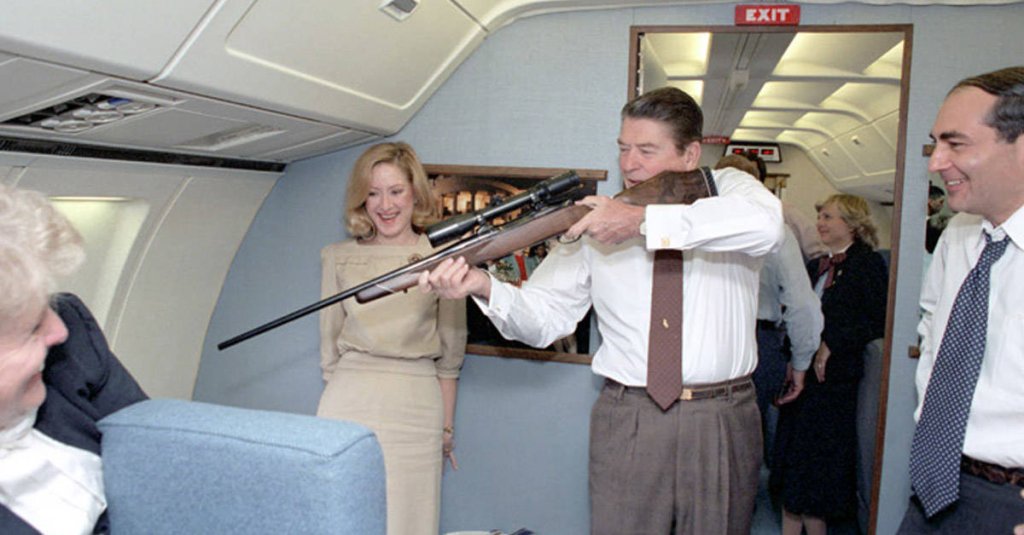
On a hot, sunny day in 1964, President Lyndon Baines Johnson had just delivered a stump speech during his campaign for the presidency. According to White House reporter Frank Cormier’s book “LBJ: The Way He Was,” once on board Air Force One, the president started taking questions about the economy from the press. In the middle of the Q&A session, Johnson took off his pants and shirt, then “shucked off his underwear… standing buck naked and waving his towel for emphasis” as he continued talking.
The bespoke U.S. Air Force Boeing 707, code-named Special Air Mission (SAM) 26000, was the first plane specifically designed to ferry the President of the United States to wherever he was scheduled to go. Most people are aware that any aircraft is designated Air Force One when the President is on board, but SAM 26000 had a particularly long and storied history.
President Johnson was sworn into office aboard SAM 26000.
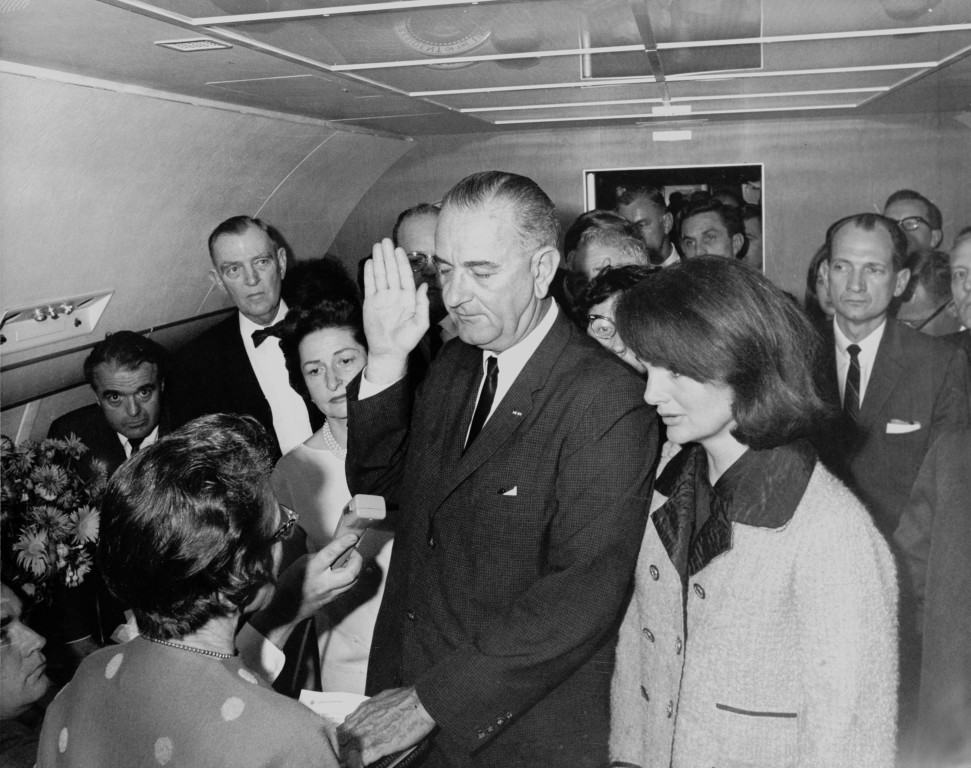
On Nov. 20, 1962, SAM 26000 was introduced to fly the President of the United States, then President John F. Kennedy. Little more than a year later, it would be where his successor, Vice-President Lyndon B. Johnson, was sworn in after Kennedy was assassinated in Dallas, Texas. First Lady Jacqueline Kennedy was at his side, still wearing the dress covered in her husband’s blood. It was the 8th time in American history that the VP had to be sworn in after the death of the sitting president.
It returned President Kennedy’s body to Washington from Dallas.

JFK Burial – Robert McNamara – Fog of War
President Kennedy’s remains were ferried back to the nation’s capital with his widow, Jacqueline Kennedy, accompanying him on Nov. 23, 1963. A portion of the SAM 26000’s wall had to be torn down to make room for the casket. The same plane performed a high-speed flyover over Kennedy’s funeral at Arlington National Cemetery two days later.
It flew Richard Nixon on his historic trip to China.
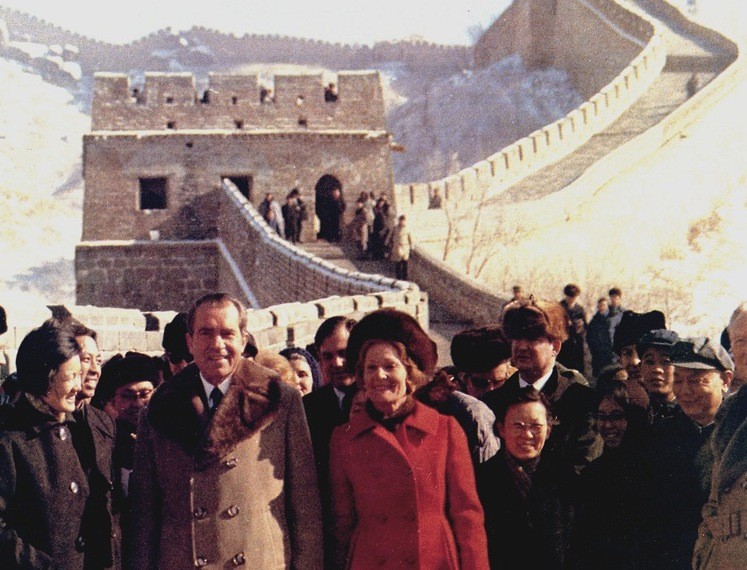
In 1972, President Richard Nixon visited Communist China, a first for the U.S. President, opening official diplomatic relations between the U.S. and China for the first time since the Nationalist regime fled to Taiwan in 1949. The division between Soviet and Chinese Communism, combined with a thaw in U.S.-China relations, led to arms treaties with the Soviet Union.
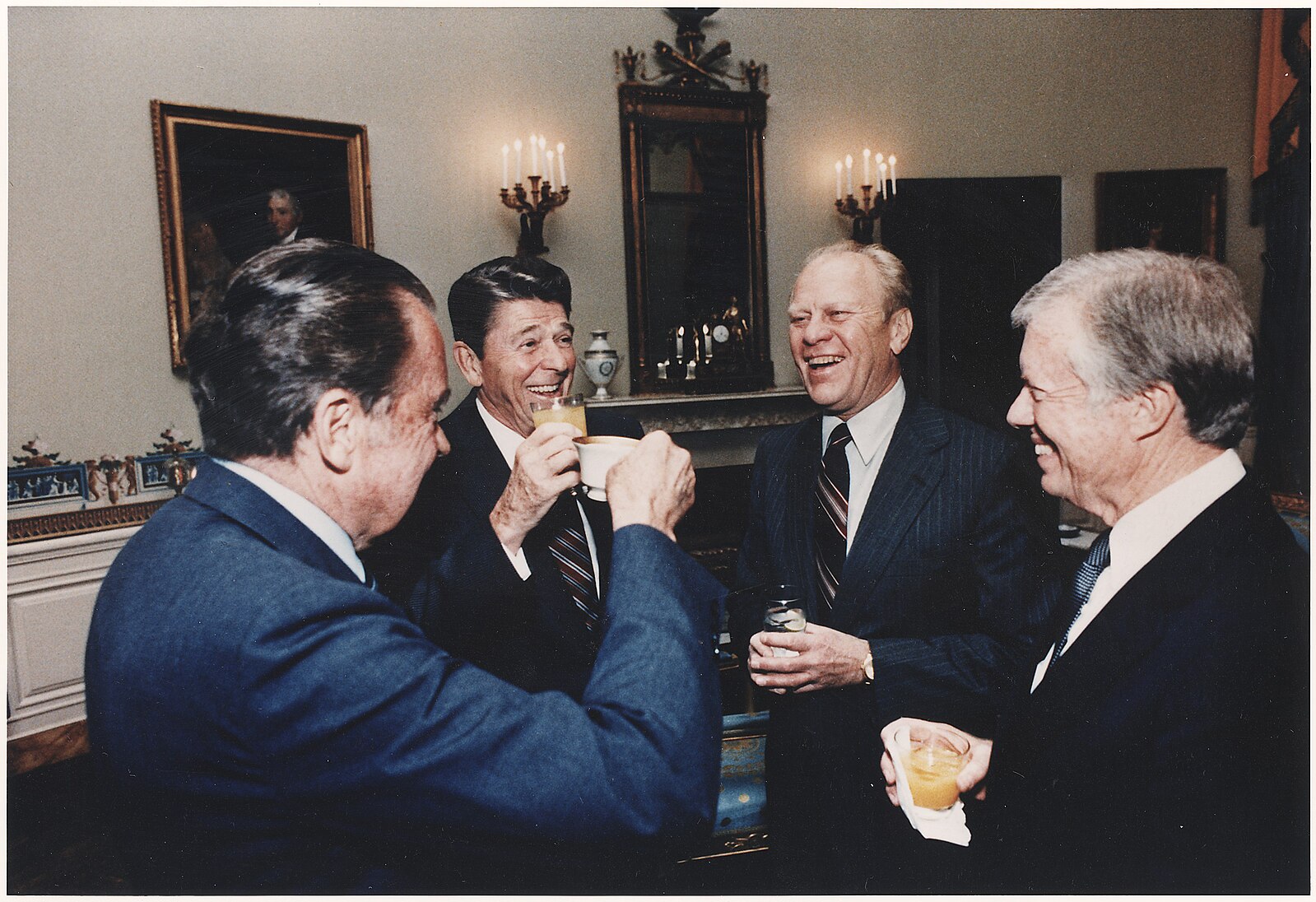
Three former Presidents represented the United States in Egypt via SAM 26000.
In 1981, Egyptian President Anwar Sadat was assassinated during a Victory Day parade. The Egyptian military’s own Lt. Khalid Islambouli, secretly a member of the Islamist extremist group Gama’a Islamiyya (Islamic Group), emptied a full magazine into the Presidential grandstand, killing Sadat and four other dignitaries while wounding 28 others.
Sadat’s agreement to the 1979 Camp David Accords, a peace treaty normalizing relations between Egypt and Israel and brokered by then-U.S. President Jimmy Carter, was the reason behind the killing.

That same year, President Ronald Reagan sent Carter along with former Presidents Gerald Ford and Richard Nixon to represent the United States at Sadat’s funeral. The three were old political rivals, and tensions aboard SAM 26000 ran high, including a dispute over who received the biggest steak at dinner. According to Carter’s 2014 memoir, “A Full Life: Reflections at Ninety,” the tensions were finally broken by none other than Nixon, who “surprisingly eased the tension with courtesy, eloquence, and charm.”
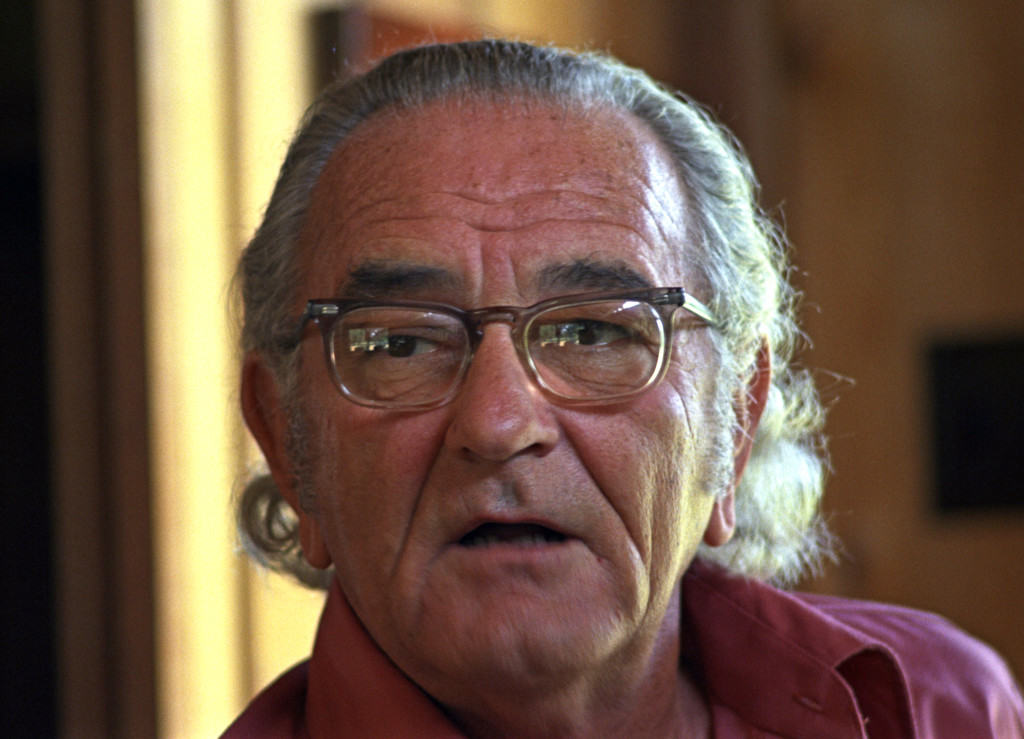
It flew two former presidents to their final resting places.
After President Lyndon B. Johnson died in 1973 and again after Richard Nixon died in 1994, SAM 26000 flew the remains of the former Commanders-in-Chief to their respective homes and final burial sites in Texas and California.
This specific plane is no longer in use as the presidential airplane. The current aircraft are Special Air Missions 28000 and 29000, and are Boeing 747s (more accurately, VC-25s, the military version of the 747). The Presidential 707 (SAM 26000), which saw all this history, can now be seen at the National Museum of the U.S. Air Force on Wright-Patterson Air Force Base in Dayton, Ohio. President Reagan’s 707 (SAM 27000) can be seen at the Air Force One Pavilion at the Reagan Presidential Library and Museum in Simi Valley, California.
Don’t Miss the Best of Mighty History
We Are The Mighty is a celebration of military service, with a mission to entertain, inform, and inspire those who serve and those who support them. We are made by and for current service members, veterans, spouses, family members, and civilians who want to be part of this community. Keep up with the best in military culture and entertainment: subscribe to the We Are The Mighty newsletter.
- Top 5 myths about US Presidents that aren’t true
- The 4 US Presidents with the craziest war stories
- 8 Presidents who actually saw combat in a big way