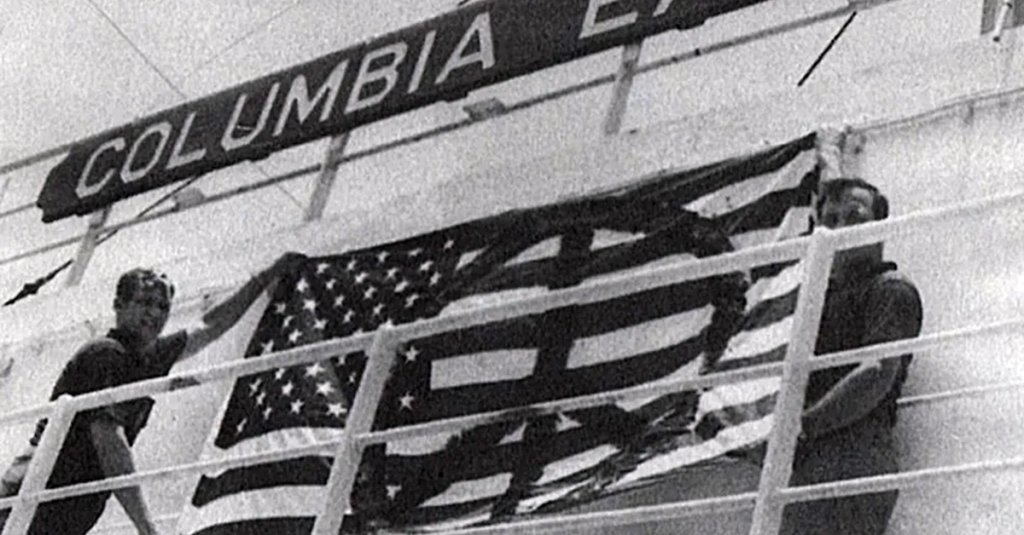
In the last century, only one American-flagged ship has been seized by mutineers. It wasn’t a Navy warship, but a merchant vessel laden with 3,500 bombs, steaming toward Vietnam. In March 1970, two desperate crewmen hijacked the SS Columbia Eagle at gunpoint, cast their shipmates adrift, and diverted the arsenal-laden ship into the heart of the Vietnam War’s chaos, sealing their wildly divergent fates.
Related: The real story of Jane Fonda and the Vietnam vets who hate her
On March 14, 1970, the SS Columbia Eagle was doing what a lot of ships did during the Vietnam War. It was hauling things that explode, burn, or explode and burn. In the hold sat almost 2,000 tons of explosives, a mixed load of 500- and 750-pound preassembled napalm bombs, and on deck were 50 more tons of live detonators, because subtlety wasn’t really the vibe in Vietnam. All of it was bound for U.S. Air Force units in Thailand, who would eventually drop them on Vietnam—except the ship never made it to Thailand.
Somewhere in the Gulf of Siam, the ship’s emergency whistle called for the crew to “abandon ship.” They wasted no time debating whether this was a drill, a prank, or the universe’s least funny joke. Two lifeboats went into the water, and 24 crewmen piled in. Only one boat had a working motor, so they lashed the other one to it and pulled about a mile off, figuring they’d just escaped a very sudden, very painful maritime fireworks show.
Then something weird happened: no more boats joined them. Which meant 15 men were still aboard, including the captain, Donald Swann. An hour later, the castoffs watched smoke belch from the stack as the freighter accelerated away at about 19 knots. That’s when it clicked. The abandon-ship call was a ruse, and their ship was stolen.
The good news was that those 24 men had food, water, and the luck of floating along a busy trade route. They also knew another freighter, the SS Rappahannock, was somewhere behind them. When night fell, they spotted its lights, fired flares, and got picked up.
The bad news was that the Columbia Eagle was now in the hands of two crew members, and the next radio message explained why the ship had suddenly developed a strong interest in not being found.
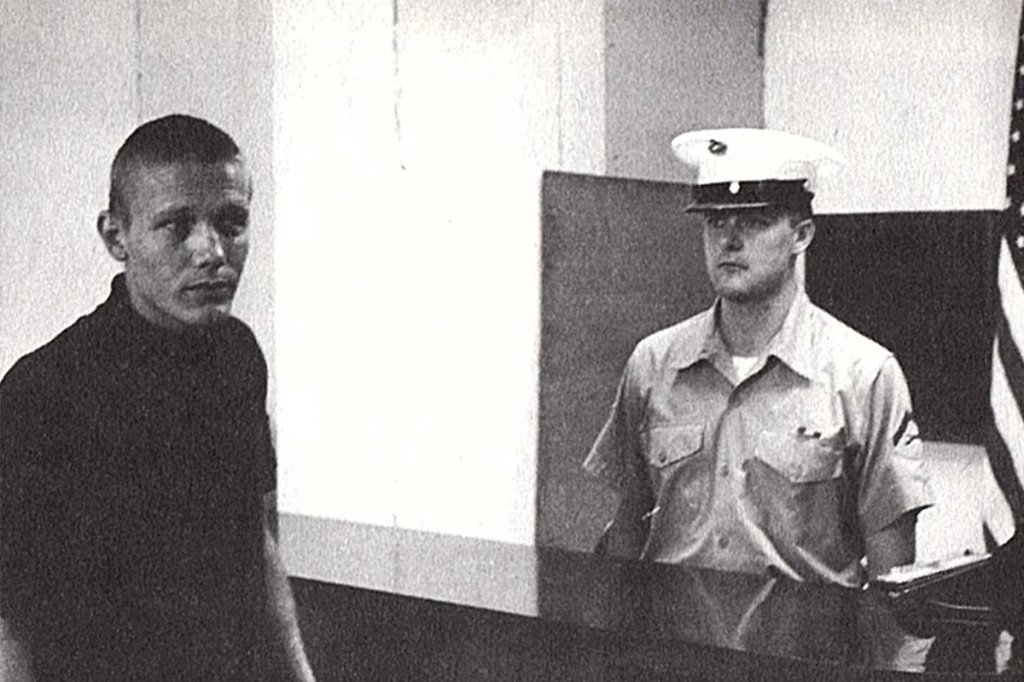
Radio traffic revealed hijackers were Clyde W. McKay and Alvin L. Glatkowski, both sailors from California, and both anti-war activists. They claimed there was a bomb aboard and warned they’d scuttle the ship if Cambodia didn’t seize it. The U.S. Coast Guard cutter Mellon tailed them, but about 24 hours after the takeover, the Columbia Eagle reached Cambodian territorial waters. Its explosive cargo and the thieves who stole it were out of reach.
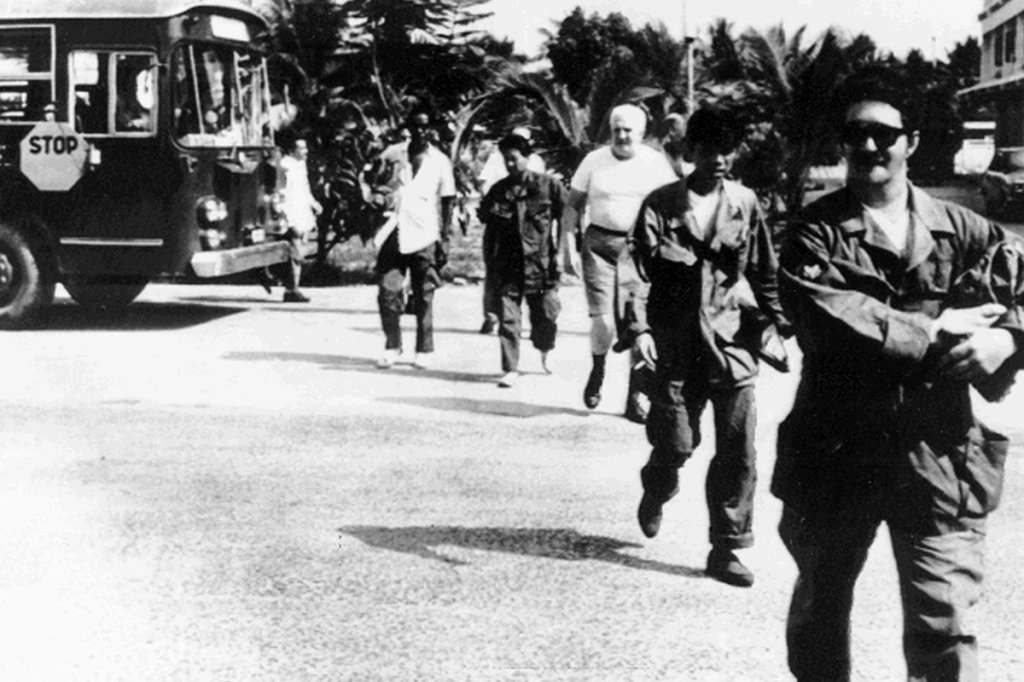
Unfortunately for the hijackers (and Prince Norodom Sihanouk), Cambodia granted political asylum to McKay and Glatkowski right before Prince Norodom Sihanouk was deposed in a coup, and the ship ended up riding at anchor off Sihanoukville in Cambodian custody. The other 13 crewmembers, briefly held hostage by Cambodia (although spending 12 days as a hostage doesn’t feel brief when you’re the hostage), were picked up safely by our usual heroes, the U.S. Coast Guard.
What happened next was a plot twist of historic and catastrophic proportions (for the hijackers). After the coup, the welcome mat disappeared. Glatkowski was eventually released, tried to find a friendly embassy, struck out, and surrendered at the U.S. Embassy in Phnom Penh. He later pleaded guilty and received a sentence that could run up to 10 years—“10 years, served seven” in his telling—and he ultimately served about eight years before mandatory release.

The story ends darker for McKay. According to his official Defense POW/MIA Accounting Agency profile (although the fact that his ending comes from the POW/MIA Accounting Agency tells you everything you really need to know at this point), he escaped Cambodian custody in Phnom Penh on Nov. 4, 1970, and was killed at some point afterward under unclear circumstances. His remains were repatriated to American custody in 1990, and eventually identified in 2003, a bureaucratic epilogue that’s about as unromantic as history gets.