
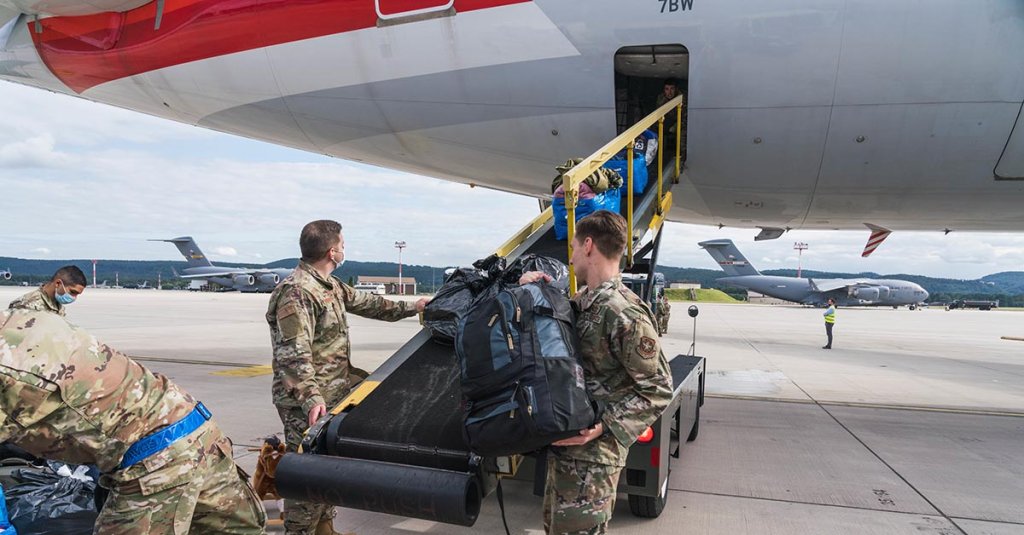
Thanks to a rising demand for vehicles, World War II forced the United States government to press a number of civilian aircraft into military service for use as transports and cargo haulers.
The Civil Reserve Air Fleet consists of hundreds of passenger and freight aircraft flown by companies such as JetBlue, UPS and United Airlines. They are ushered into military service whenever the Department of Defense needs more aircraft to fulfill its various missions.
Related: 10 legendary heroes of the US Air Force
The CRAF officially formed in December 1951 through an agreement between the Department of Defense and the Department of Commerce. The deal streamlined the realignment of civilian aircraft into military service if the military’s own airlift capabilities couldn’t handle the volume of transport operations caused by national emergencies, crises, or war.
If called upon, airlines and freight carriers that have agreed to a CRAF contract provide aircraft and aircrew (i.e., pilots and flight attendants) to the U.S. Transportation Command. It then assigns these airliners to airlift missions. Those include anything from moving troops and gear to evacuating the injured and wounded in “air ambulance” roles.
Which Airlines Are Part of the Civil Reserve Air Fleet?

CRAF – Civil Reserve Air Fleet – THE OTHER HALF OF CONTINGENCY AIRLIFT – CharlieDeanArchives
At the moment, virtually all major American commercial aircraft operators—including international and domestic airlines and parcel delivery companies with aviation divisions — are fully contracted members of the CRAF, making their aircraft available to USTRANSCOM as and when they are needed. This includes scores of short, medium and long-range airliners and cargo aircraft that can have their interiors reconfigured to carry gear or troops.
Long-range, wide-body airliners and cargo transporters, such as the Boeing 747 and 777, Airbus A330, or McDonnell Douglas MD-11, are operated in sizable numbers by carriers like FedEx, American Airlines and Delta Air Lines. These aircraft are slated to augment the Air Force’s C-17 Globemaster III and C-5M Galaxy fleets because of their transoceanic range, according to Civil Reserve Air Fleet guidelines.
Smaller aircraft like the Boeing 737 series and the Airbus A320 series are also listed among the aircraft available to USTRANSCOM in the event of a CRAF activation. As they lack the range and capacity of larger widebody airliners, they are relegated to domestic roles instead.
The CRAF was first activated during the Persian Gulf War in the early 1990s. Those civilian planes transported scores of American troops and tons of military hardware to the Middle East in preparation for Operations Desert Shield and Desert Storm. Airlines like Pan Am, United and TWA provided large passenger aircraft to haul Marines, airmen, soldiers and sailors from the continental United States to Saudi Arabia and other major staging points in advance of the coordinated assault on Iraqi forces.
CRAF Last Activated 5 Years Ago
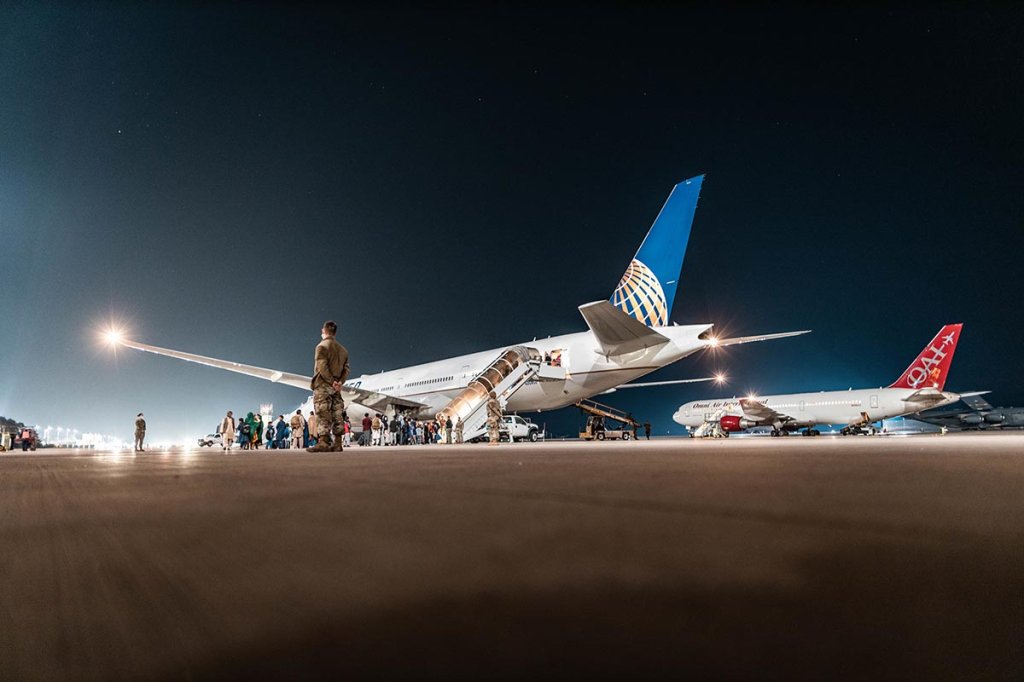
The Civil Reserve Air Fleet also has been activated two other times: for Operation Iraqi Freedom in 2003 and Operation Allies Refuge in Afghanistan in 2021.
In the years since, the U.S. military mostly used its own airlift abilities to fly troops and gear in and out of combat zones. However, should the need arise, the military also tenders contracts to civilian charter companies. They provide aircraft and pilots to ferry personnel and equipment wherever the military requires.
Airlines can decide against joining the CRAF, but many do not. The reason is simple: It makes them more competitive for government transportation contracts. Those include charter flights for military personnel across the world.
Don’t Miss the Best of We Are The Mighty
• The 18 greatest fighter aircraft of all time
• The official unofficial nicknames of 5 modern military aircraft
• Marines remember Operation Iraqi Freedom 20 years later