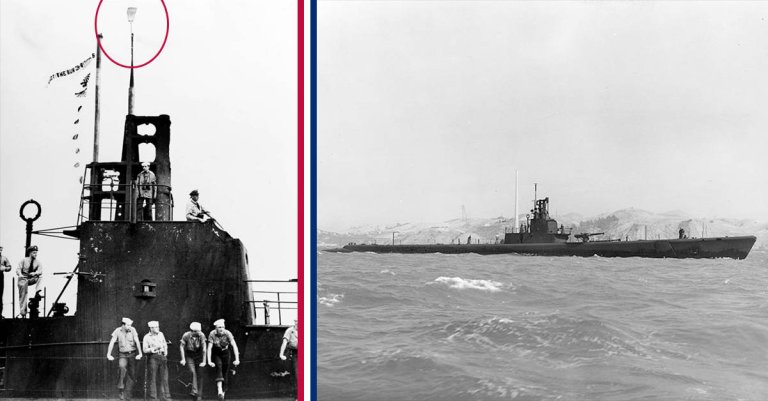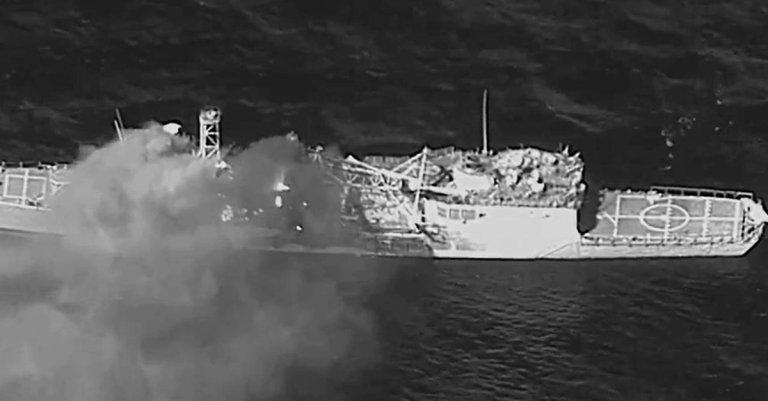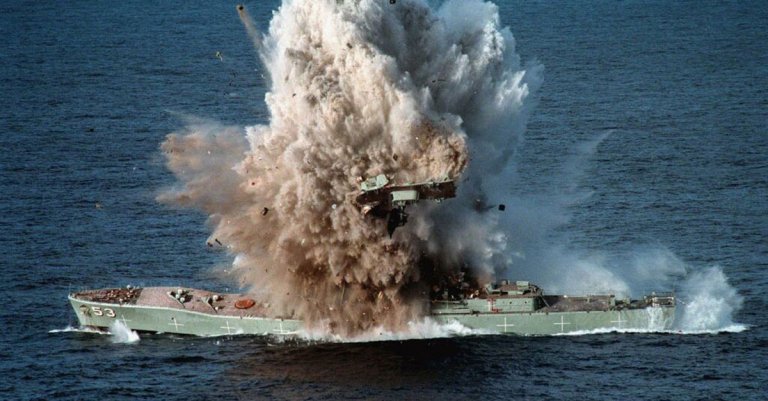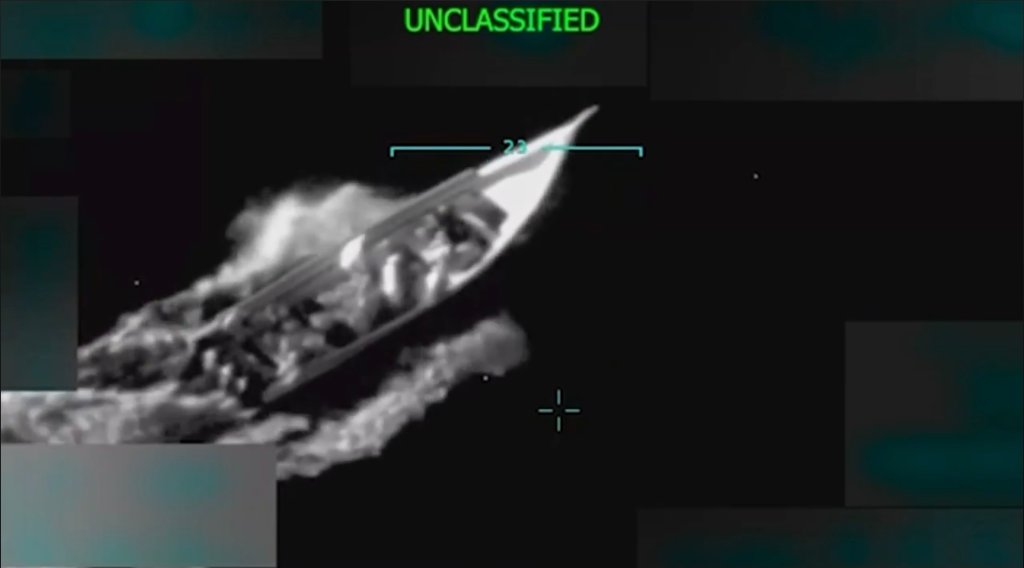
On Sept. 2, 2025, the White House, Department of Defense, and Department of State announced that the U.S. military conducted “a kinetic strike” against an alleged drug boat connected to a South American narco-terrorist organization. The action was part of a counter-drug mission in the Caribbean, which consisted of nine warships, including three destroyers and a nuclear-powered fast-attack submarine.
While a video of the strike was published to social media, the U.S. government has not publicly confirmed the details of the engagement.
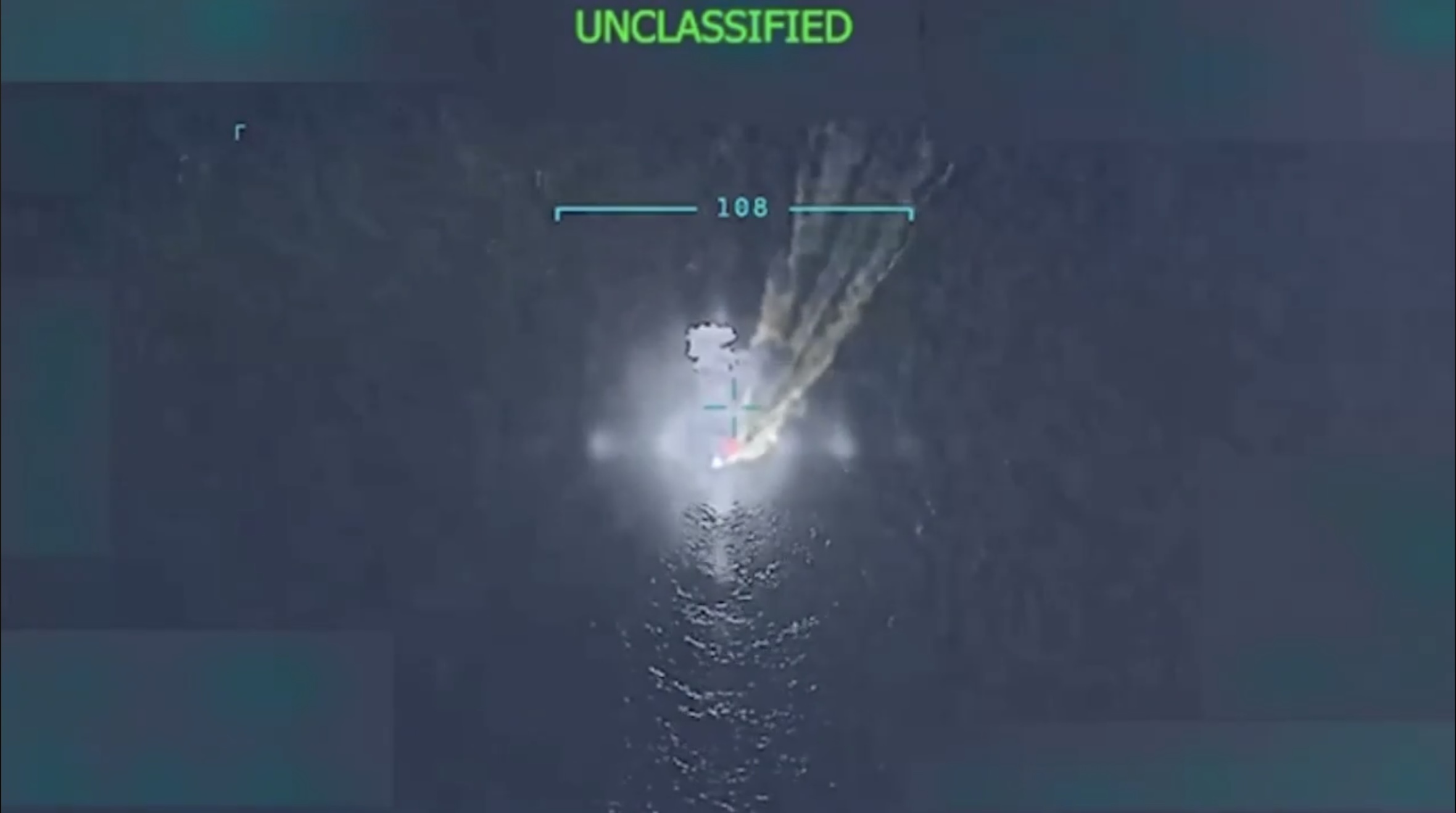
Unconfirmed reports to other media outlets have stated that the strike was conducted by a drone or helicopter, but defense department employees familiar with the weapon system used told We Are The Mighty that, based on the footage, the weapon used was likely an AGM-114 Hellfire missile.
The explosion provided by the Hellfire missile’s nearly seven-mile range and its laser-guided precision ensured that the event resulted in 11 terrorist deaths and zero American casualties. It’s hard to put a price on that kind of outcome. It’s not, however, hard to price out a missile. In FY2021, a single Hellfire missile cost about $150,000–not an insignificant amount of money.
But could it have been done cheaper? Let’s play armchair admiral and explore three more affordable ways that the Navy could destroy a johnboat loaded with terrorists and drugs.
1. 5-inch Mark 45 gun
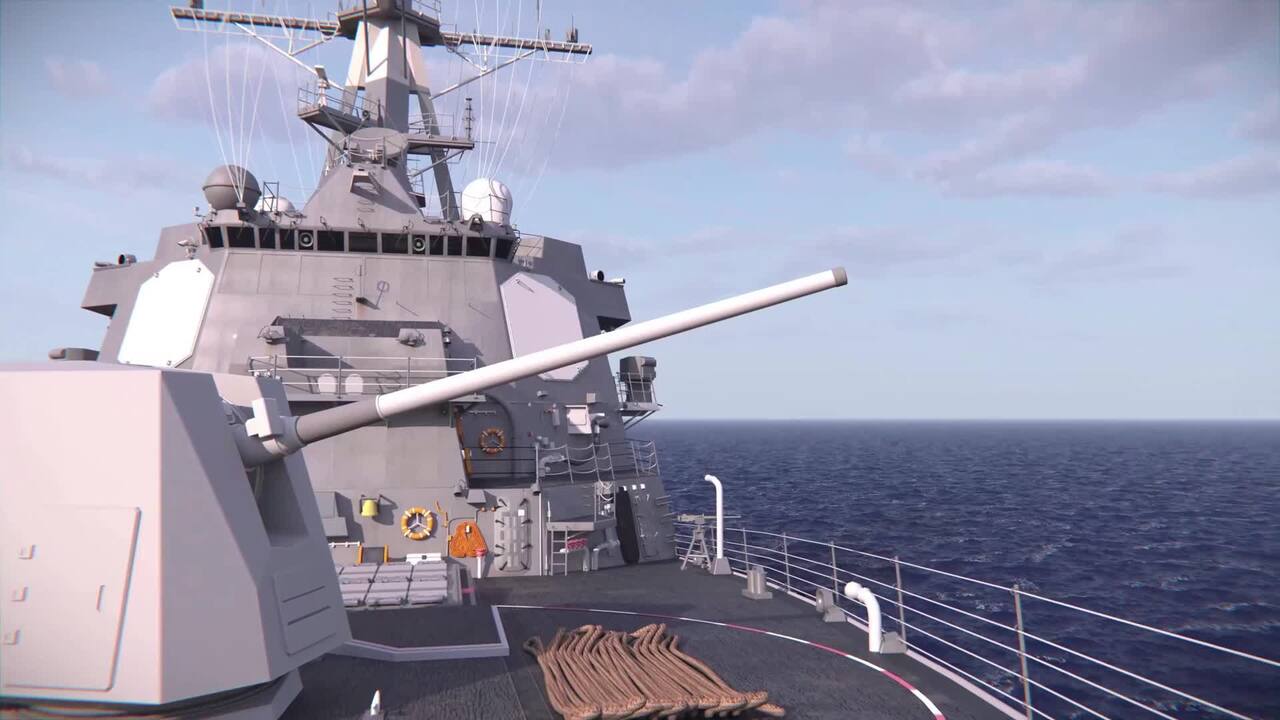
The Navy has largely switched to missiles as its primary weapon systems. However, Arleigh Burke-class destroyers are still armed with guns. On the forward deck is a single 5-inch Mark 45 gun. A multipurpose weapon, the gun can be used for anti-aircraft, naval gunfire support, and anti-ship roles. Notably, the Mark 45 has a range of 13 nautical miles and could engage a surface target from a greater distance than a Hellfire missile.
In addition to conventional shells, the Navy has been testing a Hypervelocity Projectile for the Mark 45. This guided projectile extends the range and increases the accuracy of the Navy’s 5-inch gun. While more expensive than conventional 5-inch shells, the HVP is reported to cost between $75,000-100,000. This would be cheaper than a Hellfire, as long as it hit on the first shot.
2. Mk 5 Mod 0 HELIOS
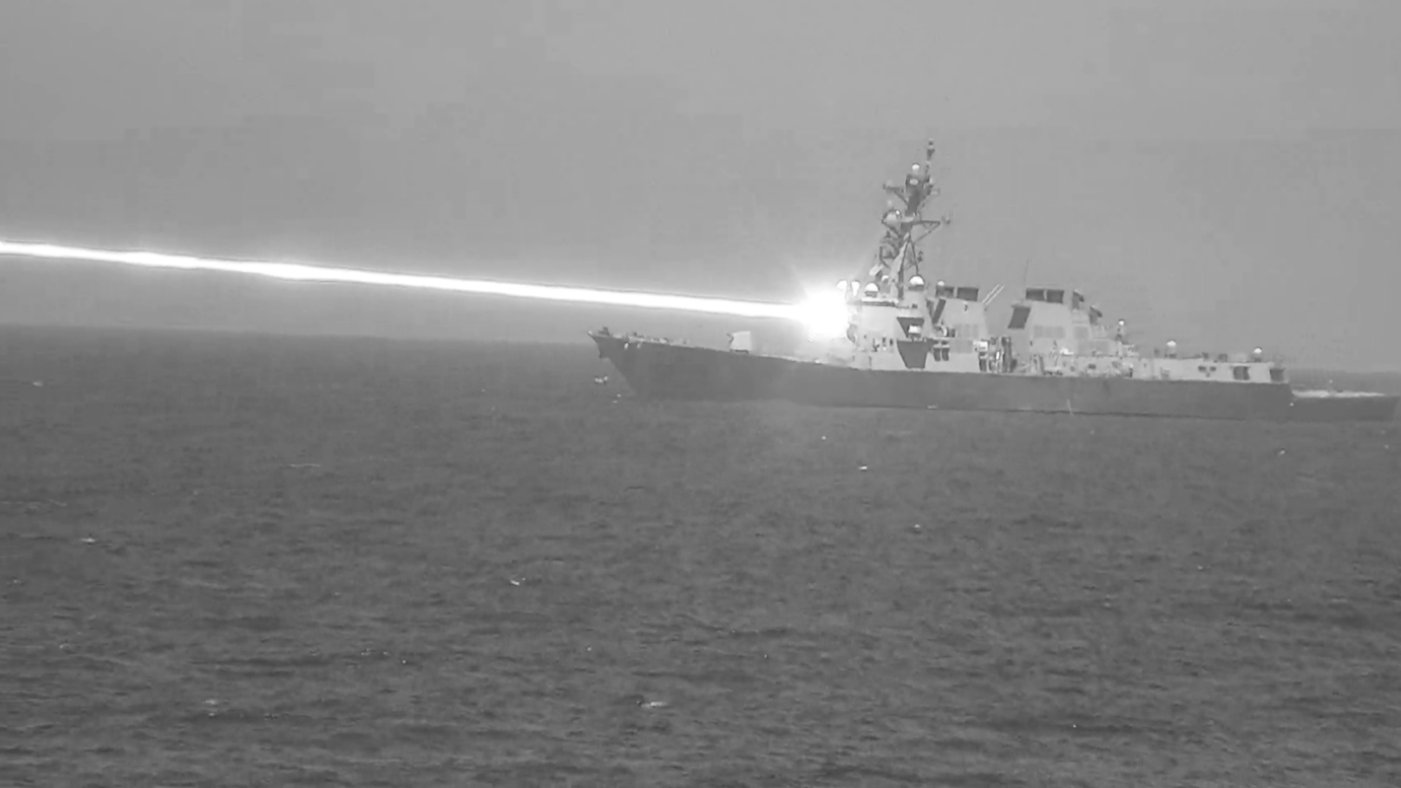
Conventional weapons like missiles and guns can be boring. What if we used the power of the sun? Ok, not quite, but the Navy’s High Energy Laser with Integrated Optical-dazzler and Surveillance was designed to provide ships with a cost-effective weapon system to intercept drones, fast-attack boats, and missiles. The HELIOS (you have to wonder how many meetings it took to shoehorn in that acronym) uses fiber lasers to shoot a 60-150 kW beam that fries its target or sets it on fire with directed energy.
In 2018, Lockheed Martin was awarded a $150 million contract for two HELIOS units, one of which was installed on a destroyer. Additional funds have been allocated to continue the development of the weapon. However, looking at the cost of a single shot, the HELIOS is actually very economical. Drawing from the ship’s power supply, the weapon is limited only by power and cooling.
3. Marines
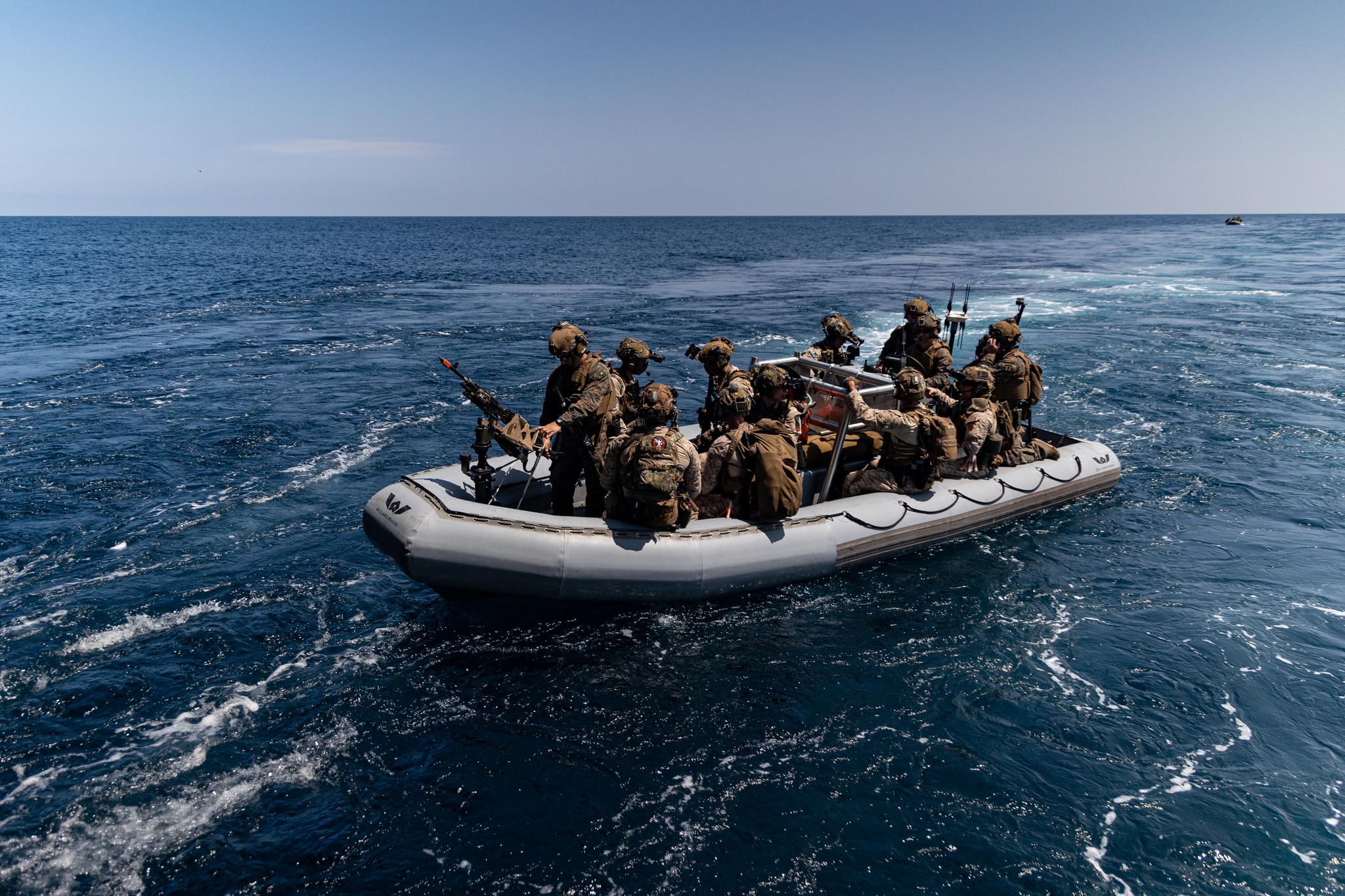
To paraphrase Cpl. Ray Person in “Generation Kill,” the Marines are America’s pit bull. They’re mistreated, starved, and once in a while, they’re let out to attack somebody. There’s no greater friend and no worse enemy than a U.S. Marine. While it would put American troops in the most direct danger, unleashing underway Marines who have been cooped up on a Navy ship is a great way to ensure a target’s destruction.
Part of the U.S. Navy deployment to the Caribbean is the 22nd Marine Expeditionary Unit aboard the USS Iwo Jima. Give the Marines their M27s, tell them whichever boat smokes the most terrorists gets a fresh box of crayons, lower the well deck ramp, and let loose the Devil Dogs of War. A thousand rounds of 5.56mm M855A1: $680. Crayola Ultimate Crayon Box Collection, 152 Count: $25. Seeing the smiles on the faces of underway Marines on their way to attack someone: Priceless.