
Throughout history, there have been moments when sports represented something far greater than athletic competition.
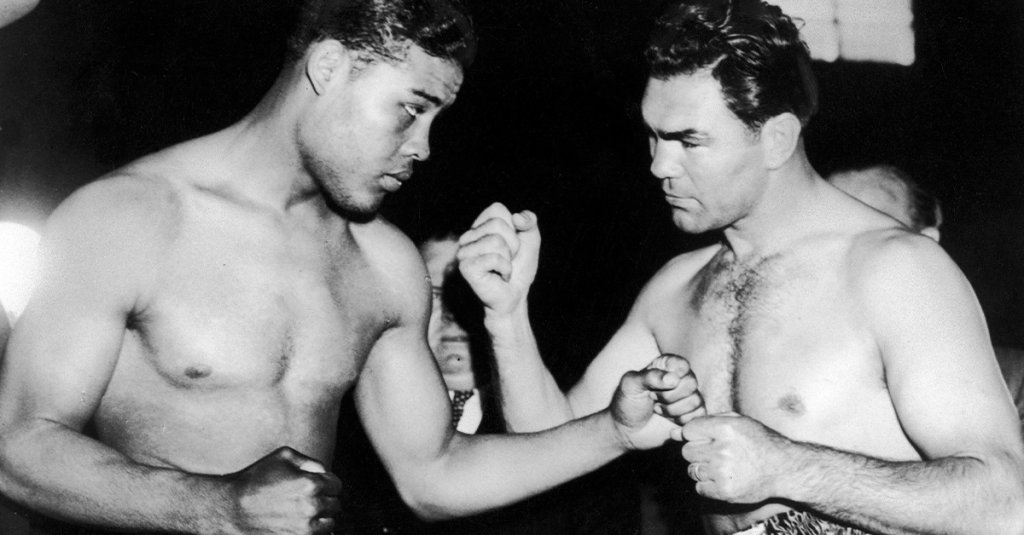
As the world drifted toward World War II, the two heavyweight boxing matches between Joe Louis and Max Schmeling became symbolic clashes between democracy and fascism, with the African American Louis avenging his earlier defeat to the German Schmeling.
Also Read: This No. 1 overall draft pick became the NFL’s MVP while in the Army
Their legendary rivalry is the focus of “The Clash of Nations: Joe Louis vs. Max Schmeling,” premiering on the History Channel on Friday, June 19, 2026, at 8 p.m. ET/PT. The documentary, with NBA legend LeBron James as an executive producer, will be available for streaming the following day.
2 Vastly Different Backgrounds
Louis’ ascent to the highest level of professional boxing, the world heavyweight championship, began in Detroit during his youth. Born Joseph Louis Barrow in Alabama in 1914, the Louis family moved to the Motor City in 1926, seeking to escape racial violence and intimidation from the Ku Klux Klan.
Louis’ 1936 fight against Schmeling marked his emergence from the segregated Jim Crow South onto the international stage. A unifying figure in Depression-era America, “The Brown Bomber” garnered support from Americans across racial, religious, and social lines.
The man who stood across the ring from Louis in 1936 and 1938, Schmeling, became one of Germany’s most high-profile athletes and later a reluctant symbol of Nazi propaganda. Born in Klein Luckow in 1905, Schmeling’s professional boxing career began in 1924 in his home country. Before facing Louis, he fought major bouts in the United States against opponents such as Jack Sharkey, Young Stribling, Mickey Walker, and Max Baer.
With the rise of Adolf Hitler in the 1930s, Schmeling became an international extension of Nazi Germany’s image, including its antisemitic ideology. Despite numerous facets of his personal and professional life that contradicted this portrayal, including his willingness to work with Joe Jacobs, a Jewish-American promoter, many American fans viewed Schmeling negatively during the late 1930s. This growing distaste for both Schmeling and Nazism contributed to Louis’ surging popularity leading to the bouts, despite the institutional racism that persisted throughout the United States.
Their First Meeting
Heading into their June 19, 1936, fight, Louis—the younger man by nearly nine years—was the clear betting favorite.
Some observers saw Schmeling, a former European and world champion, as a big name to add to the American’s growing resume of victories on his way to a title. Despite being the No. 2 contender for the world heavyweight championship behind Louis, many boxing insiders believed Schmeling was past his prime.
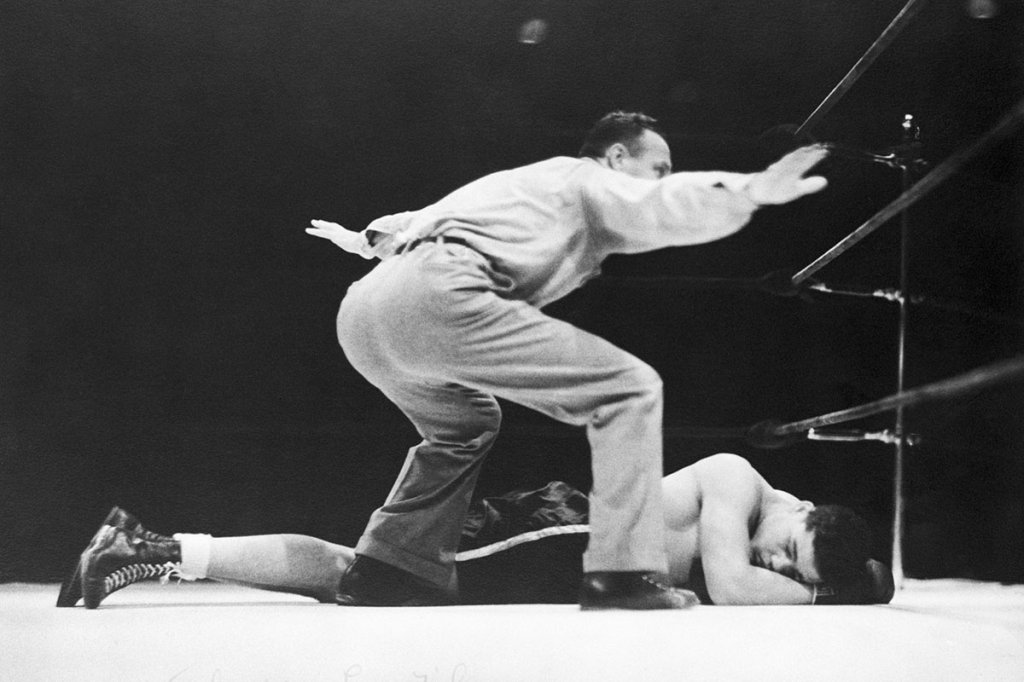
That night at Yankee Stadium in the Bronx, Schmeling put the naysayers to rest. After three rounds of competitive boxing, the German’s counter right hand sent Louis crashing to the canvas. Despite rising to his feet, Louis appeared dazed for the next eight rounds. Schmeling battered Louis, and in the 12th round of a scheduled 15-round fight, he landed another big, right-handed punch to the jaw that knocked Louis down again.
This time, the referee counted “The Brown Bomber” out on the canvas.
The knockout loss marked Louis’ first career defeat, but it did not serve as a major career setback. He went on to string together seven victories before getting a shot at James J. Braddock’s world heavyweight crown on June 22, 1937. Louis won and successfully defended the world heavyweight championship three times before he fought Schmeling again.
The Rematch Was a Mismatch
The Nazis celebrated Schmeling’s upset victory in 1936 as proof of the Aryan race’s superiority. Schmeling, though, angered high-ranking Nazi officials with his reluctance to fully embrace their ideology while refusing to distance himself from Jews in the boxing business like Jacobs.
Schmeling entered the rematch with Louis on June 22, 1938, at Yankee Stadium on a three-fight winning streak. The German returned to New York with a publicist for the Nazi Party, who confidently stated that a Black man could not defeat their fighter. Some reports claimed winnings from the fight would support the German war effort. Angry picketers and protesters met Schmeling and his entourage during his stay in New York.
Inspired by a pep talk with President Franklin Delano Roosevelt—who told him, “Joe, we need muscles like yours to beat Germany”—Louis flipped the script on Schmeling in front of an announced crowd of more than 70,000 fans. This fight only lasted 2 minutes, 4 seconds as Louis unleashed a barrage of punches to Schmeling’s head and body to the delight of the boisterous, overwhelmingly white crowd. Louis knocked down Schmeling three times before the German’s trainer threw in the towel.
The defeat served as a setback for the sports-obsessed Nazi leaders, who viewed Schmeling’s loss to a Black American as an embarrassment to the party’s propaganda machine. While Schmeling remained popular among the German people, there was a noticeable shift by state media to avoid reporting on the national hero.
Schmeling further defied the Nazi regime by sheltering two Jewish teenage brothers in his Berlin hotel room as Nazi mobs targeted Jewish homes, synagogues, and businesses during Kristallnacht from November 9-10, 1938. Details of the incident did not become widely known until after the war and shaped future views of the man.
Serving Their Countries
On the other hand, Louis remained a national hero in the United States as his continued success kept him in the spotlight. He initially retired from boxing in 1949—ending a nearly 12-year run as heavyweight champion, which remains a record—but later returned to the ring and lost to Ezzard Charles on September 27, 1950.
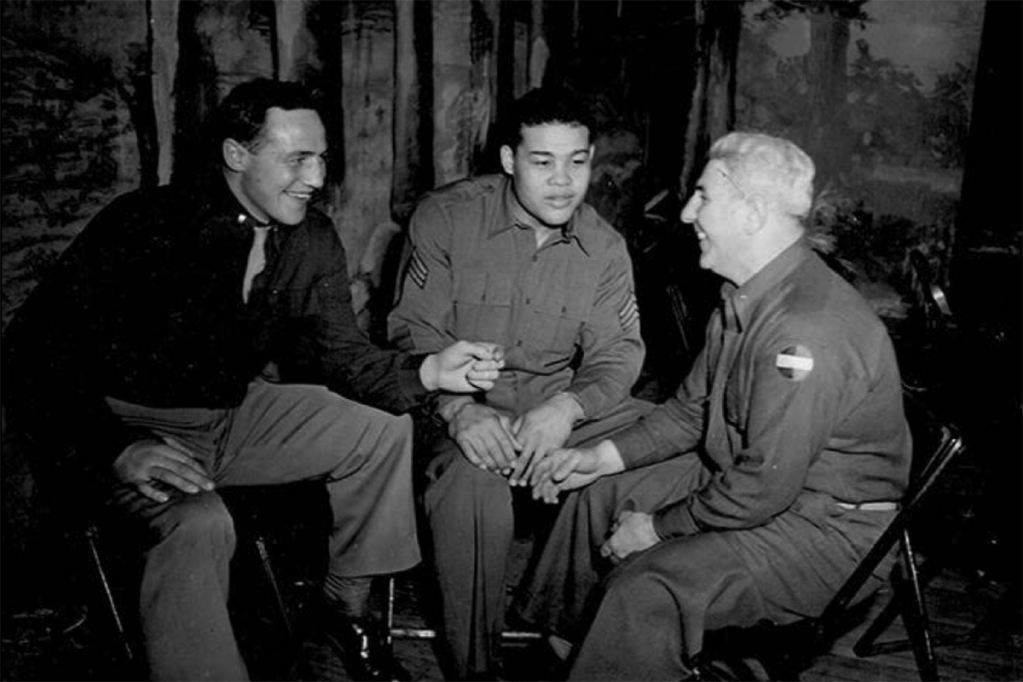
Louis and Schmeling both served their respective country’s militaries during World War II, with Louis enlisting in the U.S. Army in 1942 and Schmeling serving as a paratrooper in the Luftwaffe.
Military officials considered Louis too important to morale and the war effort to risk in combat, but he nevertheless played a major role in supporting American troops and raising military funds through exhibition bouts and celebrity tours. Fellow soldier and future boxing legend Sugar Ray Robinson accompanied Louis on many of these wartime appearances.
For his wartime service, Louis received the prestigious Legion of Merit. Part of his citation read, “Staff Sergeant Barrow has entertained two million soldiers by frequent boxing exhibitions which entailed considerable risk to his boxing future as the champion heavyweight of the world, but he willingly volunteered such action rather than disappoint the soldiers who desired to see him in the ring.”
Schmeling served in the German military from 1939 to 1941, with his service ending when he was wounded in the right knee by shrapnel from mortar fire while fighting in the Battle of Crete. Deemed medically unfit after the May 1941 invasion of the Greek island, he returned to civilian life in Germany.
Friends to the End
After the war, Schmeling briefly returned to boxing before retiring in 1948.
Louis fought professionally until 1951, when he lost his final bout to Rocky Marciano on October 26. After his boxing career, Louis found himself in debt after losing much of his boxing winnings to handlers. A massive IRS tax bill further complicated matters, contributing to his financial decline later in life. Louis was forced to rely on celebrity appearances and the financial generosity of friends, including Schmeling, later in life.
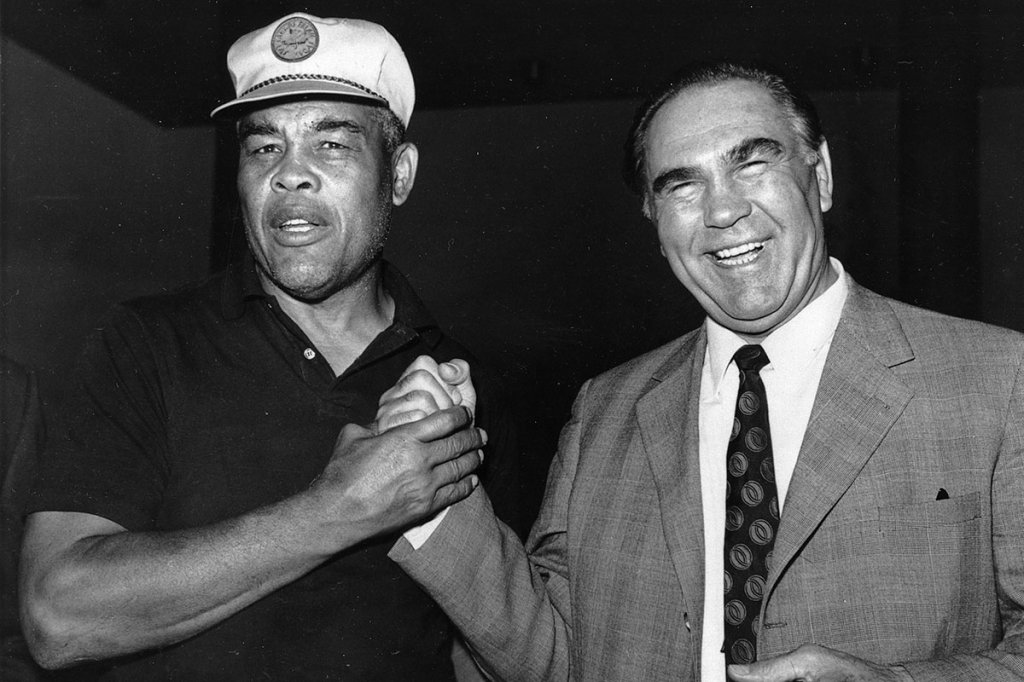
The friendship between Louis and Schmeling became one of the most remarkable and symbolic relationships in sports history, because it defied the political, racial, and national divisions that defined their rivalry. Over time, the two former rivals developed a close friendship built on mutual respect and admiration. That bond endured until Louis’ death on April 12, 1981.
With Schmeling serving as a pallbearer, Louis was buried with full military honors at Arlington National Cemetery. Schmeling died on February 2, 2005, at the age of 99, closing the chapter on one of boxing’s most historically significant careers.
“The Clash of Nations: Joe Louis vs. Max Schmeling” will revisit their remarkable rivalry when it premieres on the History Channel on June 19, 2026.
Don’t Miss the Best of We Are The Mighty
• Why the service academies deserve their own spot in March Madness
• How a Navy veteran basically invented the sports drink industry
• The American general most respected by the Nazis might surprise you
Featured
Loading comments…
Comments couldn’t be loaded. Please refresh the page.