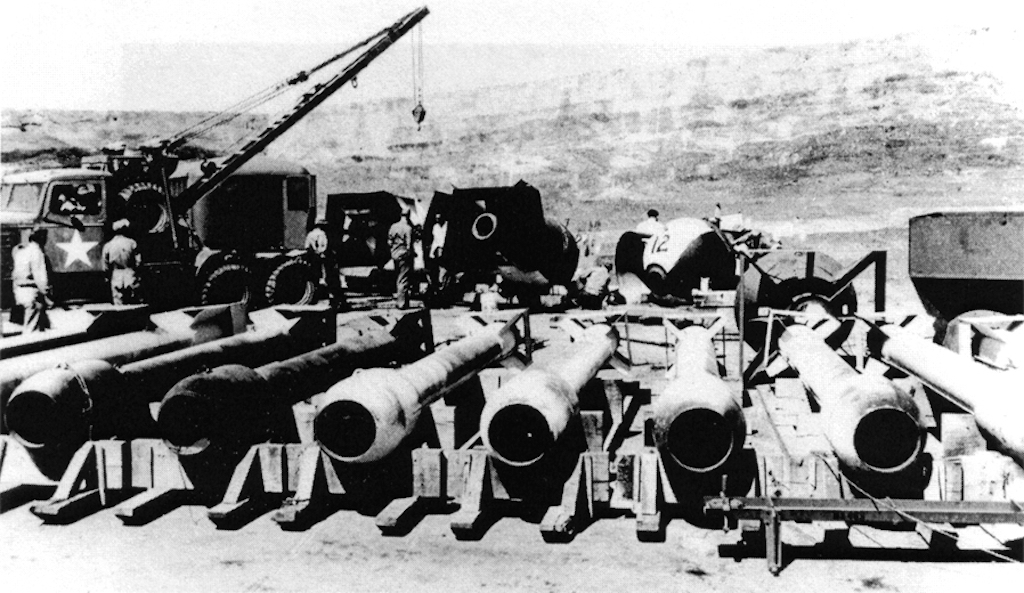
The United States paid massive costs to build the first atomic bombs in the Manhattan Project. The whole thing started as a response to Nazi Germany’s efforts to build atomic weapons. We researched, invested in, and built the bombs to prevent an existential threat from a fascist regime.
Of course, Germany ended up not having the resources to develop the bomb. And it dropped out of the war before the bombs fell. And so President Harry S. Truman decided to use the weapons to avoid an invasion of Japan. Historians argue over how influential the bombs were in Japan’s decision to surrender.
But what did the U.S. actually pay to develop this weapon in terms of actual dollars spent? How much did the two atomic bombs cost when compared to, say, a planeload of conventional bombs?
A lot. It cost a lot. It cost about 20 metric tons of $100 bills, or $2 billion.
Also Read: 7 things to know about surviving an atomic bomb blast

The Manhattan Project | WWII In 2
The insanely expensive start of nuclear weapons: The Silver Program
Scientists only knew about isotopes for about 30 years and neutrons for 10 years before President Franklin D. Roosevelt greenlit the Manhattan Project in January 1942. It was only in 1939, less than three years before the start of the Manhattan Project, that German scientists discovered uranium fission.
In 1942, scientists and engineers were staring down a long and tough road. They needed to prove several of their hypotheses, and they required uranium and plutonium to support their theories and build the eventual weapons.
That started with electromagnets, typically made with copper. But soldiers needed their ammunition wrapped in copper, so the government decided to use silver instead. To create the wire coil for the magnets and for other tools and instruments, the U.S. government transferred 14,000 tons of silver to the Manhattan Engineering District.
This transfer was called the Silver Program, and it was just the start.
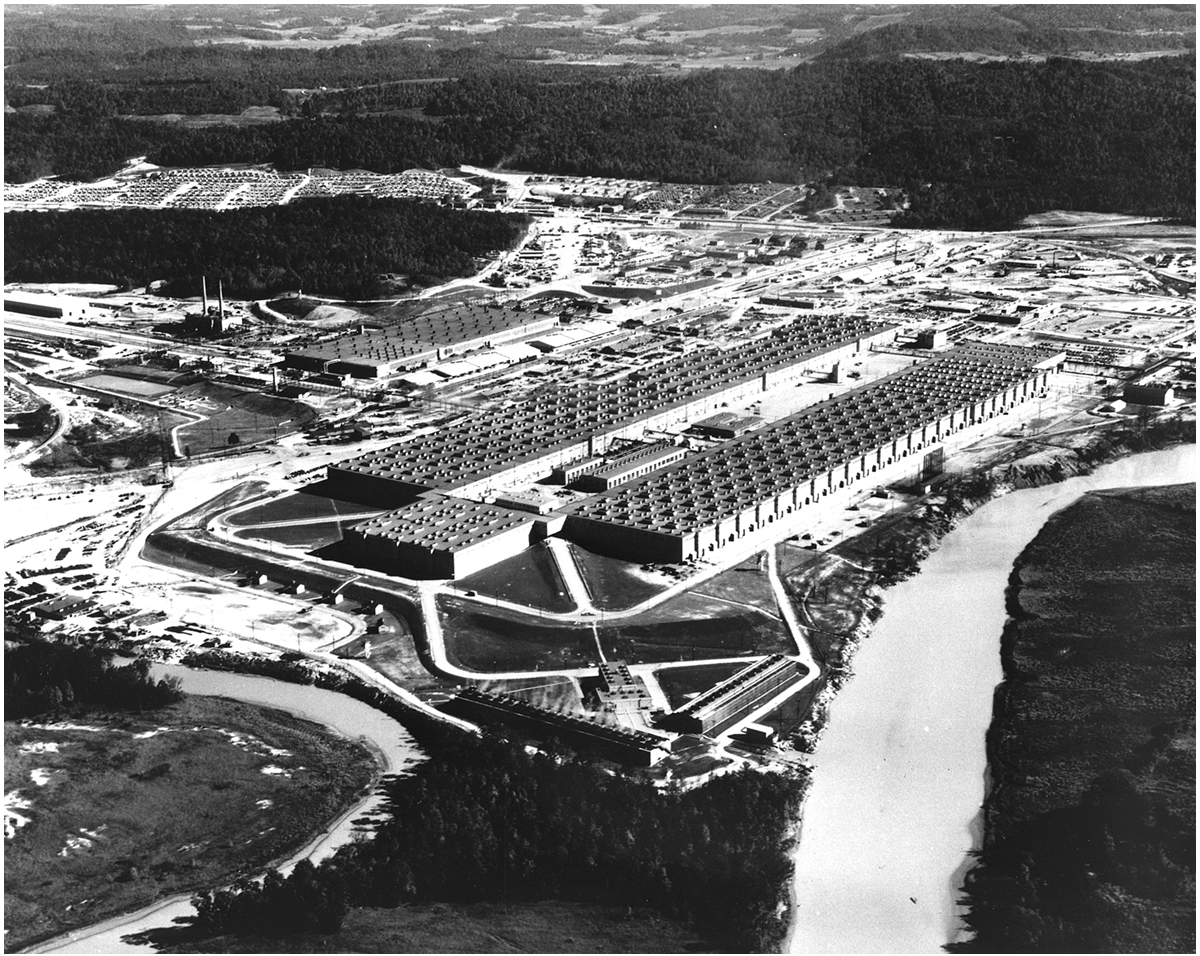
Workers for the Manhattan Project
Another major line item of the effort was the personnel needed. Eventually, at least 125,000 people worked directly for the Manhattan Engineering District and the Manhattan Project. But the military couldn’t risk such a large project having a large and obvious footprint. And it knew that it couldn’t effectively keep that many people quiet.
So it didn’t tell many of the workers what they were working on. Instead, leaders split development of key components across multiple new sites, pre-existing factories, and subcontractors.
This allowed the Manhattan Engineering District to keep many of the workers in the dark as to what they were working on. It drove up the cost and complexity of the atomic bombs, but the decision greatly assisted in maintaining secrecy.
Building the sites and the atomic bomb
As the need for sites and personnel ballooned, the Army Corps of Engineers was called in to prepare sites and construct the production facilities. Sixty percent of the 1943 budget for the program, $54 million, went directly to the Corps of Engineers for the program.
Three major research sites were built: Oak Ridge National Laboratory in Tennessee, the Hanford Site in Washington, and Los Alamos National Laboratory in New Mexico.
At the Los Alamos, New Mexico, facility, the teams tested their first nuclear device. In the pre-dawn hours of July 16, 1945, the Alamogordo Bombing Facility lit up like the sun had suddenly come up early.
The Atomic Age had begun. Stockpiled supplies of uranium and plutonium were quickly assembled to create two more devices, and Truman approved their use against the Empire of Japan. But the atomic bombs had one more cost to exact. Over 270,000 people died in Hiroshima and Nagasaki, including those who perished from cancers caused by the weapons.