By the summer of 1945, World War II had reached its most dangerous crossroads.
Nazi Germany had surrendered in May, but the war in the Pacific continued with relentless intensity. American forces had fought their way island by island toward Japan, encountering fierce resistance at Iwo Jima and Okinawa that stunned even veteran commanders. Japanese military doctrine emphasized surrender as dishonor, and civilians were being prepared to resist invasion. American planners feared that Operation Downfall, the planned invasion of the Japanese home islands, would result in casualties on a scale unseen in modern warfare.
Related: ‘Miss Atomic Bomb’ and America’s obsession with the Atomic Age
In this atmosphere of urgency, fear, and exhaustion, the United States possessed a weapon born not from traditional military innovation, but from theoretical physics. The atomic bomb promised to compress years of warfare into a single, decisive moment. Its use would bring the Pacific War to a sudden close, but it would also introduce humanity to a level of destruction that fundamentally altered how war, science, and morality would be understood forever.
At the same time, far from the skies over Japan, a naval vessel quietly fulfilled a mission critical to the atomic program. The fate of the USS Indianapolis became one of the most tragic and least understood chapters of the war, revealing the hidden human cost behind victory.
The Manhattan Project and the Birth of Atomic Power
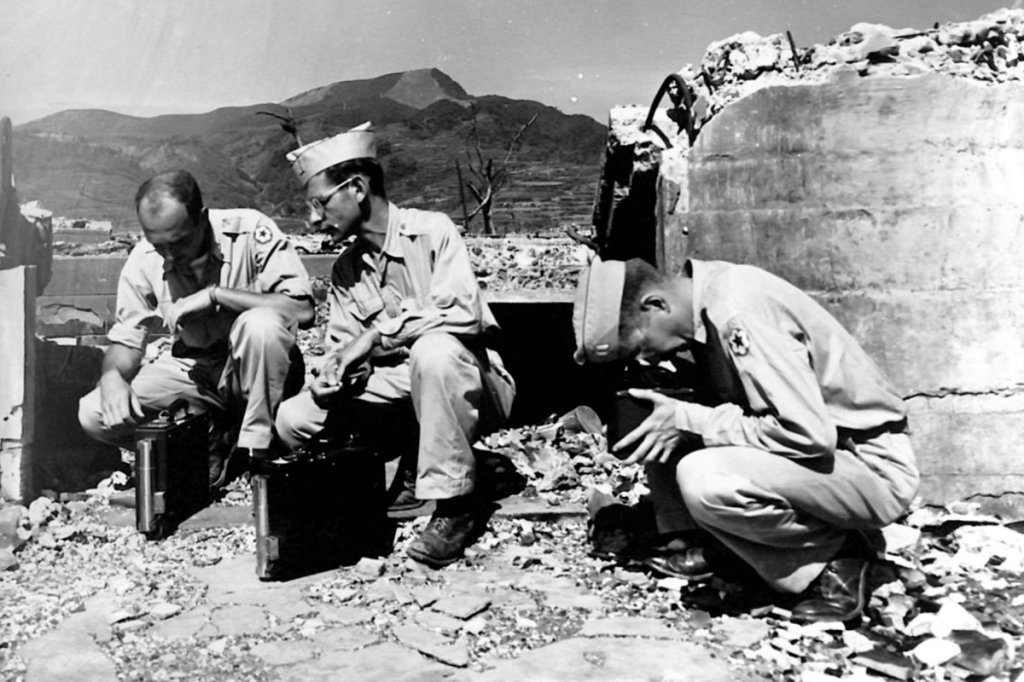
The atomic bomb emerged from the Manhattan Project, one of the most ambitious and secret scientific endeavors in history. Initiated in 1942, the project united more than 130,000 people across laboratories, factories, and military installations in the United States. At its core was the race to weaponize nuclear fission before America’s enemies could do the same.
Nuclear fission occurs when the nucleus of a heavy atom splits after a neutron strikes it, releasing enormous amounts of energy along with additional neutrons. If enough fissile material is assembled rapidly enough, these neutrons trigger a cascading chain reaction that releases energy almost instantaneously. Achieving this required not only theoretical brilliance but unprecedented industrial capacity.
Two materials proved suitable for such a reaction: uranium-235 and plutonium-239. Each posed unique challenges, and their differences led scientists to pursue two entirely separate bomb designs. The success of these designs depended on mastering physics that, only a decade earlier, had existed solely on chalkboards.
The Uranium Gun-Type Weapon: Little Boy
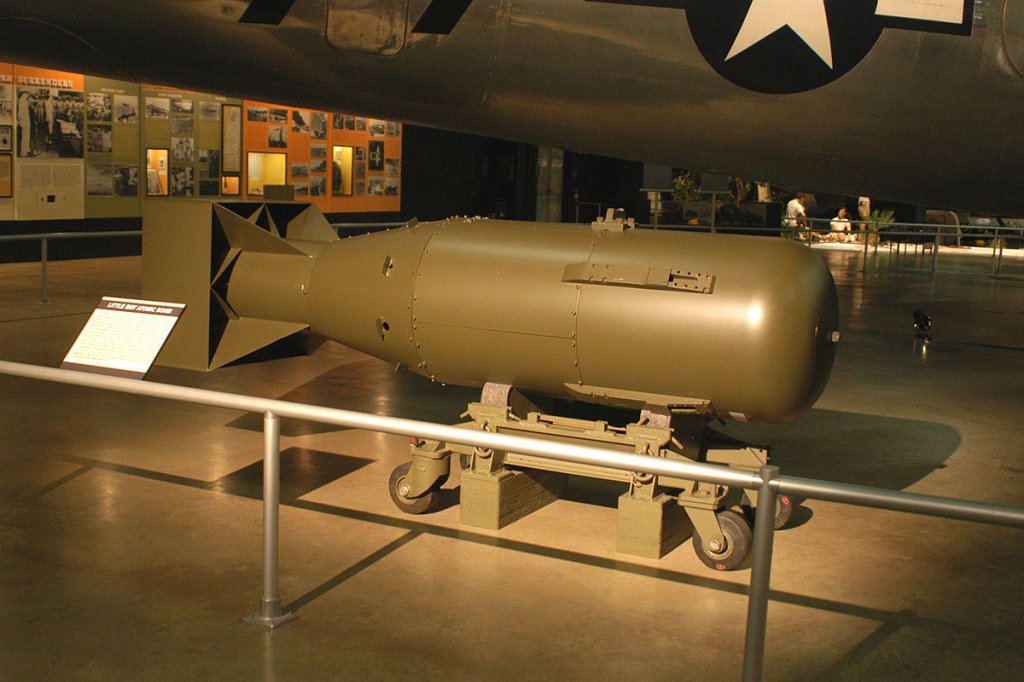
The uranium bomb, known as Little Boy, relied on uranium 235, a rare isotope that makes up less than 1% of naturally occurring uranium. Separating U-235 from the more common U-238 required enormous enrichment facilities, which were built at Oak Ridge, Tennessee. Producing enough enriched uranium for a weapon pushed American industrial capacity to its limits.
Because uranium-235 behaves predictably under fission, scientists chose a gun-type design. Inside Little Boy, two subcritical pieces of uranium were kept separate. When detonated, a conventional explosive charge fired one piece into the other, instantly creating a supercritical mass. The resulting chain reaction produced an explosion equivalent to roughly 15,000 tons of TNT.
The design was considered so reliable that it was never tested before combat use. This decision reflected both scientific confidence and wartime urgency. Little Boy was large, weighing nearly five tons, and required specially modified aircraft to deliver it.
Despite its relative simplicity, the bomb represented a revolutionary leap in destructive capability. It turned theoretical physics into an instrument of war and demonstrated that a single aircraft could destroy an entire city.
The Plutonium Implosion Weapon: Fat Man
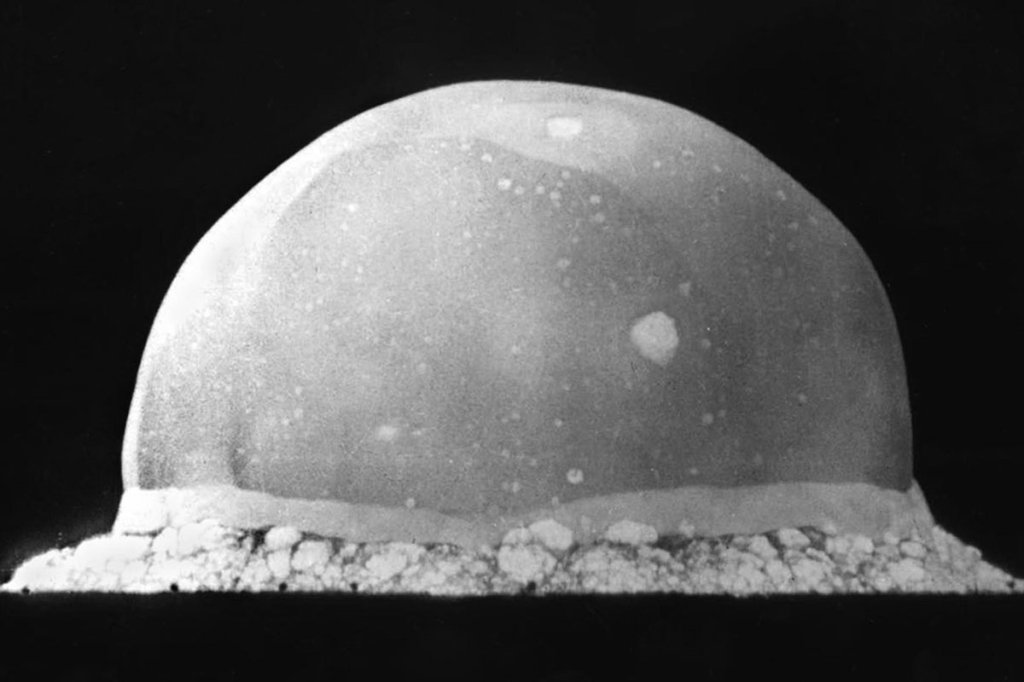
The plutonium bomb, nicknamed Fat Man, represented a far greater scientific challenge.
Plutonium-239, produced in nuclear reactors at Hanford, Washington, exhibited characteristics that made a gun-type design impossible. Its tendency toward spontaneous neutron emission risked a premature and inefficient explosion.
To overcome this, scientists developed an implosion design that required extraordinary precision. Fat Man used a spherical plutonium core surrounded by carefully shaped, high-explosive charges called explosive lenses. These charges had to detonate simultaneously, compressing the plutonium inward evenly to achieve supercriticality.
The complexity of this design led to the first nuclear test in history, conducted on July 16, 1945, near Alamogordo, New Mexico. The Trinity test confirmed that the implosion mechanism worked, unleashing a blast that stunned observers and ushered in the atomic age.
Fat Man was heavier and more technically sophisticated than Little Boy, but it was also more efficient, converting more nuclear material into explosive force.
The 509th Composite Group and the Atomic Strike Force
Delivering atomic weapons required absolute precision and secrecy. The United States Army Air Forces formed the 509th Composite Group specifically for this mission. The unit operated independently, trained separately, and was shielded from outside scrutiny.
Based on the island of Tinian, the 509th flew specially modified B-29 Superfortress bombers. These aircraft featured reinforced bomb bays, upgraded engines, and altered defensive systems. Every crew member was carefully selected and trained under conditions of intense secrecy.
Col. Paul Tibbets commanded the group. An experienced and respected pilot, Tibbets personally selected crews and oversaw modifications. The men of the 509th knew their mission would end the war, but few understood how permanently it would change history.
Hiroshima and the First Atomic Strike
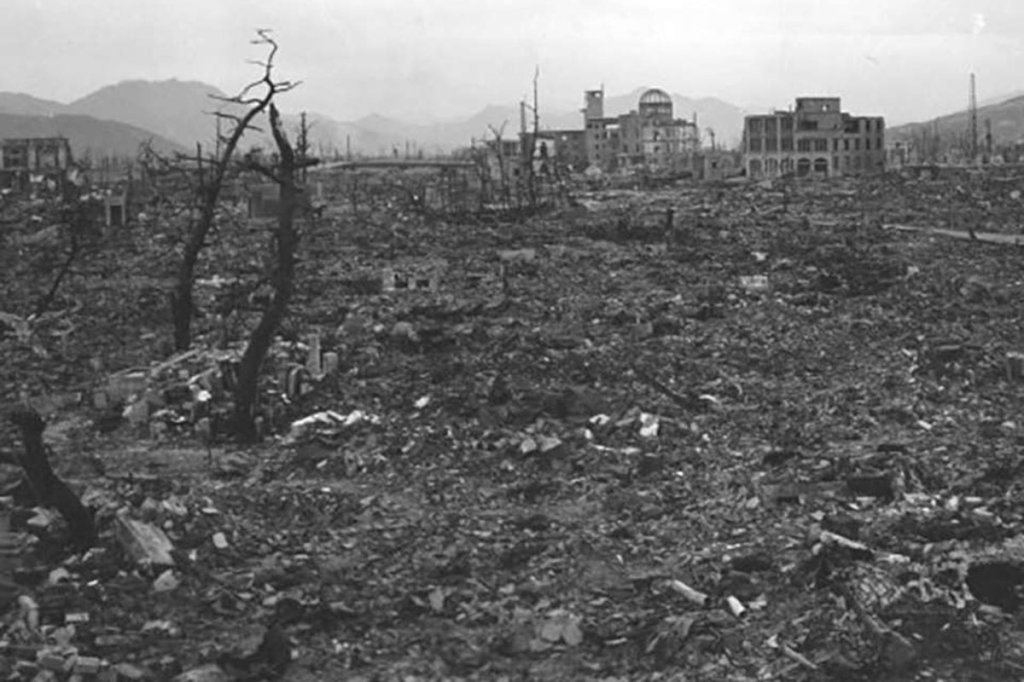
On August 6, 1945, the atomic mission against Hiroshima began. The primary strike aircraft was the B-29 Enola Gay, piloted by Tibbets and carrying the Little Boy bomb. Capt. William “Deak” Parsons served as weaponeer and armed the bomb midflight, a risky procedure deemed necessary for safety.
Two additional aircraft accompanied the mission. The B-29 The Great Artiste, flown by Maj. Charles Sweeney, carried scientific instruments to measure the explosion’s effects. The B-29 Necessary Evil, piloted by Capt. George Marquardt, documented the mission through photography and observation.
Earlier that morning, weather reconnaissance aircraft Straight Flush, Jabit III, and Full House scouted potential targets. Their reports confirmed clear skies over Hiroshima, sealing its fate.
At 8:15 a.m. local time, Little Boy detonated approximately 1,900 feet above the city. In an instant, tens of thousands of people were killed. Buildings were vaporized, fires swept through neighborhoods, and survivors were left wandering through a city reduced to ash and rubble.
By the end of 1945, as many as 140,000 people had died from blast effects, burns, and radiation sickness.
Nagasaki and the Plutonium Bombing
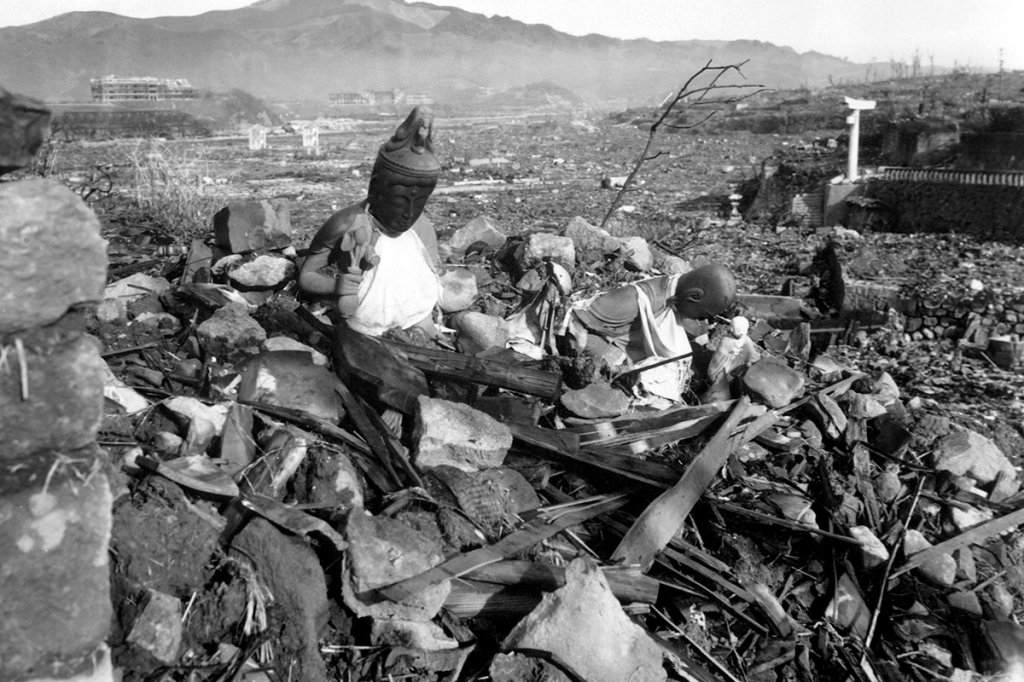
The second atomic mission launched on August 9, 1945. The B-29 Bockscar, piloted by Maj. Charles Sweeney, carried the Fat Man bomb toward its primary target, Kokura. However, cloud cover and smoke obscured the city.
After multiple unsuccessful bombing runs and growing fuel concerns, Sweeney diverted to the secondary target, Nagasaki. Accompanying aircraft included The Great Artiste with scientific instruments and Big Stink, intended to document the explosion but delayed by mechanical issues.
At 11:02 a.m., Fat Man detonated over Nagasaki. The city’s terrain limited the blast’s spread, but destruction was still immense. Between 40,000 and 70,000 people were killed immediately or died shortly thereafter.
Target Selection and Strategic Intent
The selection of atomic bomb targets was neither rushed nor arbitrary.
In the spring of 1945, President Harry Truman authorized the creation of a high-level target committee composed of military officers, scientists, and strategic planners. Their task was to determine where the new weapon would have the greatest military, psychological, and demonstrative impact.
Several criteria guided their decisions. Target cities needed to possess clear military or industrial importance, such as army headquarters, weapons production facilities, shipyards, or transportation hubs. They also needed to be large enough for the bomb’s effects to be unmistakable and measurable. Just as importantly, cities that had already suffered extensive damage from conventional bombing were deliberately excluded.
This was not an act of mercy, but a scientific and strategic calculation. Planners wanted to ensure that the destruction observed could be attributed almost entirely to the atomic bomb, allowing military leaders and scientists to assess its true power.
Hiroshima, Kokura, and Nagasaki emerged as prime candidates under these guidelines. Hiroshima served as a regional military command center and major logistics hub, while also remaining largely untouched by earlier bombing raids. Kokura housed one of Japan’s largest arsenals and significant industrial facilities. Nagasaki was a vital shipbuilding and manufacturing center, deeply integrated into Japan’s war economy.
Beyond physical destruction, psychological impact played a central role. American planners believed that the annihilation of a single city in an instant would deliver a shock so profound that Japan’s leadership would be forced to reconsider continued resistance. The goal was not simply to destroy targets, but to demonstrate a level of power that made further war appear futile.
In this sense, the atomic bomb was intended as both a weapon and a message.
Japan’s Surrender and the End of the War

Footage of the Moment the Japanese Surrendered
The bombing of Nagasaki came at a moment when Japan’s strategic position had already become untenable.
One day earlier, the Soviet Union had declared war on Japan and launched a massive invasion of Japanese-held territory in Manchuria. This development shattered any remaining hope within Japan’s leadership of negotiating a favorable peace or using the Soviet Union as a diplomatic intermediary.
Together, the atomic bombings and the Soviet entry into the war confronted Japan with the prospect of total national collapse. Cities lay in ruins, supply lines were broken, and the military faced enemies advancing from multiple directions. For the first time, the question was no longer how to win the war, but whether the nation itself could survive its continuation.
On August 15, 1945, Emperor Hirohito addressed the Japanese people in a recorded radio broadcast. In carefully chosen language, he announced that Japan would accept the terms of surrender outlined by the Allies. Many citizens never had heard their emperor’s voice. The war, he explained, had developed “not necessarily to Japan’s advantage,” and continuing it would lead only to the annihilation of the nation.
With that broadcast, World War II came to an end. Yet the conclusion of the conflict also marked the beginning of a new era. The atomic age had arrived, introducing weapons capable of destroying civilization itself and reshaping international relations for generations to come.
The USS Indianapolis and the Cost Beneath the Surface
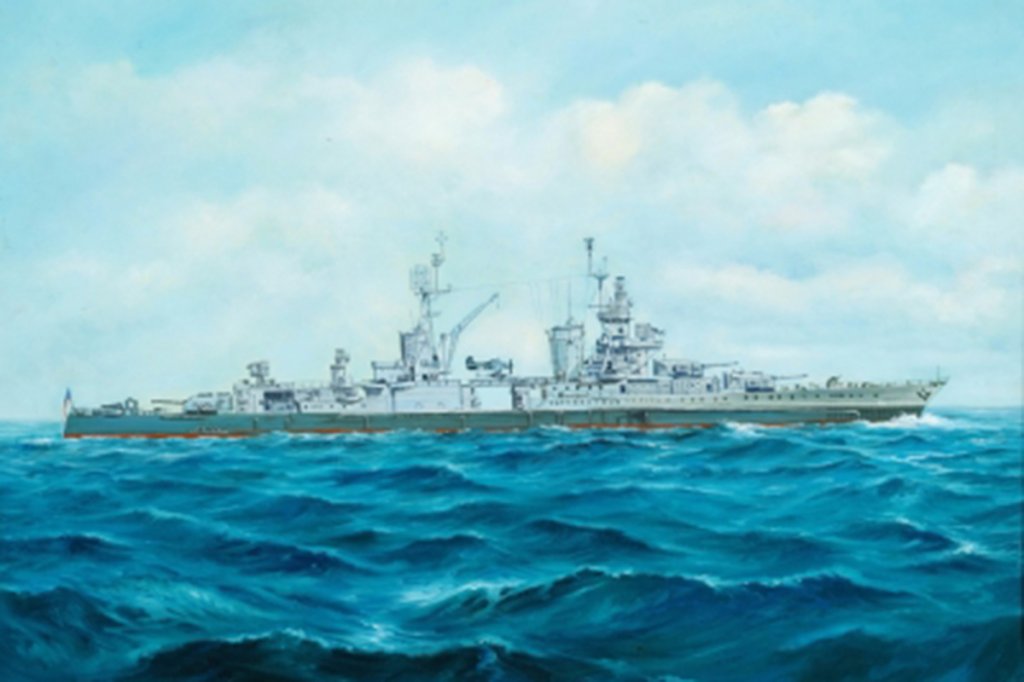
While the world focused on the dramatic end of the war, one of the most tragic naval disasters in American history remained largely unknown to the public.
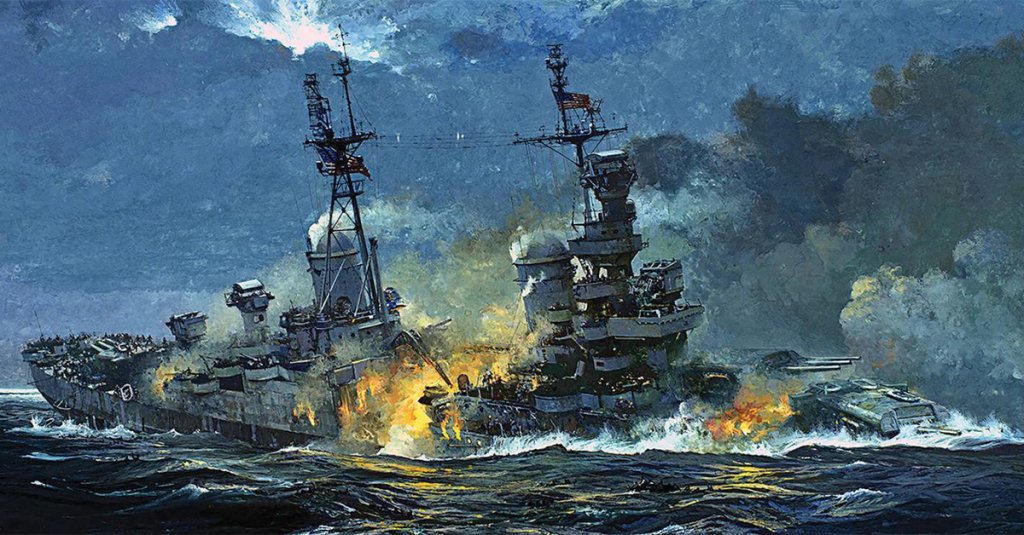
In July 1945, the USS Indianapolis, a heavy cruiser with a distinguished combat record, was assigned a mission of extraordinary secrecy. The ship transported critical components of the Little Boy atomic bomb to Tinian Island, where the 509th Composite Group was based.
The Indianapolis completed its delivery without incident, unaware of the historic significance of the cargo it carried. After unloading, the cruiser sailed to the Philippines to prepare for further operations. Because of the secrecy surrounding its mission and a belief that the route was relatively safe, the ship traveled without an escort.
Shortly after midnight on July 30, 1945, a Japanese submarine fired torpedoes that struck the Indianapolis with devastating force. The damage was catastrophic. Within 12 minutes, the cruiser rolled and sank, taking hundreds of sailors with it.
Approximately 900 of the ship’s 1,196 crew members survived the sinking and found themselves scattered across the open ocean. Many were injured, and few lifeboats were available. No distress signal was successfully received, and due to a series of communication failures and administrative oversights, no immediate rescue effort was launched.
For nearly five days, the survivors endured unimaginable conditions. Under the scorching sun and cold nights, men suffered from dehydration, saltwater poisoning, exposure, and delirium. Sharks, drawn by blood and movement, attacked repeatedly. One by one, sailors slipped beneath the waves. When rescue finally arrived by chance, only 316 men remained alive.
The loss of the Indianapolis became one of the deadliest naval tragedies in U.S. history.
Legacy, Ethics, and Historical Responsibility
The atomic bombings of Hiroshima and Nagasaki and the sinking of the USS Indianapolis are inseparable chapters in the story of how World War II ended. Together, they illuminate the immense power unleashed by modern science and the profound human consequences that accompanied its use.
The bombings achieved their immediate strategic goal by hastening Japan’s surrender, but they also introduced a weapon capable of annihilation on a global scale. Survivors carried physical and psychological scars for the rest of their lives, while the world entered an era defined by nuclear deterrence and existential fear. The sailors of the Indianapolis, many of whom never knew the true importance of their mission, represent the quiet sacrifices made far from the spotlight of history.
Remembering these events in full is not about assigning simple judgments of right or wrong. It is about understanding the weight of decisions made in moments of crisis and acknowledging the lives forever changed by those decisions. The end of World War II reminds us that victory is never free, and that the responsibility of wielding great power carries consequences that extend far beyond the battlefield.
Don’t Miss the Best of We Are The Mighty
• The WWII bombardier whose family spent 12 years bringing him home from the ocean floor
• A Medal of Honor recipient used a dud enemy mortar to save US troops during WWII
• How the daring rescue of 3 Army soldiers after a WWII plane crash in ‘Shangri-La’ unfolded
Featured