
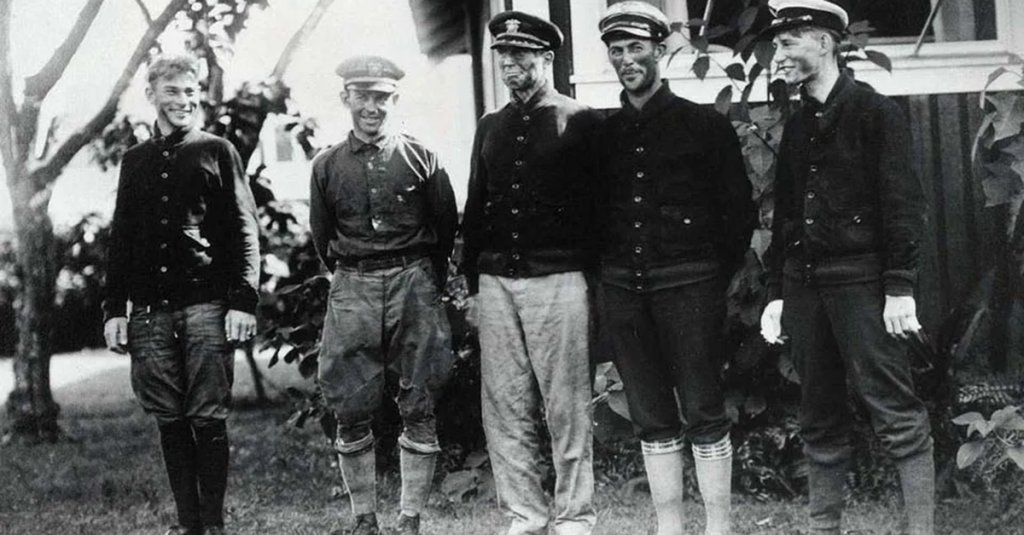
Navy Cmdr. John Rodgers and his four-person crew didn’t have much time left.
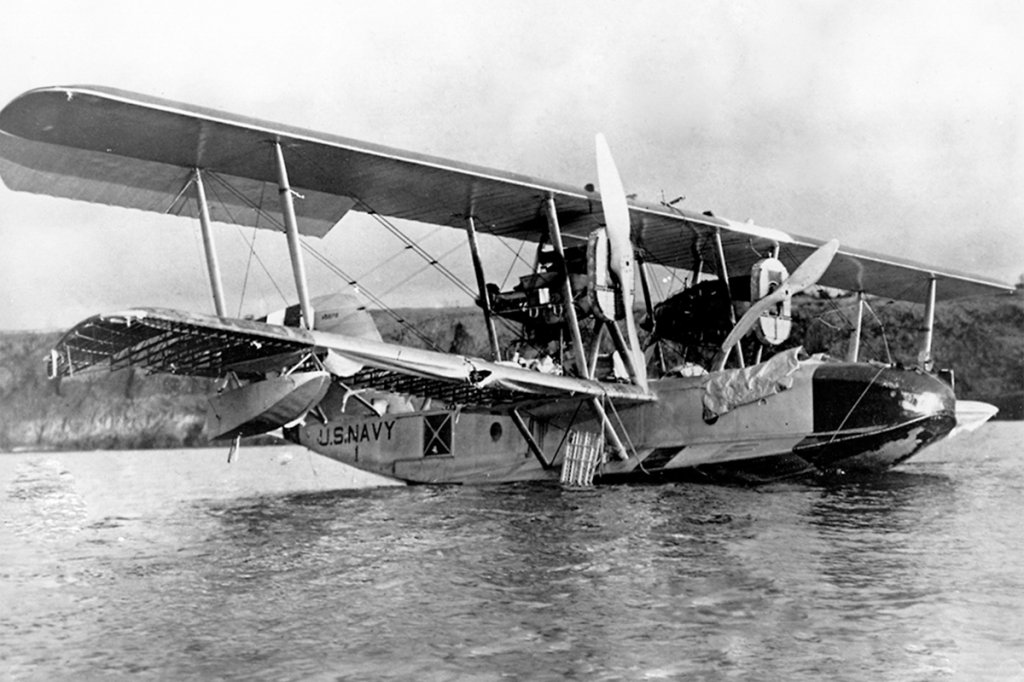
It didn’t start out that way. They were aboard PN-9 No. 1, a flying boat that left San Francisco on August 31, 1925, with history in mind. Rodgers, pilot Lt. Byron Connell, Chief Radioman Otis Stantz, Chief Machinist’s Mate Skiles Pope, and Aviation Machinist’s Mate William Bowlin were attempting to complete the first nonstop flight from the American mainland to Hawaii.
Also Read: World of Warships’ America 250 update is a love letter to US Navy history
They made it about three-quarters into their planned 2,400-mile voyage before PN-9 No. 1 exhausted its fuel supply. Rodgers ordered Connell to make an emergency landing on the Pacific Ocean.
Before PN-9 No. 1 took off, the Navy strategically placed destroyers every 200 miles or so along its planned route if any problems arose. When it went down, no warship arrived to help, but the Navy couldn’t pinpoint its location.
For the next 10 days, as writer Jason Ryan chronicled in 2019 for the U.S. Naval Institute, those aboard the PN-9 No. 1 attempted to sail toward the Hawaiian islands with limited rations and water—and hope that eroded by the day.
Strong Headwinds Pose Problem
When the PN-9 No. 1 hit the water, Rodgers already had served 22 years in the military. He was not only experienced, but the Wright brothers trained him. In addition, other men in his family—dating back to his great-grandfather—established an impressive naval legacy. Rodgers was more than happy to join them.
A pioneer of U.S. naval aviation, Rodgers was a master navigator, Ryan noted. The Navy’s first attempt to fly nonstop to Hawaii began without incident. It was not alone in its journey. Another flying boat, dubbed PN-9 No. 3, accompanied it for the first 300 miles before it went down off the California coast. All of its crew members survived.
Now alone, PN-9 No. 1 continued on its quest. A sign of trouble developed when it began to encounter unforeseen headwinds, straining its fuel supply. Aware that the biplane was headed toward the USS Aroostook approximately 400 miles from Hawaii, Rodgers intended to land on the water and meet up with the ship to refuel.
The commander’s plan was sound, except PN-9 No. 1 couldn’t locate the USS Aroostook, Ryan wrote. The flying boat’s crew became frantic.
“Plane very low on gasoline and doubt ability to reach destination. Keep careful lookout…,” Stantz messaged in all caps. “We will crack up if we have to land in this rough sea without motive power.”
They weren’t going to survive much longer in the air, either. With little choice, Rodgers gave the order to land. Connell did an exemplary job. PN-9 No. 1 survived the impact intact, but once they touched down, they faced other challenges.
An Unsuccessful Search
On the 49-foot-long PN-9 No. 1, the men had only a finite supply of rations.
Once they no longer could fly, they only had 12 sandwiches, 10 quarts of water, two quarts of coffee, three pounds of hard tack, and six pounds of canned corned beef available for the five of them, according to the Naval History and Heritage Command.
Those supplies weren’t going to last long, so the crew improvised. Rodgers even swallowed a live fish for nourishment, Ryan reported. As for water, they raced to collect rainwater in buckets, their mouths, or on a piece of fabric they ripped off the wing. They also repurposed some fabric to craft a makeshift sail.
It wasn’t nearly enough. Susceptible to the unrelenting sun, Rodgers and his men became dehydrated. Sharks and barracuda flocked around the downed flying boat.
They couldn’t wait much longer to be rescued. It wasn’t as if the Navy didn’t devote myriad resources to finding PN-9 No. 1. They deployed an impressive array of at least 26 destroyers, 34 planes, and nine submarines to cover 70,000-plus square miles to try to locate it, according to Ryan.
All of those resources couldn’t find the biplane. When the crew heard on the radio that the search might be called off, a sense that they might never be found set in. Rodgers provided some encouragement.
“Hell, boys, we might be worse off than this,” Rodgers said in an uplifting tone. “Why, I once knew a man who was adrift for 15 days with nothing but a log under him!”
PN-9 No. 1’s crew was on the water for nearly 1½ weeks when a submarine, by pure chance, spotted them.
Submarine Comes to the Rescue
Rodgers and the others couldn’t believe their luck when the R-4 submarine surfaced behind them. They were as shocked as they were overjoyed.
Crew members on the R-4 had no idea what the PN-9 No. 1 was or who was on board. They radioed the flying boat to learn more, and, Ryan wrote, its reply—”PN-9 No. 1 from San Francisco”—came back without delay.
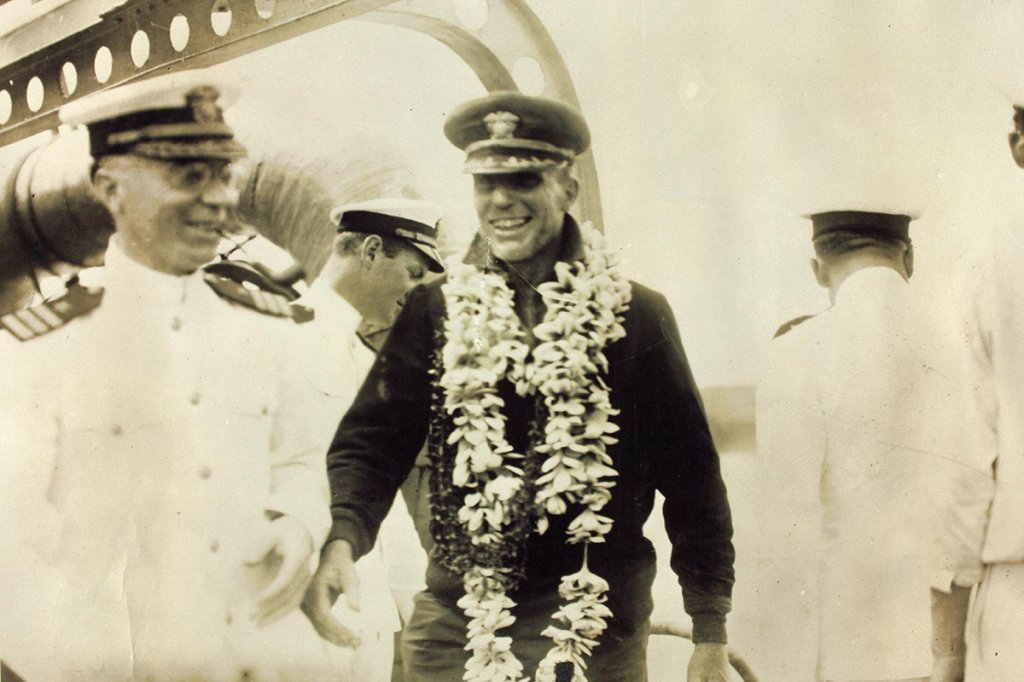
After 10 days, they were finally rescued. When they arrived at Nawiliwili Harbor in Kauai, a group of enthusiastic residents greeted them.
The PN-9 No. 1 crew didn’t become the first crew to fly nonstop from the U.S. mainland to Hawaii. That distinction went to Army Air Corps Lts. Lester Maitland and Albert Hegenberger in 1927.
Rodgers tragically wasn’t around to witness that milestone. He died in an airplane accident on August 27, 1926, at the age of 45. Rodgers is buried at Arlington National Cemetery.
Don’t Miss the Best of We Are The Mighty
• How the Navy and Coast Guard frantically searched for Amelia Earhart
• 10 life lessons that William McRaven learned in Navy SEAL training
• A Navy veteran’s unintentional discovery led to the microwave
Featured

-
Sponsored Content
Fuel to Serve: The mission starts at the meal



Loading comments…
Comments couldn’t be loaded. Please refresh the page.