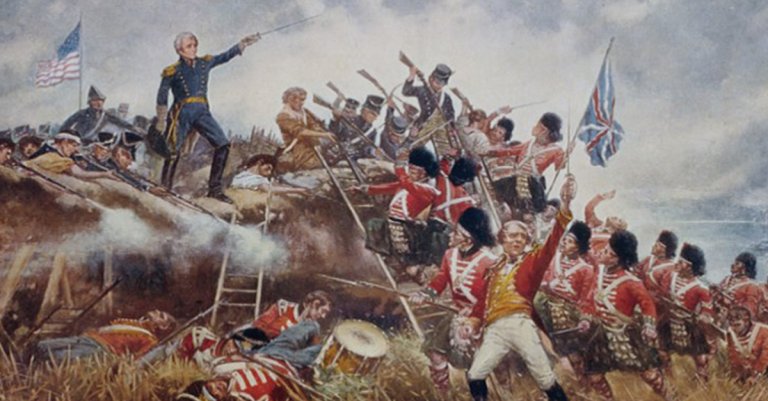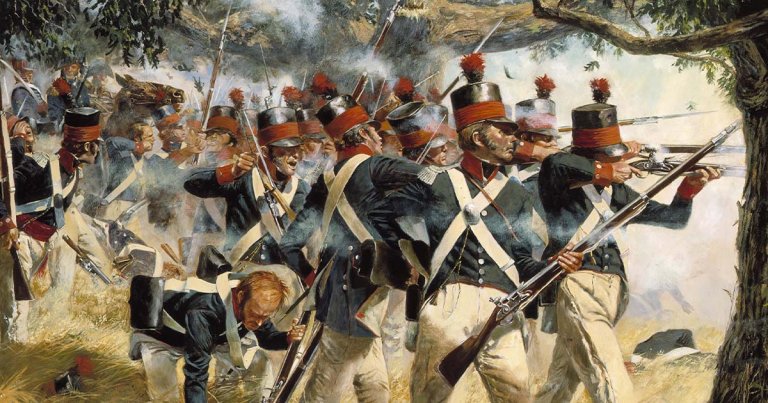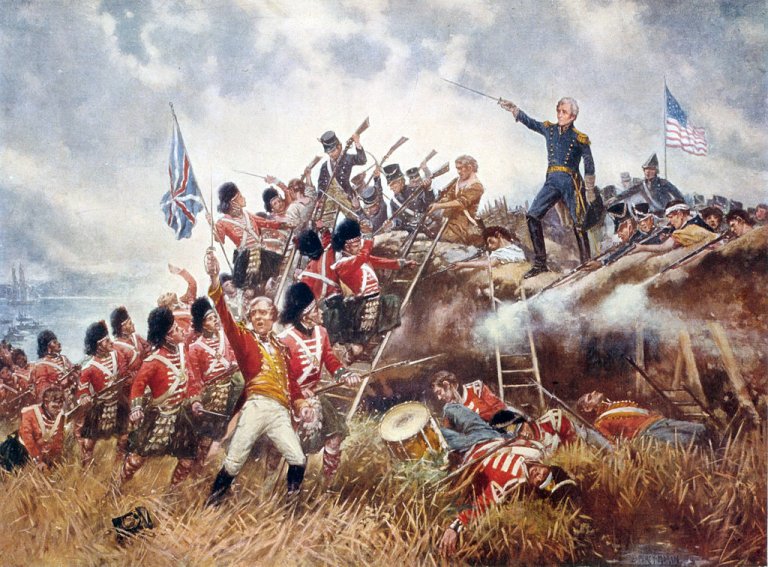
These days, it’s hard to think of a veteran who could have served in World War II, the Korean War, and the Vietnam War. It’s happened, of course. But imagine a veteran of the War of 1812 and the Mexican War fighting in the Civil War. That’s a span of more than 60 years, significantly longer than the 24 years that separated the beginning of World War II and the Vietnam War. But pivotal battles weren’t literally in our front yard in the 20th century.
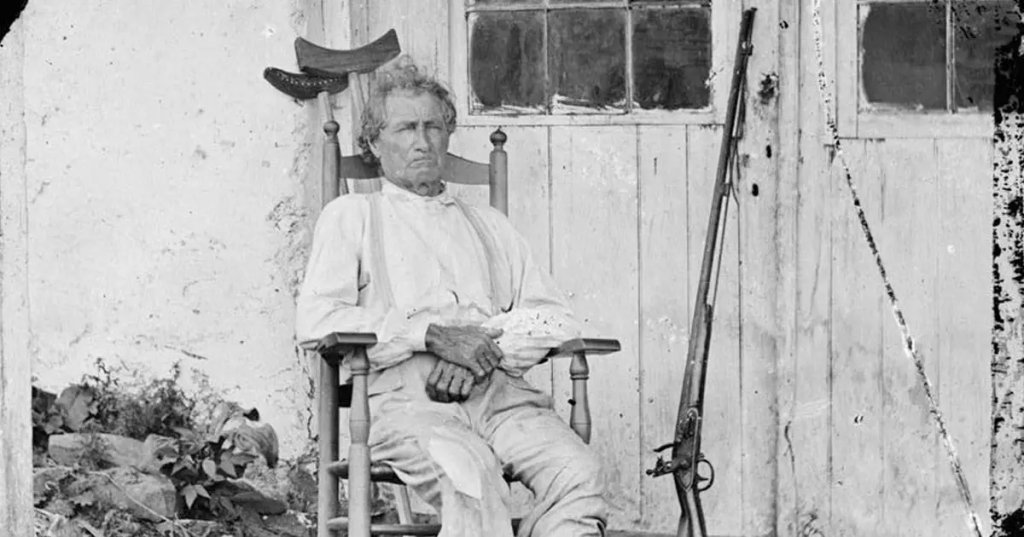
An average 69-year-old might be happy to ride out his golden years from a rocking chair, but not John Burns.
Burns fought in the War of 1812, the Mexican War, and even tried to work as a supply driver for the Union Army. Unfortunately for the old timer, he was sent back to his home in Gettysburg, Pennsylvania. He wasn’t too happy to be excluded from the Civil War.
He was already considered “eccentric” by the rest of the town (that’s what happens when you’re fighting wars for longer than most people at the time spent in school), and he had already lived twice as long as the average American of the time. He was still ready to do more for his country, but Gettysburg was much further north than the Confederates could ever attack.
Or so Burns thought.
When Confederate Gen. Jubal Early captured the town in 1863, Burns was the constable, a local authority, and was jailed for trying to interfere with Confederate military operations. When the Confederates were pushed out of Gettysburg by the Union, Burns began arresting Confederate stragglers for treason.
His contributions to the Union war effort didn’t end there.
On the morning of July 1, 1863, Burns watched as the Battle of Gettysburg began to unfold near his home. Like a true American hero, he picked up his rifle – a flintlock musket, which required the use of a powder horn – and calmly walked over to the battle to see how he could help.
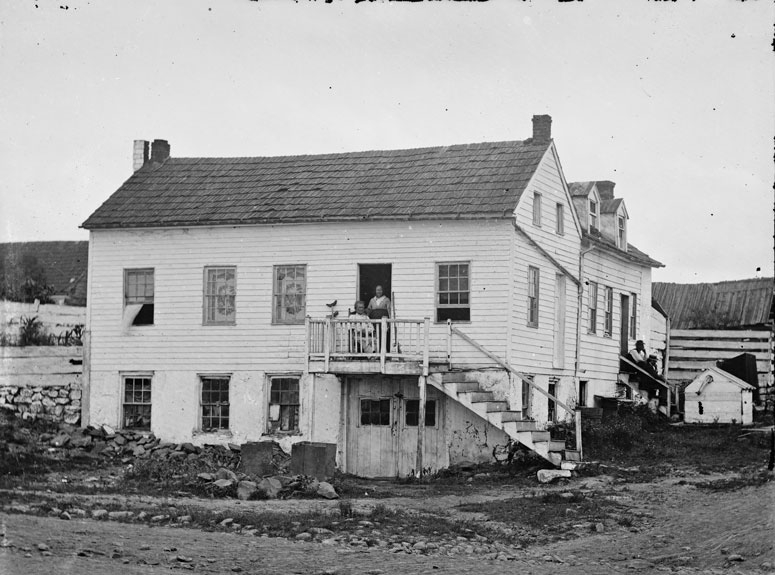
When he arrived at the Union lines, he “borrowed” a more modern musket (such borrowing is now a long-standing Army tradition) from a wounded Union soldier, picked up some cartridges, then walked over to the commander of the 150th Pennsylvania Infantry and asked to join the regiment.
This time, Burns wasn’t turned away, but the 150th Pennsylvania commanders did send Burns to Herbst Woods, away from where the officers believed the main area of fighting would be. They were wrong. Really wrong. Herbst Woods would be the site of the first Confederate offensive of the battle.
John Burns must have been quite a sight. When he joined the Union line, he was mocked by other troops for showing up to fight with his antiquated weapon and “swallowtail coat with brass buttons, yellow vest, and tall hat.” But when the bullets started to fly, he calmly took cover behind a tree and started to shoot back with his modern rifle.
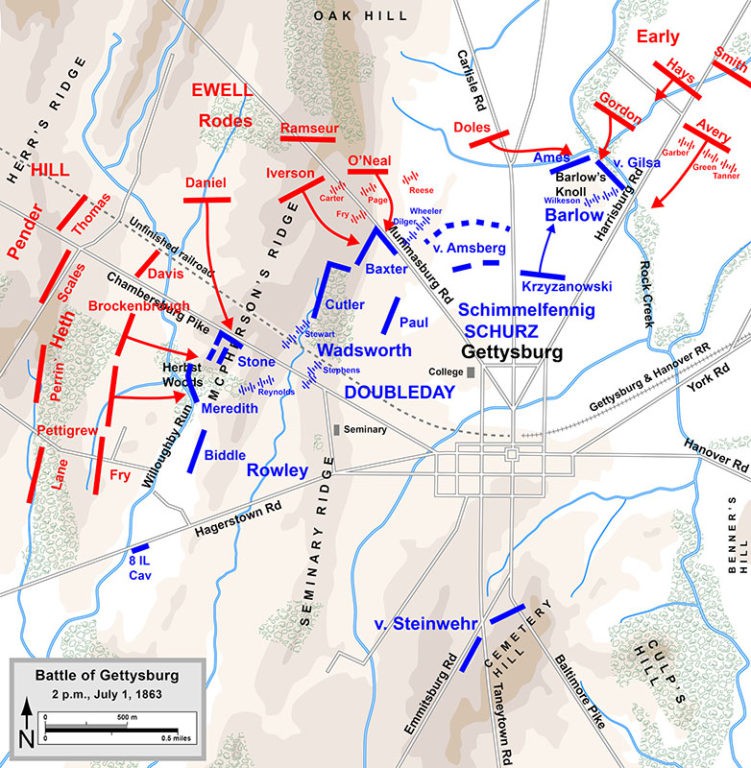
As the battle unfolded, he began sharpshooting for the Iron Brigade, but he also fought alongside the 7th Wisconsin Infantry and then moved to support the 24th Michigan. He was wounded in the arm, legs, and chest and was left on the field when the Union forces had to fall back.
Unable to retreat with the Federal troops, he ditched his rifle and buried his ammo (so he couldn’t be accused of bushwhacking), and then passed out from blood loss. He tried to convince the rebels that he was just an old man looking for help for his wife, but accounts of how well that story worked vary. Anyone fighting in an army outside of a uniform could be executed, but the ruse must have worked on some level. He survived his wounds and lived for another nine years.
The Battle of Gettysburg was a major turning point in the Civil War. The Confederates would spend the rest of the war on the defensive. John Burns became a national hero, a symbol of Union resolve.
As the poem “John Burns of Gettysburg,” written after the war by Francis Bret Harte, goes:
“So raged the battle. You know the rest. How the rebels, beaten and backward pressed, Broke at the final charge and ran. At which John Burns — a practical man — Shouldered his rifle, unbent his brows, And then went back to his bees and cows.”
When President Lincoln stopped in the Pennsylvania town to deliver the Gettysburg Address, he asked to speak with Burns and met the veteran at his home. Burns was also photographed – a big deal at the time – and a poem was written about his life. A statue of Burns was erected at Gettysburg National Military Park in 1903, where it stands today.
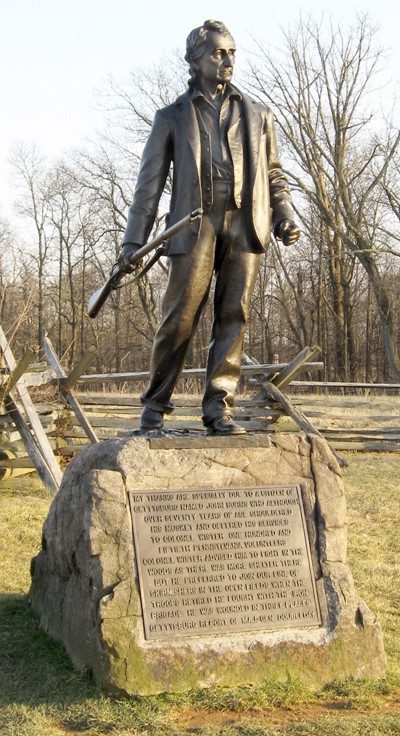
The base reads, “My thanks are specially due to a citizen of Gettysburg named John Burns, who, although over seventy years of age, shouldered his musket and offered his services to Colonel Wister, One Hundred and Fiftieth Pennsylvania Volunteers. Colonel Wister advised him to fight in the woods as there was more shelter there but he preferred to join our line of skirmishers in the open fields when the troops retired he fought with the Iron Brigade. He was wounded in three places. – Gettysburg report of Maj.-Gen. Doubleday.”