
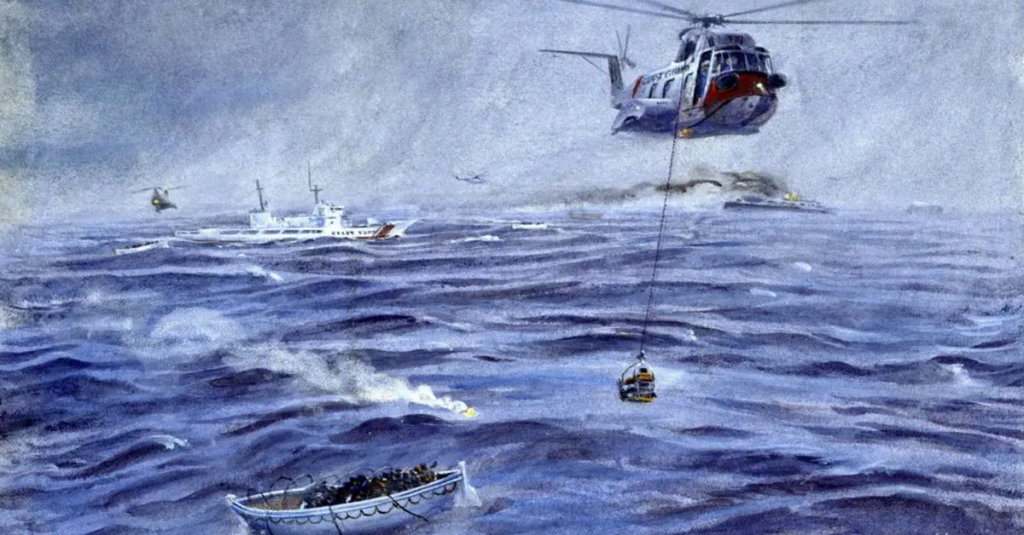
Along with the other passengers on board the Prinsendam on October 4, 1980, David Levin looked forward to a relaxing vacation.
The Dutch liner was very early into its monthlong cruise from Vancouver to Singapore when a fire broke out in the engine room shortly after midnight. After ship Capt. Cornelius Wabeke issued the order to abandon ship several hours after the first sign of smoke, the 77-year-old Levin crammed into one of the overcrowded lifeboats.
Also Read: How the most incredible Coast Guard cold-water rescue ever unfolded
Despite the circumstances, Levin and the other, mostly elderly people in his boat remained in relatively good spirits. They even sang “Row, Row, Row Your Boat” to distract them from the urgency of their situation.
Another passenger, John Gyorkos, didn’t hold that same level of optimism.
“I began to have doubts that we would all make it,” Gyorkos said, according to a 2022 article from the United States Coast Guard.
Shortly before 1 a.m., Wabeke sent out a distress message. Within the hour, Coast Guard helicopters and a cutter, the Boutwell, were on their way.
A Group Effort
Coast Guard personnel were not alone in their response.
With the 427-foot-long Prinsendam disabled and its passengers on life boats and rafts nervously awaiting rescue, U.S. and Canadian Air Force personnel flocked to the scene approximately 150 miles south of Yakutat, Alaska. In addition, civilian ships assisted, most notably the Williamsburgh, a crude oil tanker.
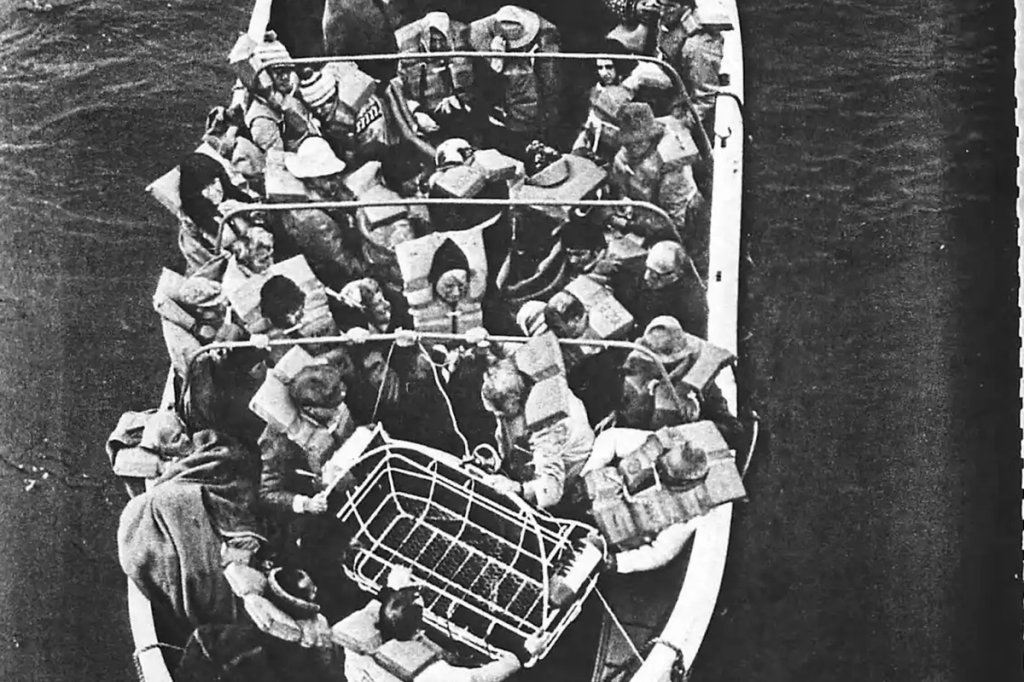
When military helicopters first spotted the survivors, they discovered lifeboats packed with people. There was little space for anyone or anything else, not even a rescue basket, as passenger Lois Berk described later. In her instance, the lack of available room delayed rescue efforts while the people huddled even closer together to create space.
A helicopter returned five times to Berk’s stuffed lifeboat before it finally rescued the relieved woman.
“I don’t know how many more trips were made by that copter, but I know not all the people were removed from lifeboat No. 3 [by that helicopter],” Berk wrote in a letter to the Coast Guard. “One copter ran out of fuel; one had an engine fail…. I heard that the crewman who worked the basket was operating his first real rescue. I was among the first 45 he plucked from death.”
The Williamsburgh usually took on the Prinsendam’s passengers as they were plucked off the waters of the Gulf of Alaska. Others boarded the Boutwell, the Coast Guard cutter.
The process of retrieving passengers was slow as the various rescue agencies battled extremely rough seas, cold weather, and high winds. Their task became more difficult after it began to storm.
Amazingly, No One Died
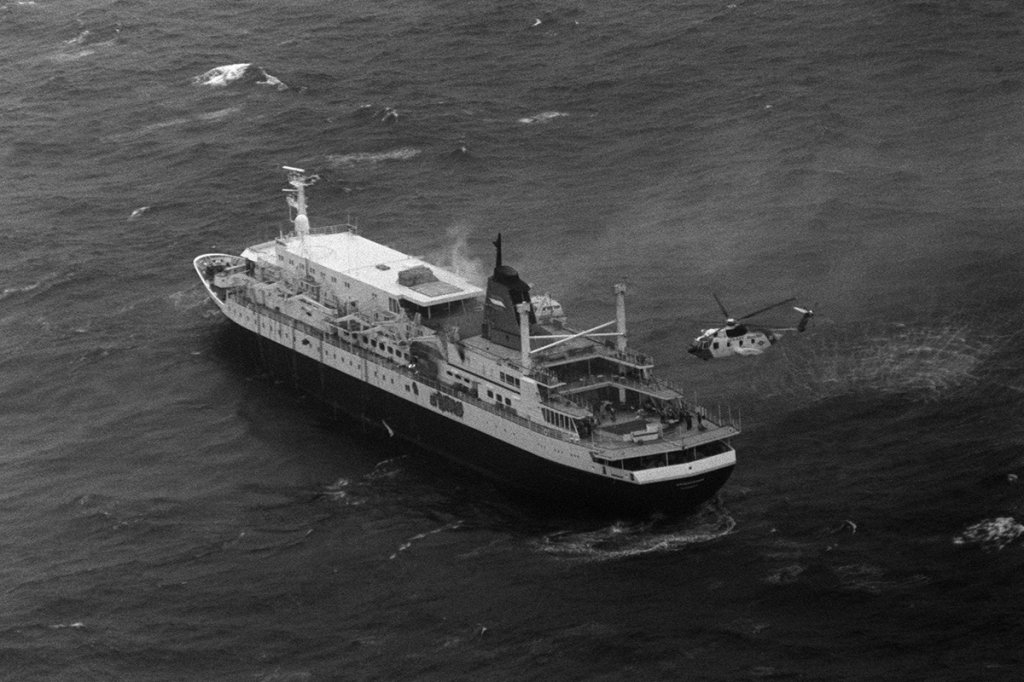
Nearly a half-day after the Prinsendam first sent out an SOS, more than 200 of the 519 passengers, crew members, and officers on board remained unaccounted for. Some prayed or sang in their lifeboats, hoping someone was listening. After an interminable amount of time on the choppy water, passengers—some in their pajamas because they were in bed when the Prinsendam caught on fire—became seasick.
The Coast Guard, et al., wasn’t going anywhere.
The Coast Guardsmen stayed until they hoisted or rescued the last person on the Prinsendam. That included its captain, Wabeke, who fittingly made sure he was the last one to depart the distressed luxury liner.
The service members achieved their mission, rescuing everyone off the water. No one on the Prinsendam died or sustained serious injuries during their frightful ordeal. At the time, it was considered the greatest rescue ever for the Coast Guard, whose history dates to 1790. Since then, the Coast Guard’s response during Hurricane Katrina in 2005 has surpassed it.
In the aftermath of the Prinsendam episode, the Coast Guard received numerous letters of appreciation. Berk was one grateful passenger who wrote. Business executive Ed Brennan was another.
“Some may call the rescue effort a miracle, but it was only accomplished because of the experience and dedication of the Coast Guard,” Brennan extolled. “Again, thank you very much personally. It’s an experience I shall treasure for the rest of my life.”
While a Canadian tugboat attempted to bring the Prinsendam back to shore, the cruise liner capsized and sank. It has yet to be recovered.
Don’t Miss the Best of We Are The Mighty
• Navy veteran David Ayer honors fellow sailor in “Heart of the Beast”
• Why the Coast Guard is part of the Department of Homeland Security
• How a Holocaust survivor saved 40 POWs in Korea
Featured
-
Sponsored Content
Fuel to Serve: The mission starts at the meal

Loading comments…
Comments couldn’t be loaded. Please refresh the page.