
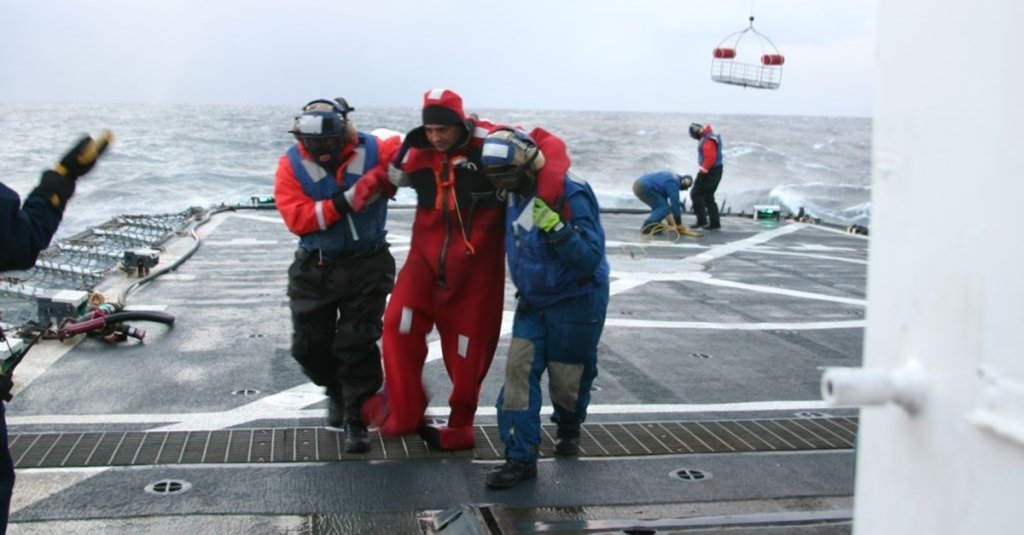
Wearing his survival suit, Ryan Shuck floated in the icy water of the Bering Sea, doing whatever he could to survive.
It wasn’t easy. Shuck struggled in the freezing water as swells up to 20 feet and snow squalls battered him. He was one of 47 people aboard the Alaska Ranger who abandoned the 189-foot-long fishing boat after it lost control of its rudder and flooded on March 23, 2008.
Also Read: How the Navy and Coast Guard frantically searched for Amelia Earhart
Shuck didn’t have the benefit of a life raft, so he had no protection against the frigid cold or the turbulent seas. At one point, as Kalee Thompson recalled in a Popular Mechanics Magazine article, Shuck became so disheartened and fatigued that he thought about unzipping his suit and drowning.
Then the United States Coast Guard arrived.
Shuck heard the sound of a HH-60 Jayhawk helicopter ahead. What the pilots, Lts. Brian McLaughlin and Steve Bonn, saw stunned them. Over a milelong stretch of water 120 nautical miles west of Dutch Harbor, Alaska, they glimpsed intermittent lights flashing in the water.
Each light represented a survivor desperate for rescue.
Answering the Urgent Distress Call
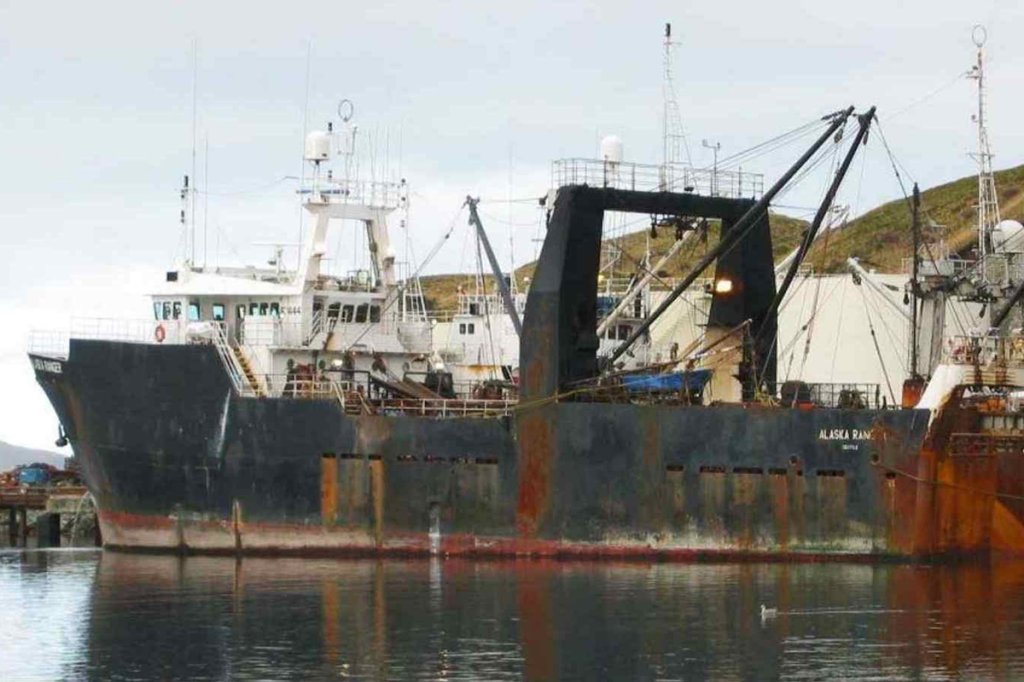
Alaska Ranger Capt. Pete Jacobsen called the trawler’s sister vessels to report its coordinates and sent out a mayday call at about 3 a.m. The Coast Guard cutter Munro received the urgent plea and prepared a makeshift triage center in anticipation of possible survivors. It also revved up its HH-65 Dolphin helicopter to send to the accident site.
By that point, the Jayhawk was almost there. As it neared the scene, McLaughlin reached someone onboard before the Alaska Ranger sank.
“The concern in the voice on the other end of the radio was palpable and filled our aircraft with the looming dread that what we were heading for was very real,” McLaughlin said in a 2022 Coast Guard article. “… They stated there were seven people left aboard, and they were getting ready to get into the rafts.”
The Coast Guardsmen started with those in the water first. The Jayhawk sent down Petty Officer 2nd Class O’Brien Hollow, a rescue swimmer who maneuvered his way to survivors one by one. He helped hook them to a metal cable that connected to the helicopter. In less than an hour, the Jayhawk hoisted 12 people out of the water, recounted Thompson—who wrote a 2010 book, “Deadliest Sea: The Untold Story Behind the Greatest Rescue in Coast Guard History,” about the harrowing rescue.
Inside the Jayhawk, no room remained to take on any more survivors. McLaughlin initially tried to drop them off on the Alaska Warrior, one of the Alaska Ranger’s sister ships, but there was no room there, either. Instead, he pivoted and took them to the Munro.
A Race Against Time
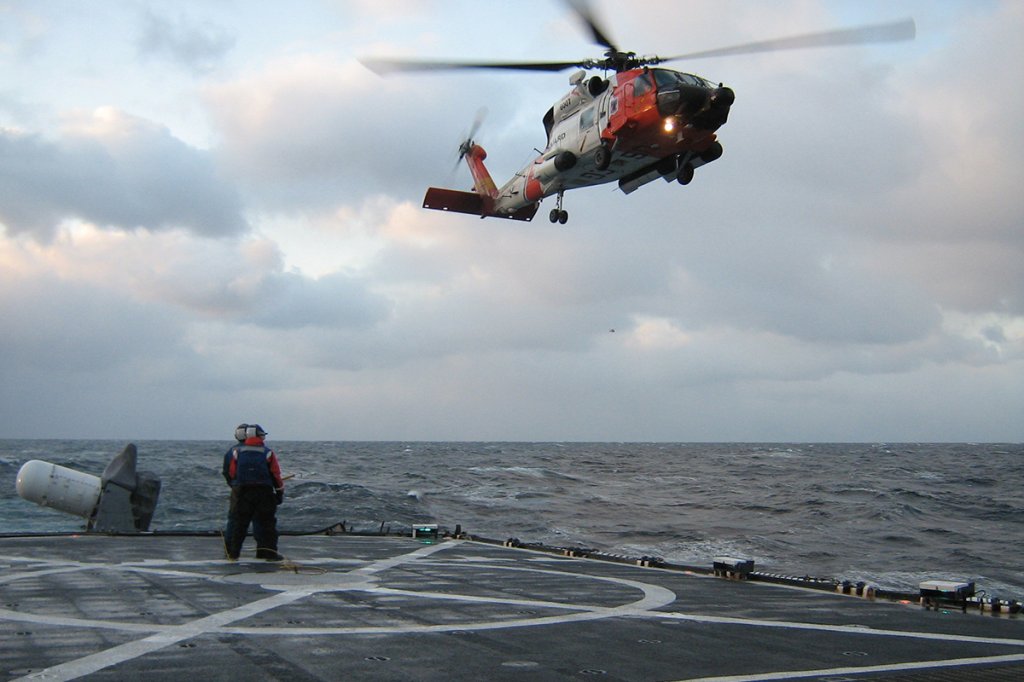
After offloading the last survivor during that trip, the Jayhawk began in-flight refueling on the Munro. It was now about 6 a.m., and Thompson said the Dolphin was close enough to take flight. When that helicopter arrived, its rescue swimmer, Petty Officer 3rd Class Abram Heller, helped pluck five men from the water.
Heller stayed behind in the rough seas, a concession to the limited space inside the Dolphin. Because that helicopter was smaller and possessed less range than the Jayhawk, it was running low on fuel, too.
It had no choice but to return to the Munro, which meant the Jayhawk couldn’t refuel completely, either, according to Thompson. The Jayhawk’s tanks were about two-thirds full of fuel when it stopped the process and headed back.
When the Jayhawk made it there, its crew saw the Alaska Warrior. The trawler took on 22 survivors, deploying its crane to pull some out of the water. Wrapped in blankets, the victims were so frigid that they held microwaved potatoes in their armpits because of the warmth they provided, Thompson noted.
The Jayhawk took on four others, plus Heller.
Rescuing 42 Survivors
Alaska Ranger Rescue
All of the survivors suffered from hypothermia. For example, when Shuck was rescued, his body temperature was at a dangerously low 94 degrees Fahrenheit, Thompson noted.
It was generally considered that few could survive the brutally unforgiving conditions in the Bering Sea that Easter morning for more than two hours. Some of the Alaska Ranger’s crew members faced those elements for three hours or more.
Despite the myriad challenges, the Coast Guard rescued 42 of the 47 men from the sunken trawler. Five men died, including Jacobsen—the Alaska Ranger’s captain. Another man died, according to Thompson, when he slipped out of the Dolphin’s open door and fell back into the water.
“Onboard the Munro, Ryan Shuck had heard that some men hadn’t made it—but he didn’t know who,” Thompson wrote. “With the help of Coast Guard aircraft, the Munro was methodically searching the ocean for one crewman who was still missing. The airlifted men would remain onboard the cutter—camped out until the search was concluded.”
The Coast Guard suspended its search on Monday evening, March 24, 2008. That last body was never recovered.
Don’t Miss the Best of We Are The Mighty
• Why the ‘peanut butter’ shot is the most dreaded injection
• This Black Green Beret battled communists and racism in Vietnam
• Vietnam vet Bill Roedy left the Army for cable TV—and helped win the Cold War
Featured

Sponsored Content
Automated vs. self-directed investing: A guide for military families
Loading comments…
Comments couldn’t be loaded. Please refresh the page.