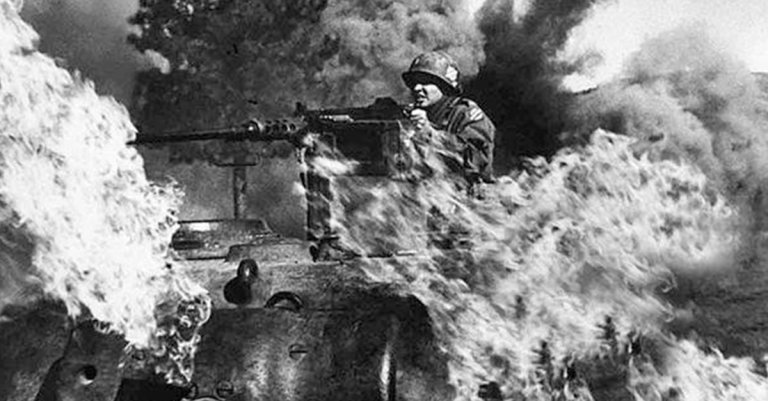
In the tense months that followed the Japanese attack on Pearl Harbor, the American home front was gripped by fear, uncertainty, and the expectation that another devastating blow could strike at any moment. Nowhere was this feeling more intense than on the West Coast. California’s vast coastline, military bases, and major industrial centers seemed obvious targets for Japanese aggression, and residents braced for an attack they increasingly believed was inevitable.
It was in this climate of heightened alertness and national anxiety that one of the most dramatic and perplexing events of World War II unfolded: the so-called Battle of Los Angeles.
Also Read: Lucille Ball exposed a World War II Japanese spy plot with her dental fillings
From the night of Feb. 24 to the early hours of Feb. 25, 1942, the skies above Los Angeles erupted with anti-aircraft artillery, powerful searchlights, and the relentless thunder of explosions. Thousands of soldiers engaged in what they believed to be a fight for the safety of the American mainland. Civilians huddled in darkness, listening to the barrage and wondering if the next bomb would fall on their neighborhood.
But when dawn finally broke over the city, no enemy aircraft were found, no bombs had dropped, and no invasion had taken place. What had been heralded as a Japanese attack quickly and embarrassingly unraveled into one of the most bewildering false alarms in American military history—but also one that would go on to spark decades of UFO speculation and become one of the earliest and most iconic cases in UAP lore.
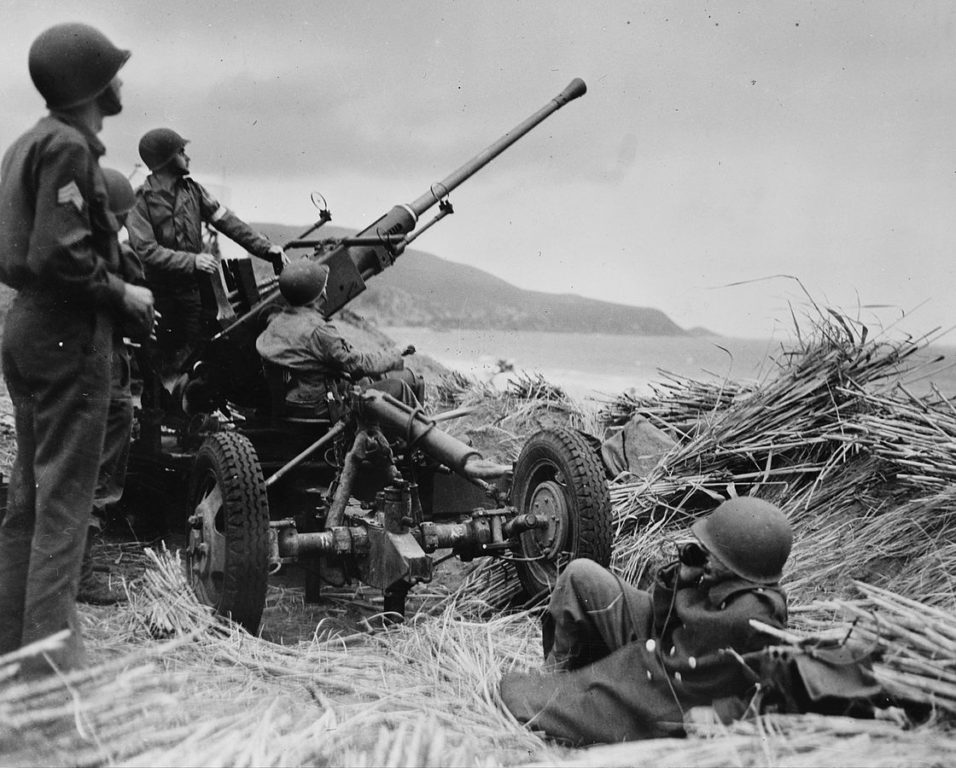
The attack on Pearl Harbor on Dec. 7, 1941, shattered the American sense of security and thrust the nation into global war. The West Coast suddenly felt exposed. Military intelligence warned that Japan possessed long-range aircraft and submarines capable of striking the mainland. The Japanese had already demonstrated this reach—they shelled the Ellwood Oil Field near Santa Barbara on Feb. 23, 1942, just one day before the Battle of Angeles.
Newspapers, radio broadcasts, and government officials all contributed to a climate of unease. Rumors of spies, saboteurs, and secret Japanese air bases in Mexico circulated widely.
Blackout drills became a normal part of life, and anti-aircraft crews, fearing a repeat of the surprise at Pearl Harbor, were instructed to act quickly and decisively at the first sign of trouble. With emotions running high and the memory of burning battleships still fresh, the West Coast was primed for panic.
The events that triggered the air raid began shortly after 7:00 p.m. on Feb. 24, when naval intelligence warned that an attack might occur within hours. Around 11:30, military radar detected an unidentified contact about 120 miles off the coast. Although the blip disappeared, the sighting set off alarms among commanders. Reports began streaming in from coastal observers claiming to see aircraft, lights, and unusual shapes in the night sky.
Shortly after midnight, the growing unease culminated in the Army issuing a full air raid warning for Los Angeles County at 2:25 AM. Sirens wailed across the city. Power companies shut down electrical grids, plunging millions into darkness. Anti-aircraft crews scrambled to their stations, and powerful searchlights sliced through the blacked-out sky. The population braced for what they believed was the beginning of a major attack.
Moments later, gun crews reported seeing a “formation” of aircraft, though descriptions varied wildly—some claimed dozens of planes, others only one. What followed would plunge the city into chaos.
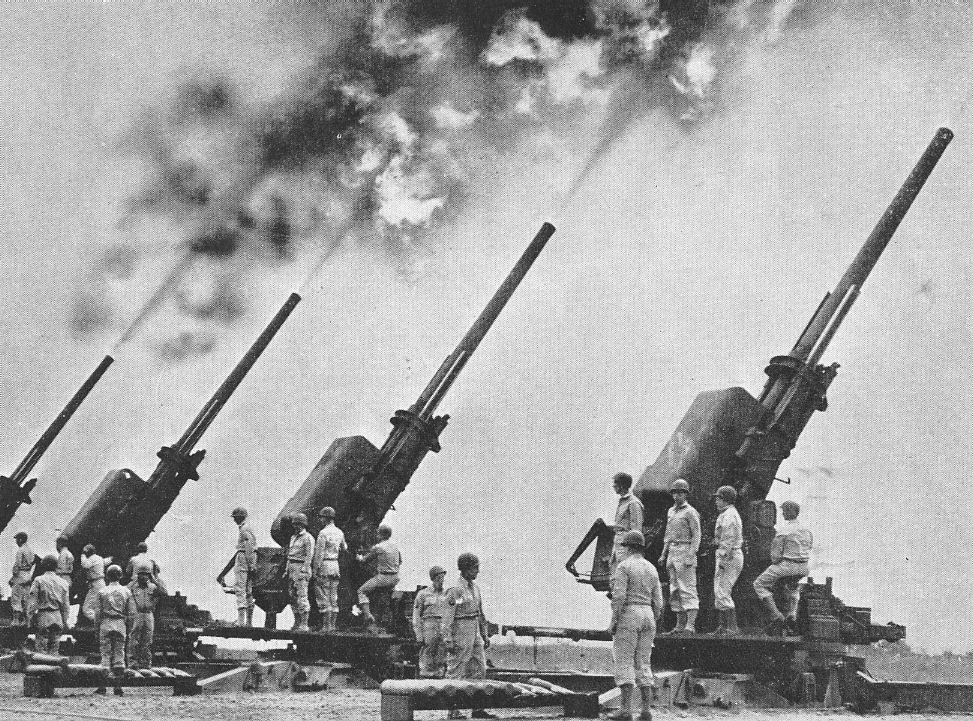
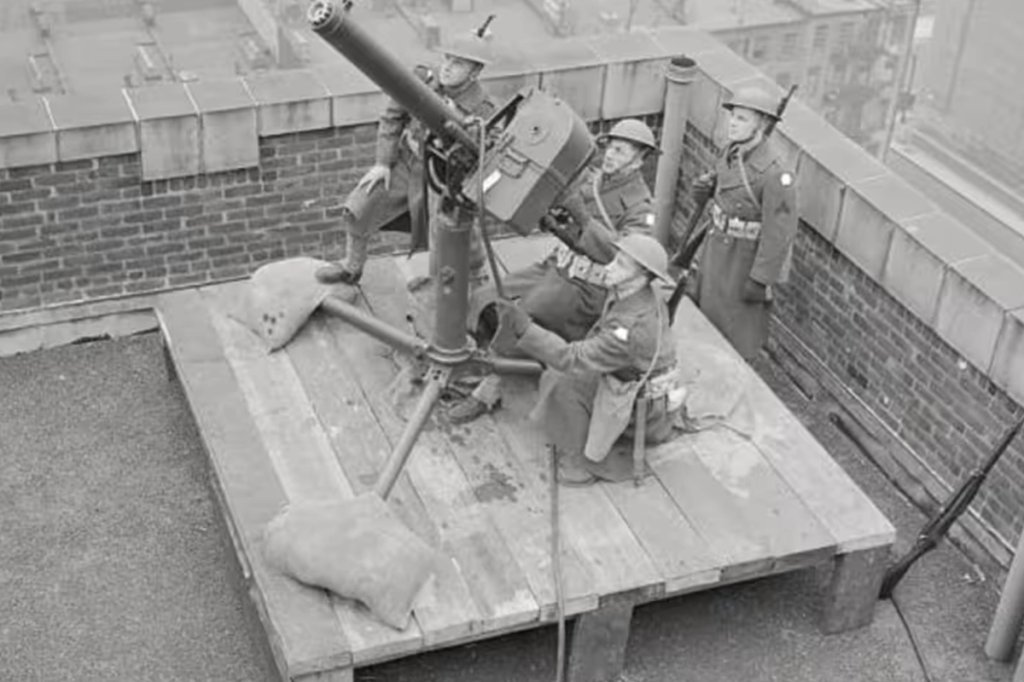
At approximately 3:00 a.m., the first streaks of anti-aircraft fire erupted over the city. The Battle of Los Angeles had begun. Within moments, batteries across the city began firing in a coordinated barrage that lit up the darkness and echoed through the Los Angeles basin for more than an hour. More than 1,400 rounds of high-explosive ammunition were unleashed into the night sky as soldiers attempted to hit targets they believed were passing overhead.
Civilians described the scene as something straight out of a war movie. Searchlights locked onto glowing shapes, while the sky erupted with the flashes of bursting shells. Explosions illuminated the clouds, and long trails of smoke drifted over city streets. Many Los Angeles residents believed the attack they had feared for months had finally arrived. Some claimed to see large, slow-moving craft hovering in the searchlights, while others insisted multiple planes were flying in formation.
Yet communications from the Army remained inconsistent and unclear. Some officers believed they were firing at Japanese aircraft approaching at high altitude. Others were convinced they saw nothing at all. The chaos, however, continued until nearly 4:15 AM, when the all-clear signal was finally issued, and silence returned to the city.

When dawn broke on the 25th, the people of Los Angeles expected to find wreckage from downed Japanese planes and damage from aerial bombs. Instead, the only visible destruction had come from American anti-aircraft fire. Shrapnel from spent shells littered rooftops, punctured cars, shattered windows, and damaged homes and businesses. The barrage caused multiple fires, and the stress of the night claimed several lives. Three civilians died in car accidents during the blackout, and two others suffered fatal heart attacks brought on by the shock of the bombardment.
Despite the widespread chaos and heavy firing, not a single enemy aircraft was recovered, nor were any bombs found anywhere in the city. The military could not identify a single confirmed target.
The contradictory statements from military officials only made the situation more confusing. While Navy Secretary Frank Knox declared the entire incident a “false alarm” caused by “war nerves,” Army commanders insisted that as many as 15 aircraft had been spotted and engaged. This disagreement, combined with a lack of evidence, opened the door for speculation that continues to this day.
Although theories have flourished for decades, historians now agree that the most probable cause of the incident was far less dramatic. A weather balloon, launched by the 4th Interceptor Command shortly before the firing began, likely drifted into the line of sight of jittery anti-aircraft crews. The balloon’s metallic components could easily have reflected searchlight beams and appeared on radar, which was still a relatively new and unreliable technology at the time.
Once the first guns opened fire, the bursting shells, drifting smoke, and glowing debris created optical illusions that made crews believe additional planes were appearing in the sky. In the confusion, a chain reaction took place, transforming a simple misidentification into an hour-long barrage.
The feverish atmosphere following the recent bombing near Santa Barbara, combined with the lingering trauma of Pearl Harbor, created a situation in which soldiers and civilians alike were primed to see danger, even where none existed.
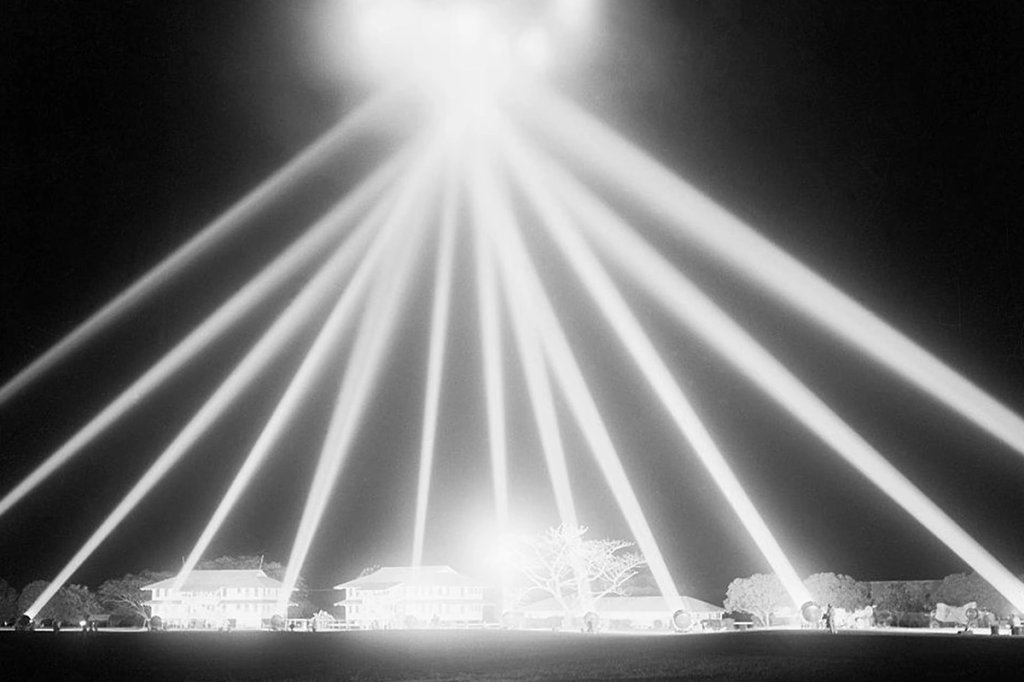
Although the official explanation pointed to a weather balloon and mass hysteria, the public imagination quickly seized upon the more mysterious aspects of the incident. One photograph, widely circulated in newspapers, showed multiple searchlights converging on a glowing object in the sky. The image, enhanced by the newspaper for clarity, later became a cornerstone of UFO lore. Many believed the soldiers had fired at a massive, unidentified craft that had hovered over the city before silently slipping away.
As the UFO phenomenon grew in the 1950s and 1960s—with the Roswell incident, Cold War sightings, and Project Blue Book—researchers revisited the 1942 event and declared it one of the earliest and most compelling mass sightings in U.S. history. The absence of wreckage, the conflicting military reports, and the eyewitness descriptions of large craft only fueled its legend. Today, the Battle of Los Angeles remains one of the most frequently cited cases in discussions of unexplained aerial phenomena.
Modern UAP researchers point to the sheer number of eyewitness accounts, the military response, and the unresolved contradictions as evidence that something unusual may have occurred. While mainstream historians lean toward the weather balloon explanation, the event’s place in UFO history is firmly secured.
The Battle of Los Angeles had lasting consequences both militarily and culturally. It revealed critical flaws in coastal defense communication and radar interpretation at a time when the nation could least afford misunderstandings. It also contributed to the already growing suspicion and paranoia that ultimately led to the mass internment of Japanese Americans—a dark chapter in American civil liberties.
Culturally, the incident became a touchstone for the UFO movement, a story that bridges wartime hysteria and the enduring human fascination with the unknown. It stands today as a powerful example of how fear, stress, and uncertainty can shape perception, and how extraordinary events can become legend when definitive answers remain elusive.
The Battle of Los Angeles was not a clash between American forces and a foreign enemy—it was a confrontation between a fearful nation and its own anxieties. The night sky over Los Angeles erupted not because of an invading force, but because of the tension, trauma, and uncertainty gripping a country at war.
Yet the story did not end with morning light. Instead, it took on a second life in American folklore, becoming one of the most famous and enduring UFO cases in history. In the end, the Battle of Los Angeles reminds us that the line between history and mystery is often razor thin—and that sometimes, the most powerful battles are those fought within the human imagination.
Don’t Miss the Best of We Are The Mighty
• The tiny Cold War helicopter the Marines almost took into combat
• Two veterans shaped the UFO phenomenon from a joke into real federal policy
• The 1952 UFO Washington sighting that upended decades of denial