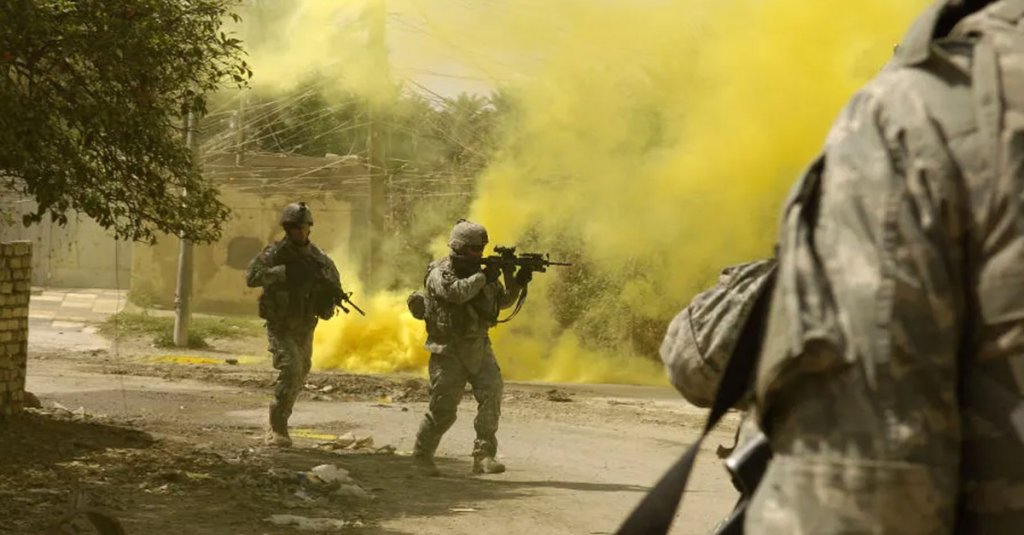
The Battle of Baqubah II ran from March to August 2007 and became one of the hinge fights of the Iraq War. Centered on Diyala’s capital, northeast of Baghdad, the campaign pushed U.S. and Iraqi units off their big bases and into the city’s neighborhoods, orchards, and canal lines. Shaping operations in March set the stage for a larger strike.
In June, commanders kicked off Operation Arrowhead Ripper to break al-Qaida in Iraq’s grip on Baqubah and its approaches. The assault cleared most of the city but left pockets of fighters scattered through Diyala. To press the advantage, the summer turned into a rolling series of offensives: Operation Phantom Strike widened the hunt across northern Iraq. At the same time, Operation Lightning Hammer pounded insurgent sanctuaries northeast of Baqubah. The goal was simple and brutal: keep AQI on the run, deny it safe ground, and grind down its cadre.
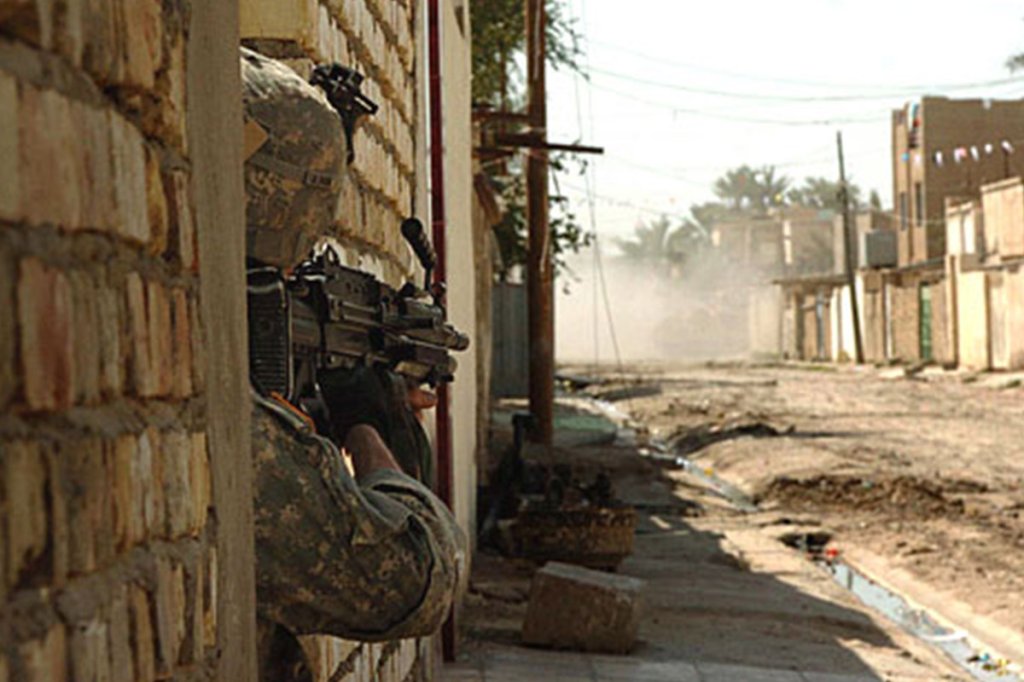
Here’s the fuse that lit it. In October 2006, al-Qaida declared the “Islamic State of Iraq,” replacing the Mujahideen Shura Council and crowning Baqubah its notional capital. After the U.S. launched the Baghdad Security Plan in early 2007, AQI shifted out of the capital and poured men and weapons into Diyala. They built observation posts and fighting positions, mined roads, rigged houses to kill whoever opened a door, and set up supply sites and training camps. Intelligence estimated roughly 2,500 fighters in Baqubah itself, plus about 500 in support—the city was their prize terrain.
Buhriz
The shooting started in earnest at Buhriz. On March 14, insurgents used hit-and-run RPG ambushes to harass U.S. patrols—until Apache gunships rolled in with Hellfires, dropping 40–50 enemy in short order. The next day, American units began clearing the palm groves around the town. It felt like Vietnam by way of the Diyala River: snipers in the trees, mines in the paths, pre-sited kill zones, rehearsed escape routes. An SA-7 shoulder-fired missile even streaked past an Apache in a near-miss. After a week of brutal contact, Buhriz was largely under U.S. control, though the cat-and-mouse attacks didn’t stop overnight.
Related: This is why the Apache helicopter is a tank’s worst nightmare
Through April and May, a task force built around 5-20 Infantry pushed methodically across eastern Baqubah, reinforced by Bronco Troop, 1-14 Cavalry, and two companies from 1-12 Cavalry. For that battalion, those months were among the hardest of a 15-month tour—house to house, block to block, field to field—preparing the ground for Arrowhead Ripper and the summer’s follow-on blows that finally cracked AQI’s “capital.”
Tahrir and New Baqubah
AQI’s strongholds in Tahrir and New Baqubah didn’t fall in a day. Clearing teams moved block to block under a constant mix of ambushes, deep-buried IEDs, and car bombs that slowed everything to a crawl. On April 5, a Bradley was lost and an American soldier killed; amid that chaos, Army medic Christopher Waiters earned the Distinguished Service Cross for pulling two more Americans out of the kill zone.
Read: 10 incredible Post-9/11 combat medics who risked their lives to save others
The pressure never let up. On May 6, a Stryker was destroyed, killing six soldiers. Three weeks later, May 27, U.S. troops clearing Chibernat—just north of the city—found an AQI torture site and freed seven Iraqi hostages.
Operation Arrowhead Ripper
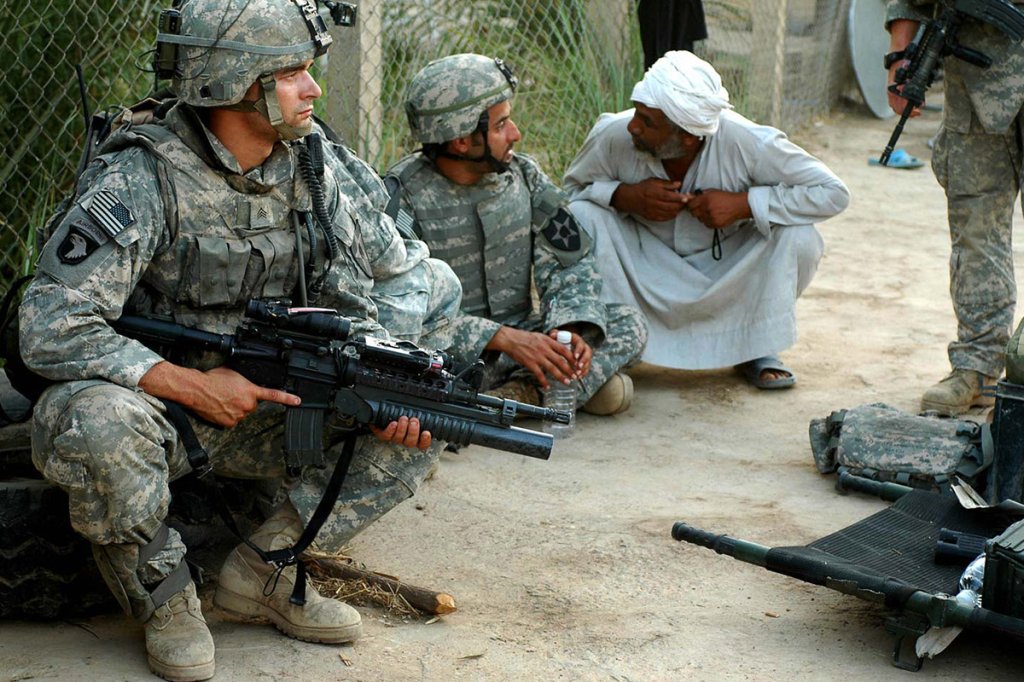
Task Force Regulars had isolated the city’s west but couldn’t finish the job alone. Lt. Col. Bruce Antonia requested more muscle, and in early June, the 3rd Stryker Brigade Combat Team and 1-23 Infantry arrived, along with the 3/2 brigade staff.
Before dawn on June 19, 2007, the 3rd SBCT and 2-505th Parachute Infantry Regiment kicked off Arrowhead Ripper with a rapid air assault into Baqubah’s seam lines. By morning, at least 22 insurgents were down; by nightfall, roughly 30. A Bradley struck a buried mine near an empty clinic in the southwest, killing one American.
Related: The Army went old school and named this Stryker ‘Dragoon’
Roughly 2,000 U.S. soldiers fought inside the city while about 4,500 more supported from FOB Warhorse. An Iraqi Army brigade and ~500 Iraqi police joined in, backed by 155 mm howitzers, Apache gunships, and U.S.–U.K. close air support. The influx of combat power marked the turning point: instead of containing Baqubah, the coalition began dismantling it.
A Tense Lull (late June–early July)
By June 28, some sectors were calm enough for troops to move in relaxed daylight formations, but “quiet” was relative. On July 1, a raid on a townhouse cost the Iraqi Army three soldiers. Meanwhile, about 15 km away, Al-Khalis became a fallback hub for fighters slipping out of Baqubah despite the nearby U.S. footprint at FOB Grizzly.
From July 3, a three-day push in Mukhisa (northeast of the city) killed 25, detained five suspects, and turned up 10 weapons caches—still under the Arrowhead Ripper umbrella. Mid-July saw renewed clashes with 1-12 Cavalry; both sides took casualties, and later reports flagged heavy shelling and civilian-casualty allegations—often tied to booby-trapped houses the insurgents left behind.
Closing the Net (mid-August)
The surge-era umbrella offensive Phantom Thunder wound down on August 14, and Arrowhead Ripper closed on August 19. Baqubah was largely back under government control. Violence didn’t vanish—insurgent cells persisted in Diyala’s river villages and orchards—but the city was no longer the “capital” AQI had imagined.
AQI Stronghold Broken
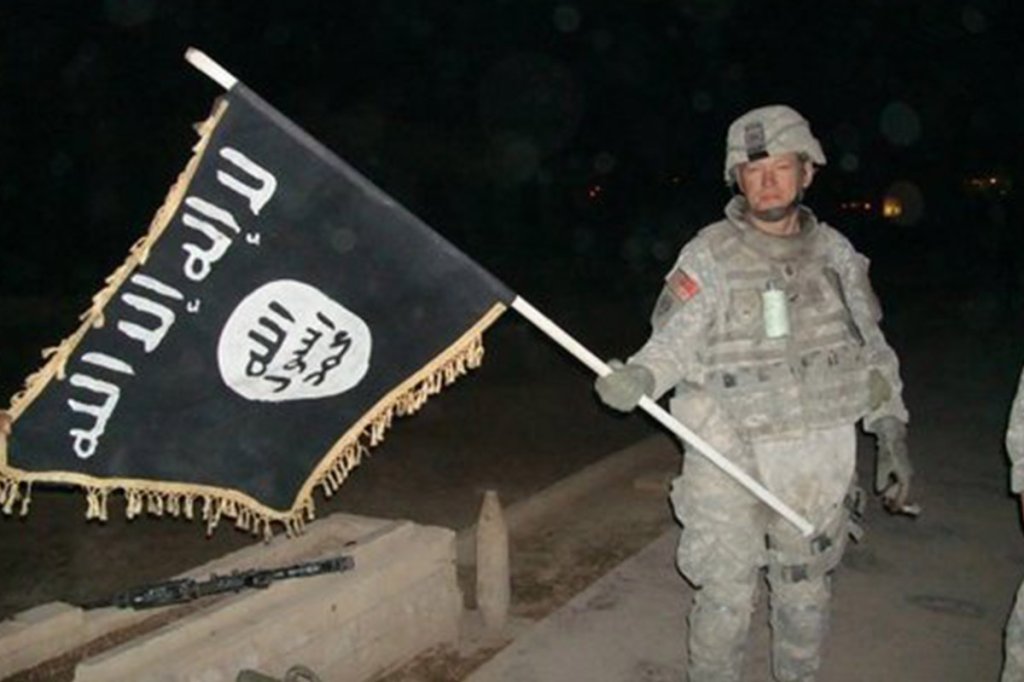
None of this came cheap. U.S. and Iraqi forces took losses in direct fire, on mined routes, and inside houses wired to kill. At the same time, hundreds of insurgents were killed or captured, and stacks of caches were pulled from groves, alleys, and safehouses—each one a little less fuel for AQI’s machine.
Baqubah shifted from a sanctuary to contested ground to a mostly secure city over the spring and summer of 2007. The mission’s aim was narrow and ruthless—break the stronghold, hand the streets back to local governance—and that’s what happened. The fight still echoes in Diyala’s mix of calm days and sudden violence, but the arc bent away from AQI’s “state” and toward a city that could breathe again.