
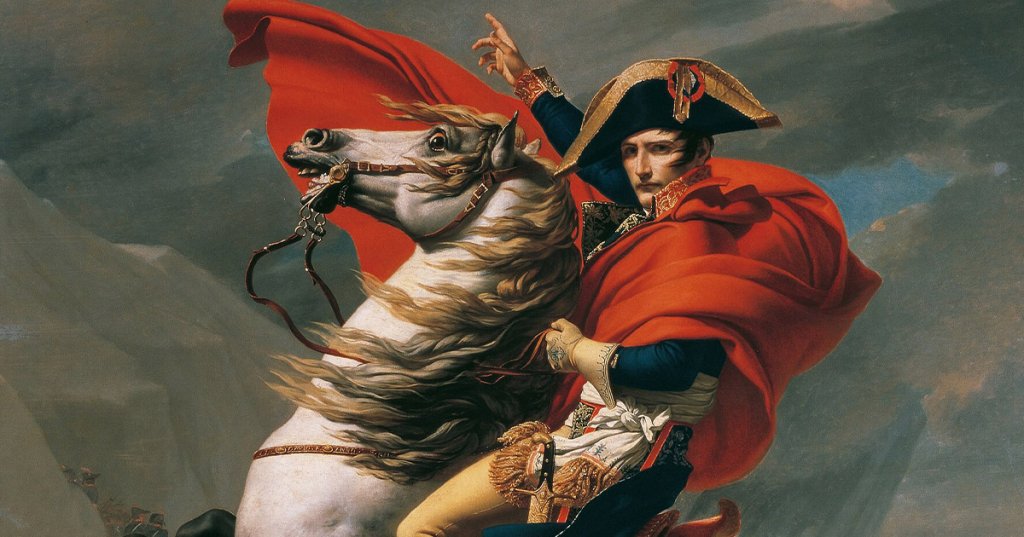
Someone went and Moneyball-ed military history. Data scientist Ethan Arsht applied the principles of baseball sabermetrics to the performances of history’s greatest generals, examining their ability to win battles. He started by comparing the number of wins from that general to a replacement general in the same circumstances.
The math is tricky, but the list of the best generals is definitive. There are just a few caveats.
First, where is all this information coming from? Although an imperfect source, Arsht compiled Wikipedia data from 3,580 battles and 6,619 generals. He then compiled lists of key commanders, total forces, and, of course, the outcome. The general’s forces were categorized, and his numerical advantage or disadvantage was weighted to reflect tactical ability. The real power lies in ranking the general’s WAR score, also known as Wins Above Replacement.
For each battle, the general receives a weighted WAR score, with a negative score for a loss. For example, at the Battle of Borodino, which pitted Napoleon against Russian Gen. Mikhail Kutuzov, the French had a slight numerical advantage over the Russians. So, the model devised by Arsht gave Bonaparte a WAR score of .49, which means a replacement general had a 50% chance of still winning the battle. Kutuzov gets a -.49 for Borodino, indicating that a replacement for him had a 51% chance of losing anyway.
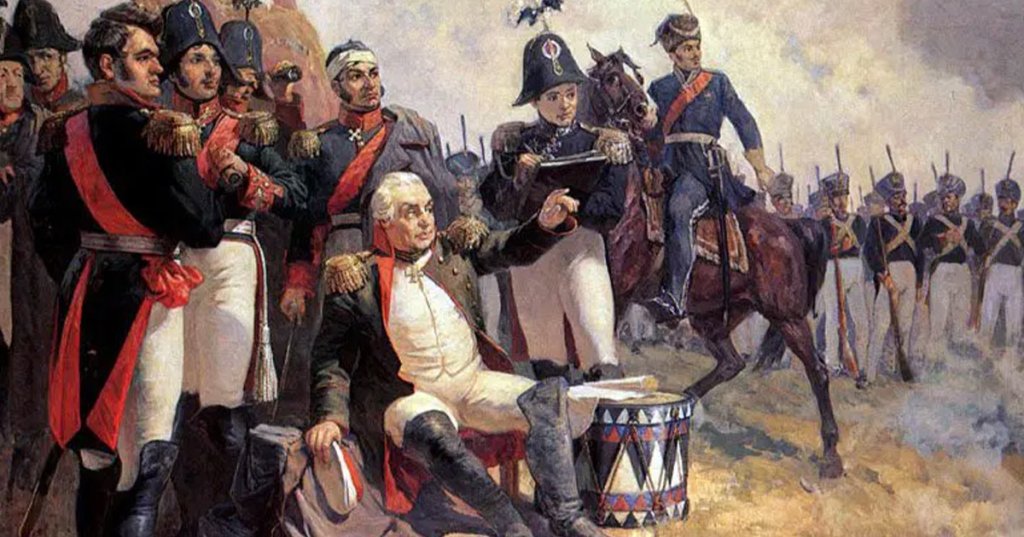
The more battles a commander fights and wins, according to the model, the more opportunities he has to raise his scores. Fighting fewer battles doesn’t help, either. There were some surprises in the model, such as the apparent failures of generals like Robert E. Lee and those of more recent times. For modern generals like George S. Patton, lower scores can be attributed to the relatively small number of battles commanded.
For more about Arsht’s results, responses to criticism, and his findings, visit his post on Medium’s “Towards Data Science.” To see every general’s data point and where they sit in the analysis, check out the Bokeh Plot, an interactive data visualization.
Remember, this has nothing to do with overall strategy, and it’s all in good fun. Arsht does acknowledge his shortcomings, so be sure to check those out as well.
Here are history’s 10 best generals.
10. Alexander the Great

As previously mentioned, Alexander was a great strategist, but since his life was cut short and he had only nine battles from which to draw data, it leaves the model very little to work with. Still, the conqueror of the known world is ranked much higher than other leaders with similar numbers, including the Japanese Shogun Tokugawa, German Field Marshal Erwin Rommel, and Confederate General J.E.B. Stuart.
It should be noted that Alexander’s per-battle WAR average is higher than anyone else’s on the list.
9. Georgy Zhukov
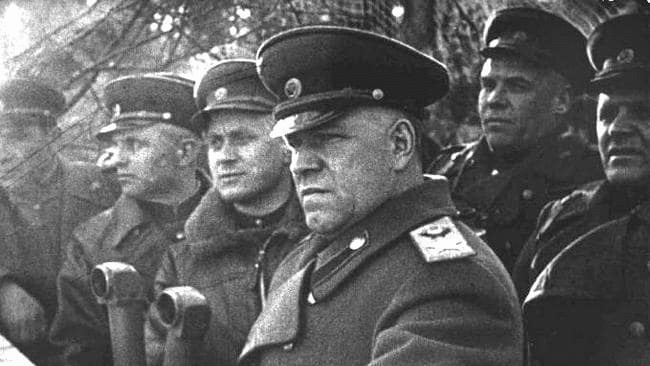
Field Marshal Zhukov has only one more battle than Alexander, and his overall score barely squeaks by the Macedonian. But in terms of Russian stature, he more than makes up for Kutuzov’s failures. Interestingly enough, his score is far, far above that of Gen. Douglas MacArthur and Confederate Generals Jubal Early and John Bell Hood. That’s what overcoming the odds does for your WAR score.
8. Frederick the Great
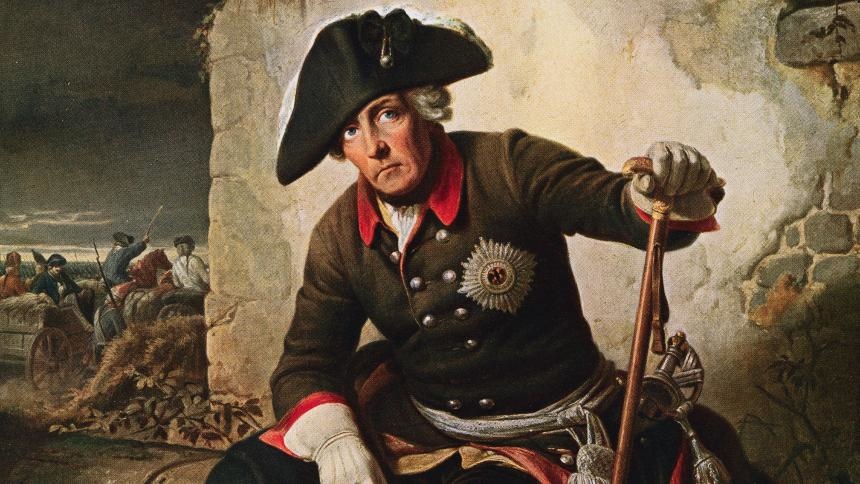
Ruling for more than 40 years and commanding troops in some 14 battles across Europe earned the enlightened Prussian ruler the number 8 spot on this list. His per-battle average was also lower than Alexander’s, but, on the whole, he was just a better tactician.
7. General Ulysses S. Grant

Grant’s performance commanding Union troops in 16 battles earned him the seventh spot on the list – and the U.S. presidency. Although his performance on the battlefield is clearly much better than that of his contemporaries, it should be noted that his Civil War arch-rival, Robert E. Lee, is so far below him on the list that Lee actually has a negative score.
6. Hannibal Barca
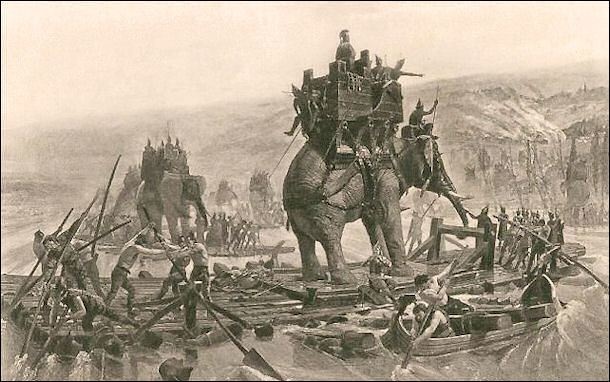
Hannibal, after being captured by the Roman general Scipio Africanus, is believed to have given his own ranking system to Scipio, once the two started talking. His personal assessment wasn’t far off from the truth. He listed Alexander the Great and himself. Both of whom are in the top ten, even centuries later.
5. Khalid Ibn al-Walid

Khalid was a companion of the Prophet Mohammed and one of the Islamic Empire’s most capable military leaders. In 14 battles, he remained undefeated against the Byzantine Empire and the Sassanid Persians, and played a crucial role in spreading Islam to the broader Middle East. Compared to others who fought similar numbers of battles, his score eclipses even Frederick the Great.
4. Takeda Shingen
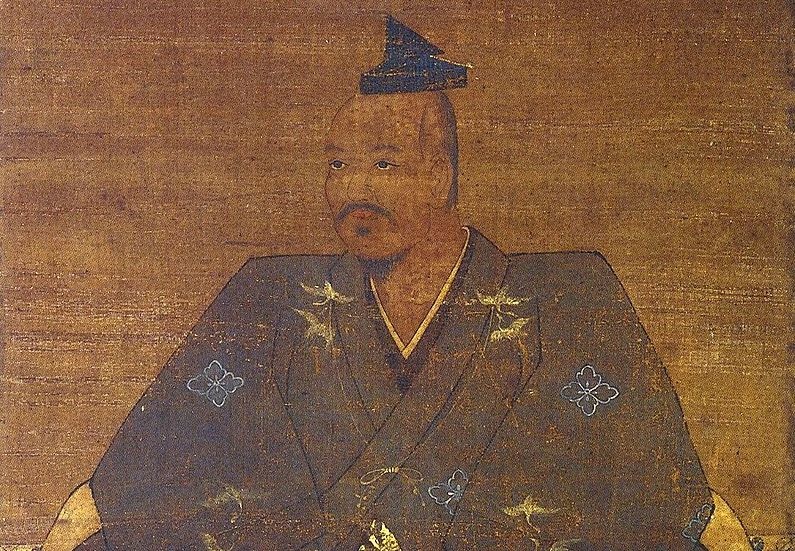
Being one of the best military minds in feudal Japan is a really big deal, because almost everyone seemed to be a military mind and being better than someone else might mean you get challenged to a duel. After 18 battles, the Tiger of Kai reigned supreme – in Japan, anyway.
3. Arthur Wellesley, 1st Duke of Wellington
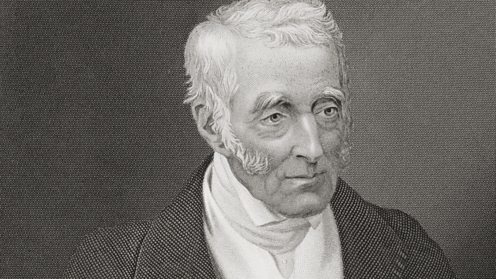
It’s a pretty big deal to be the guy who delivered a solid defeat to the man they called “Master of Europe.” Napoleon’s old nemesis, the Duke of Wellington, also saw command of 18 battles, but his WAR score is considerably higher than that of Takeda Shingen, his nearest challenger.
2. Julius Caesar

Caesar didn’t have command in as many battles as Shingen or the Duke of Wellington, but his WAR score reflects a greater degree of risk and shrewdness in his battlefield tactics. But even Caesar also couldn’t top Alexander’s per-battle WAR average.
1. Napoleon Bonaparte
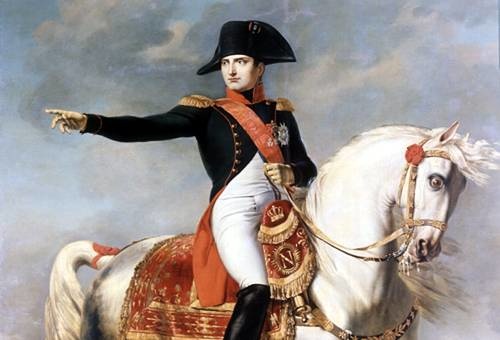
Yes, you might have guessed by now, but the number one spot belongs to l’Empereur. Napoleon is so far ahead of the normal distribution curve created by the data for these 6,000-plus generals, it’s not even close. After 43 battles, he has a WAR score of more than 16, which blows the competition away. There can be no question: Napoleon is the greatest tactical general of all time, and the math proves it.
Don’t Miss the Best of We Are The Mighty:
A pilot survived a Mach 3 ejection from the edge of space by not ejecting at all
9 troops who became heroes after they disobeyed orders
10 most lethal special operations units from around the world

Loading comments…
Comments couldn’t be loaded. Please refresh the page.