During World War II, while American soldiers fought across continents, the home front became a battleground of its own. Saboteurs, spies, and covert networks tried to exploit weaknesses in America’s defenses. At the very moment Nazi infiltrators slipped ashore in 1942 as part of Operation Pastorius, another secret war was already underway, one fought on the New York waterfront.
There, the U.S. government turned to an unlikely partner to protect the nation’s supply lifeline: organized crime. These two stories, the foiled Nazi sabotage plot and the Mafia’s clandestine defense of America’s ports, intersected at a critical moment and revealed how vulnerable and how resilient the home front truly was.
Why the Waterfront Needed Protection
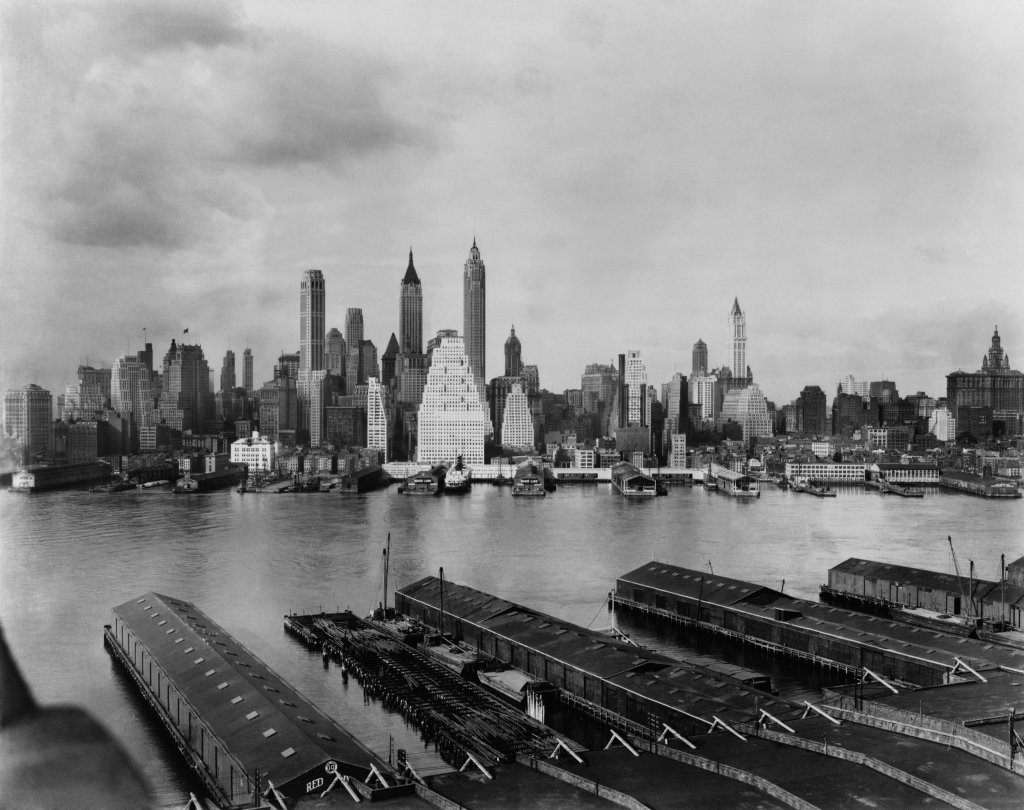
New York Harbor was essential to the Allied war machine. Every tank, aircraft part, medical kit, and ration crate destined for the European theater flowed through its piers. But the docks were chaotic and deeply corrupt. For decades, the Mafia and allied criminal networks had infiltrated longshoremen’s unions, controlled hiring, and manipulated shipping through bribery and intimidation. Under normal circumstances, this criminal stronghold was a major federal problem. Under wartime conditions, it became a potential national emergency.
The fire and capsizing of the SS Normandie in February 1942—whether accident or sabotage—sent a shockwave through the Office of Naval Intelligence. If Axis agents could disrupt port operations, they could cripple the flow of matériel that sustained the Allied effort. With federal reach limited in tight-knit waterfront neighborhoods, the government made a controversial decision: to enlist the very criminal forces that dominated the docks.
The Underworld Becomes the Shield
Behind closed doors, the U.S. Navy launched Operation Underworld: a covert partnership with Mafia figures such as Joseph “Socks” Lanza and, later, the imprisoned Charles “Lucky” Luciano. These men commanded influence where federal agents had virtually none. The government needed order, surveillance, and loyalty on the piers, and the Mafia could deliver all three, though not for patriotic reasons alone.
Mob bosses used their control of labor to prevent strikes that could halt wartime shipping. They stationed trusted men at key loading points, restricted access to sensitive cargo, and quietly monitored unfamiliar faces. Longshoremen, truckers, bartenders, and union stewards became informal intelligence gatherers. Tips from these networks helped federal authorities identify questionable activity, criminal schemes, and suspected foreign agents.
Where law enforcement lacked visibility, the Mafia had eyes everywhere, and enemies knew it. Axis operatives attempting to move around the piers faced both federal surveillance and mob retaliation. The docks became one of the least hospitable places for saboteurs on American soil, not because of government regulation, but because of fear of the underworld.
This unlikely alliance secured America’s logistical artery at a moment when the nation needed it most.
The Nazi Saboteur Plot
During World War II, while American soldiers fought across Europe and the Pacific, the U.S. homefront faced a threat more alarming than most Americans ever realized. In 1942, Adolf Hitler approved one of Nazi Germany’s boldest attempts to strike the United States directly through a secret sabotage mission called Operation Pastorius.
Its purpose was to cripple American industrial production and weaken public confidence. The plot failed spectacularly, but it exposed real vulnerabilities along the U.S. coastline and forced major changes in domestic counterintelligence during the war.
The Third Reich’s Strategic Gamble
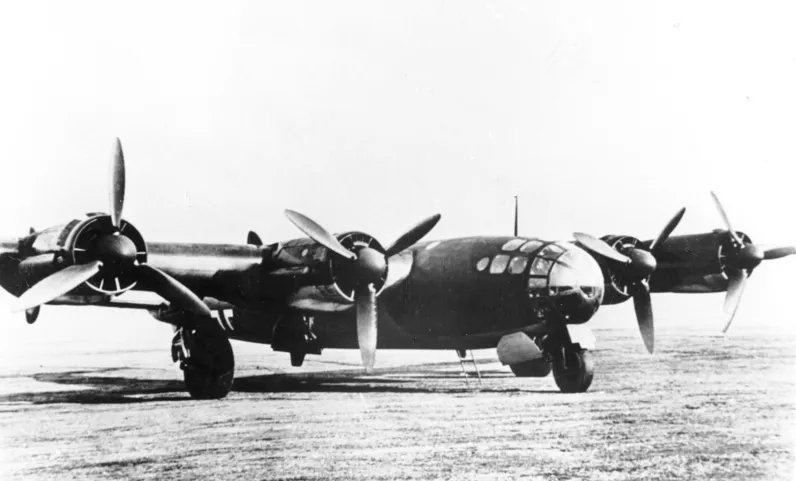
By 1942, it was clear to Nazi leadership that the American industrial machine—especially the factories churning out tanks, ships, munitions, and aircraft—posed a monumental challenge to the Axis war effort. The United States could replace lost materiel faster than Germany could destroy it. Interrupting that production became a top priority for the Abwehr, Germany’s military intelligence service. The planners of Operation Pastorius envisioned a coordinated sabotage campaign to strike at aluminum plants, railroad hubs, water systems, and major industrial facilities across the East Coast and Midwest.
Hitler approved the plan, hoping that even temporary disruptions would force the United States to divert resources away from overseas operations and toward defending the home front.
The Quentz Lake School
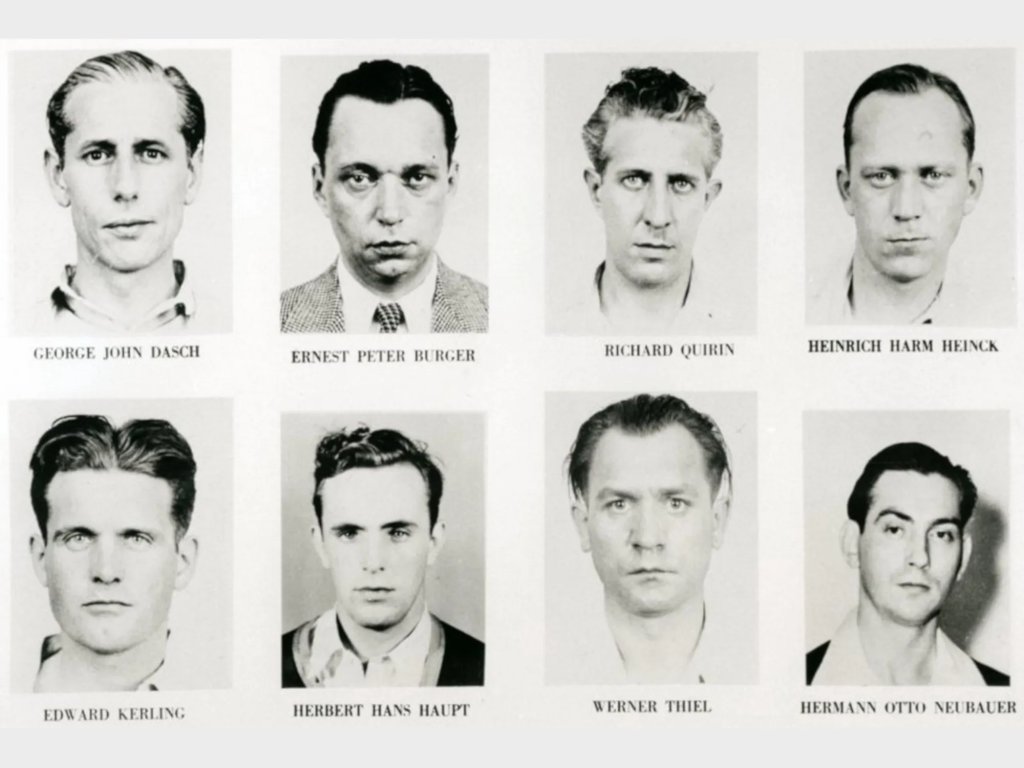
Eight men, all former residents of the United States who could speak English and blend in with everyday Americans, were selected for the mission. Their expertise in American customs made them ideal infiltrators. These recruits were brought to a secluded sabotage school at Quentz Lake near Berlin, where they trained rigorously in explosives, covert movement, disguise, and operational security. They practiced assembling time-delayed bombs, studied American maps and transportation networks, and learned to forge documents that would allow them to travel the country undetected.
Their targets included aluminum factories in New York and Tennessee, critical rail lines in Pennsylvania, water facilities in the Midwest, and industrial plants across several states. When their preparation was complete, the teams were loaded with explosives, cash, and forged papers before being dispatched toward American shores aboard German U-boats.
Landing on American Shores
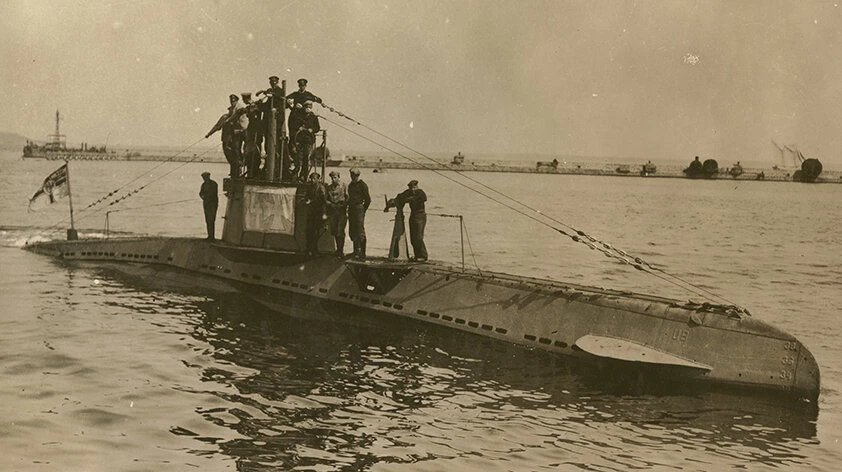
The first team arrived on the beach at Amagansett, Long Island, in June 1942, emerging from a German U-boat under cover of night. Wearing uniforms to avoid execution as spies if captured, they quickly changed into civilian clothing and buried crates of explosives beneath the dunes. A second team landed days later near Ponte Vedra Beach, south of Jacksonville, Florida, in one of the most brazen infiltration attempts in U.S. history.
When I teach this event to my U.S. History students during our World War II home front unit, I always pause on this moment—Jacksonville’s unexpected place in the story. I explain to my students that this wasn’t an operation unfolding thousands of miles away. It happened right here in our own backyard, on the same coastline they visit with their families. I tell them about the U-boat surfacing just off Florida’s shore, the men wading through the breakers with explosives strapped to their bodies, and how easily this piece of history could have been lost to time.
Using maps, photographs of Ponte Vedra in the 1940s, and even newspaper clippings, I help students visualize how this German team slipped into a quiet beach community. The personal connection—this happened where we live—immediately pulls them into the narrative. It becomes more than facts; it becomes a story they can feel.
A Mission Destroyed From Within
What the German high command never imagined was that the leader of the Long Island team, George John Dasch, intended to sabotage the operation itself rather than America’s factories. Dasch despised the Nazi regime and confided in teammate Ernst Burger, who also harbored anti-Nazi sentiment. Within days of landing, Dasch traveled to Washington, D.C., and attempted to contact the FBI directly.
At first, agents doubted his story. But after providing names, locations, training details, and evidence buried in the dunes on Long Island, Dasch finally convinced federal investigators of the truth. The FBI quickly tracked down the remaining seven saboteurs, arresting them before any attacks could be carried out.
J. Edgar Hoover announced the arrests in a triumphant press conference, portraying the FBI as having cracked the case through expert investigative work, though the public did not know the plot had collapsed because the saboteurs had turned themselves in.
A Constitutional Turning Point
Franklin D. Roosevelt ordered that the captured saboteurs be tried by a military tribunal, setting the stage for a landmark legal battle. In Ex parte Quirin, the Supreme Court upheld the government’s right to try enemy combatants—even U.S. residents—in military courts during wartime.
Six of the saboteurs were executed on August 8, 1942, marking one of the swiftest and harshest punishments for espionage in American legal history. Dasch and Burger, having cooperated with U.S. authorities, received prison sentences but were deported to Germany after the war.
Wake-Up Call for American Homeland Security
Operation Pastorius forced the United States to rethink homefront security. The ease with which German U-boats delivered saboteurs to American beaches shocked the public and the government alike. Military and civilian agencies expanded coastal patrols, tightened security at ports and factories, and strengthened domestic intelligence networks. Although the saboteurs never executed their mission, their infiltration revealed that America’s vast coastline could not be ignored.
Teaching Operation Pastorius in the 11th-Grade Classroom
Operation Pastorius offers a compelling way to help students understand that the home front during World War II involved more than rationing and war bonds; it was a battlefield of its own. By sharing the story of the Ponte Vedra landing, you connect your students directly to the history beneath their feet, demonstrating that global conflict touched their state in ways textbooks rarely highlight.
A map analysis activity allows students to study the Long Island and Florida landing sites and evaluate why the Germans chose those beaches. Primary sources such as Dasch’s statements or FBI wartime press releases help students compare public perception to the reality behind the case. A classroom discussion on Ex parte Quirin raises critical questions about constitutional rights during wartime and helps students connect WWII to modern debates about national security.
1. The vulnerability of the homefront
Students learn that war is not limited to overseas battles but can touch everyday American life. The idea that saboteurs landed near Jacksonville is a moment that always sparks discussion.
2. Human motives inside history
I encourage students to examine why Dasch betrayed the mission, exploring themes of ideology, moral conflict, and individual agency during wartime.
3. Critical thinking about national security
We debate how the U.S. government responded, including whether military tribunals were the appropriate venue for the captured saboteurs.
4. Local history as national history
By connecting national events to familiar local locations, students see how their own communities fit into the broader American story.
These strategies help bring the drama and tension of Operation Pastorius to life, allowing 11th-grade students to understand that World War II was not only a global conflict but also a struggle that touched American soil in ways both unexpected and unforgettable.
A Foiled Plot With Far-Reaching Consequences
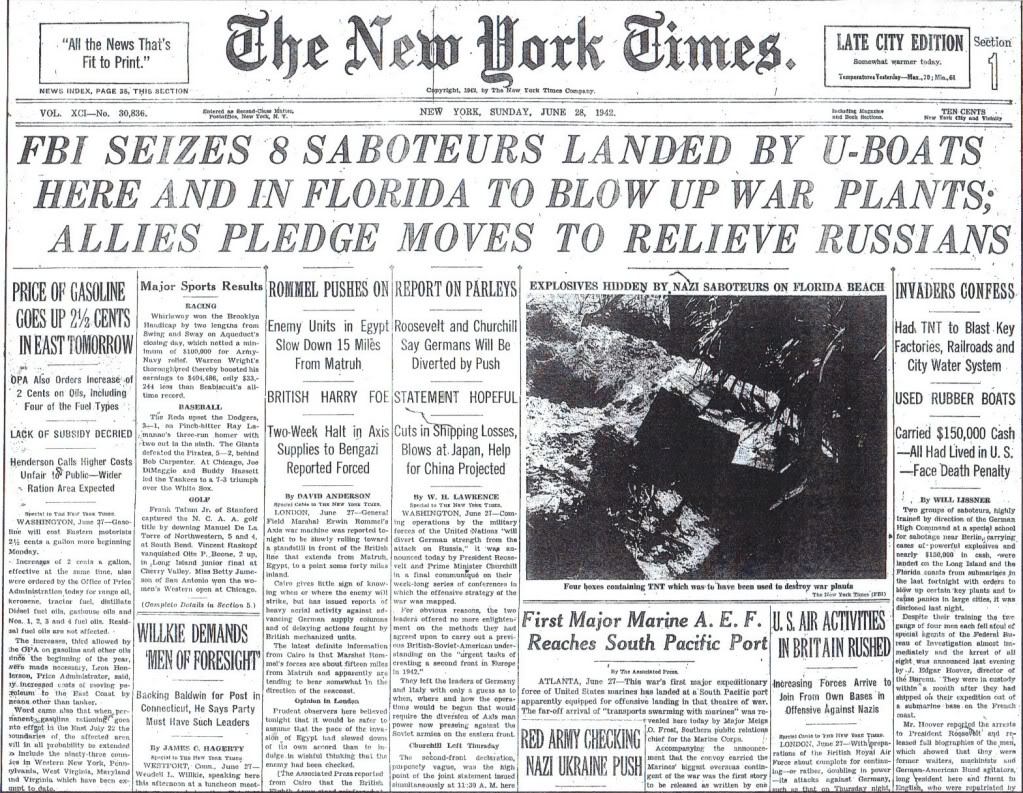
Operation Pastorius collapsed almost as soon as it began, undone by the men chosen to carry it out. Yet its repercussions were profound. It exposed vulnerabilities in American homeland defense, prompted significant changes in counterintelligence operations, and left a legal legacy that endures to this day. Together with Operation Underworld, it reveals a homefront marked by hidden battles, unexpected alliances, and moments when the war drew shockingly close to American shores.
This story continues to captivate students because it reminds them that even in a global conflict fought across oceans, moments of danger and intrigue unfolded right here at home.