As the United States prepares to commemorate its 250th anniversary, it is worth pausing to examine not only the moment when independence was declared, but the turbulent months that made that declaration inevitable.
Uncertainty, violence, and irreversible change marked the final six months before July 4, 1776. Across the colonies, ideas hardened into convictions, loyalty gave way to resistance, and British authority was tested and often broken. Cities burned, militias mobilized, and colonial leaders began to act not as subjects petitioning a distant Crown, but as architects of a new political future.
To understand the birth of the nation, one must first understand this crucible period.
Related: Nathanael Greene: The Revolutionary War’s most underrated leader
As revolutionary ideas spread through pamphlets, sermons, and conversations, the war itself intensified with brutal clarity in the southern colonies. While northern battles often dominate popular memory of the American Revolution, the opening months of 1776 revealed the South as a proving ground where imperial authority was violently asserted and decisively challenged. In Virginia and North Carolina, fire and blood replaced hesitation. These events forced colonists to confront the true nature of British power and pushed many who had once hoped for reconciliation firmly toward independence.
The destruction of Norfolk and the clash at Moores Creek Bridge were not isolated incidents. Together, they illustrated a central truth of the Revolution. British control was not simply eroding through political disagreement. It was unraveling through military confrontation, popular resistance, and the Crown’s own willingness to use terror as a tool of governance.
By the spring of 1776, the South was no longer a region cautiously watching events unfold. It had become a battleground where the choice between submission and independence was no longer abstract.
Norfolk Reduced to Ashes

The Burning of Norfolk_ A Devastating Episode in the American Revolution
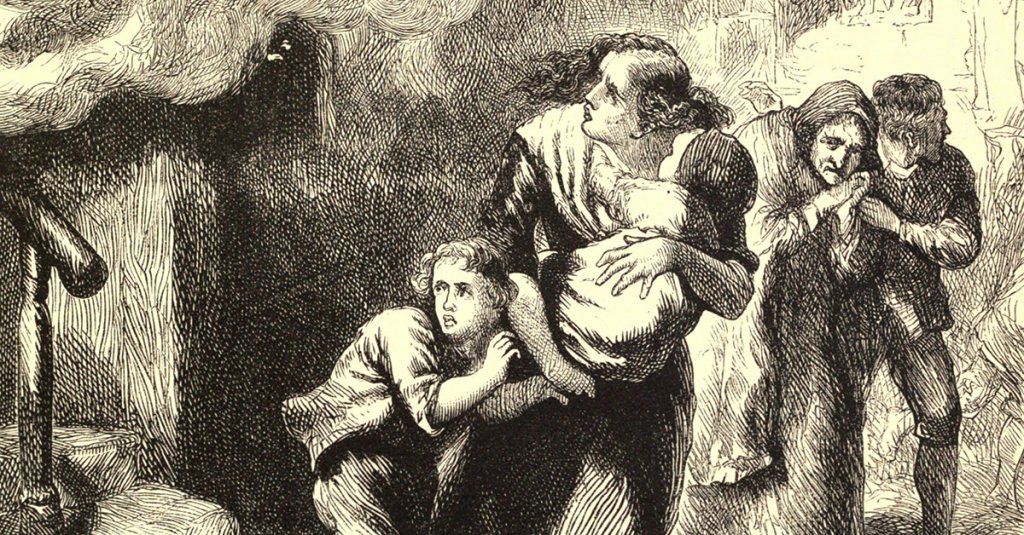
On January 1, 1776, British forces burned the city of Norfolk, Virginia, one of the most important ports in the southern colonies. The city had long been a hub of trade, commerce, and political activity. Its deepwater harbor connected Virginia’s economy to the wider Atlantic world, and its population included merchants, artisans, enslaved laborers, and small farmers whose livelihoods depended on maritime exchange.
The destruction of Norfolk did not occur in isolation. For months, the city had been caught between Patriot and Loyalist forces. Lord Dunmore, the royal governor of Virginia, had taken refuge aboard British ships after fleeing Williamsburg. From the safety of the harbor, he attempted to maintain control through raids, proclamations, and intimidation. Tensions escalated as skirmishes broke out between Patriot militia and British troops along the coast.
When the city burned, responsibility was shared between British naval bombardment and Patriot actions intended to deny the enemy shelter. But in the public mind, the event became inseparable from British authority. Regardless of who lit the first fires, the result was unmistakable. A major American city lay in ruins, its people displaced, its economy shattered.
For many Virginians, Norfolk’s destruction marked a point of no return. The image of British warships firing on civilian homes and warehouses was seared into public memory. The Crown was no longer a distant ruler issuing proclamations from across the Atlantic. It was a force capable of annihilating entire communities to preserve control.
The Political Impact of Destruction
The burning of Norfolk had consequences far beyond its physical devastation. Politically, it shattered lingering illusions about imperial restraint. For colonists who still believed the conflict might be resolved through negotiation, Norfolk stood as grim evidence to the contrary. When challenged, British authority responded with overwhelming force, not compromise.
Read Next: Thousands of Russian troops almost fought the American Revolution
The destruction also accelerated political radicalization in Virginia. Moderates who had once urged patience found their arguments increasingly hollow. If loyalty to the Crown offered no protection from destruction, what incentive remained to preserve it? The fire that consumed Norfolk ignited something equally powerful in the colonial psyche. It hardened attitudes, clarified stakes, and reframed the conflict as a struggle for survival rather than reform.
Virginia’s leaders took careful note. The colony that would soon play a central role in pushing for independence now had a powerful example of what submission might entail. Norfolk became both a warning and a rallying cry, reinforcing the argument that liberty could not coexist with unchecked imperial power.
War Comes to the Southern Backcountry

While Virginia reeled from Norfolk’s destruction, events in North Carolina moved rapidly toward open rebellion. Unlike the port cities, much of North Carolina’s conflict unfolded in the interior, among small farmers, frontier settlers, and recent immigrants. The colony was deeply divided. Loyalist sentiment ran strong, particularly among Scottish Highlanders who had recently settled in the region and retained ties to the Crown.
British officials saw North Carolina as fertile ground for restoring royal control. Plans were laid to raise Loyalist forces that could link up with British troops arriving by sea. If successful, this strategy might have stabilized the southern colonies and provided a base for future operations.
Instead, it ended in disaster.
The Battle of Moores Creek Bridge
On February 27, 1776, Patriot militia confronted Loyalist forces near Moore’s Creek Bridge in southeastern North Carolina. Though small by later standards, the battle carried enormous symbolic and strategic weight. Loyalist troops, many of them poorly armed and inexperienced, advanced toward the bridge.
They expected little resistance. What they encountered was a well-prepared Patriot force that had stripped planks from the bridge and greased the remaining beams. As Loyalists attempted to cross, they were met with musket fire and artillery. The engagement was brief but decisive. Within minutes, the Loyalist advance collapsed. Many were killed or captured, and the rest scattered into the countryside.
The Patriot victory at Moores Creek Bridge effectively ended British authority in North Carolina for the time being. Royal officials fled. Loyalist networks were disrupted. The planned British invasion collapsed before it could begin.
Popular Resistance and Military Reality
The significance of Moores Creek Bridge extended far beyond the battlefield. It demonstrated that organized colonial resistance, when supported by local populations, could defeat Loyalist forces even before regular British troops arrived. The victory boosted morale throughout the southern colonies and reinforced the belief that independence was not only desirable, but achievable.
Equally important was the battle’s impact on Loyalist sentiment. Many who had quietly supported the Crown now faced the reality of being on the losing side of a popular movement. In regions where neighbors fought neighbors, neutrality became increasingly difficult. Moores Creek Bridge made clear that the revolution was no longer a distant political dispute. It was a local struggle with real and immediate consequences.
For British planners, the defeat was a sobering lesson. The assumption that large numbers of Loyalists would rally to the Crown proved overly optimistic. In many cases, Loyalist support was shallow, fragmented, or unwilling to withstand armed resistance.
Collapse of Compromise

The Southern Campaign: The Revolutionary War in Four Minutes
Together, the burning of Norfolk and the victory at Moores Creek Bridge revealed a common truth.
British authority in the South was collapsing under the combined weight of military resistance and political alienation. Acts of destruction designed to intimidate instead radicalized. Efforts to mobilize Loyalist support exposed the limits of imperial influence.
Each event narrowed the space for compromise. Colonists who witnessed British violence or Patriot success found it increasingly difficult to imagine a return to the old order. The idea of reconciliation with a government willing to burn cities and unleash civil war lost whatever appeal it once held.
The southern colonies, often portrayed as cautious or divided, were undergoing a rapid transformation. The war was no longer something happening elsewhere. It was unfolding in their ports, along their rivers, and across their farms.
Fear, Loyalty, and Choice

The violence of early 1776 forced ordinary people to make difficult choices. For enslaved individuals, British proclamations offering freedom in exchange for loyalty complicated the conflict, introducing new risks and opportunities amid chaos. For small farmers and merchants, the destruction of property and disruption of trade made neutrality untenable.
Fear played a powerful role, but it cut in multiple directions. British firepower inspired terror, but it also inspired defiance. Patriot victories created hope, but they also demanded commitment. In this environment, loyalty was no longer inherited. It was chosen, often under duress.
These choices reshaped southern society. Communities reorganized around militia service, supply networks, and local governance. Authority increasingly flowed from popular assemblies rather than royal officials. Long before formal declarations, independence was becoming a lived reality.
Strategic Consequences

The events in the South had national implications. The collapse of British plans in North Carolina forced commanders to rethink their southern strategy. The evacuation of Norfolk weakened British influence in Virginia and deprived the navy of a secure base. These setbacks contributed to a broader pattern of imperial retreat during the early months of 1776.
For the Continental Congress, southern resistance reinforced the case for independence. Delegates could point to British destruction and failed Loyalist uprisings as evidence that reconciliation was no longer possible. The war was already being fought as a war between nations in all but name.
Military success in the South also helped balance the revolutionary effort. Victories were not confined to New England. The revolution was proving to be a continental struggle, drawing strength from diverse regions with shared resolve.
A Region Transformed
By March 1776, the southern colonies had crossed a threshold. British control, once assumed to be durable, now appeared fragile. Authority rested increasingly in the hands of colonial assemblies and militia leaders. The Crown’s power depended on force rather than consent, a reality that undermined its legitimacy.
The memory of Norfolk’s flames and the triumph at Moores Creek Bridge lingered long after the smoke cleared. These events became part of a shared narrative that framed independence as both necessary and justified. They illustrated the costs of empire and the possibilities of resistance with brutal clarity.
The South and the Road to Independence
The American Revolution was shaped as much by destruction as by debate. In the South during the opening months of 1776, fire and resolve worked together to propel the colonies toward independence. The burning of Norfolk exposed the violence at the heart of imperial rule. The victory at Moores Creek Bridge revealed the power of organized resistance backed by popular support.
Together, these events accelerated the collapse of compromise and hardened colonial resolve. They transformed fear into determination and uncertainty into action. By the time independence was formally declared later that year, many southerners had already reached their own conclusion through experience rather than rhetoric.
The revolution in the South was not merely a reaction to ideas from pamphlets and congresses. It was forged in burning cities and contested bridges. It proved that the struggle for independence was not confined to one region or one moment. It was a shared ordeal that reshaped a continent and set a new nation on its path.