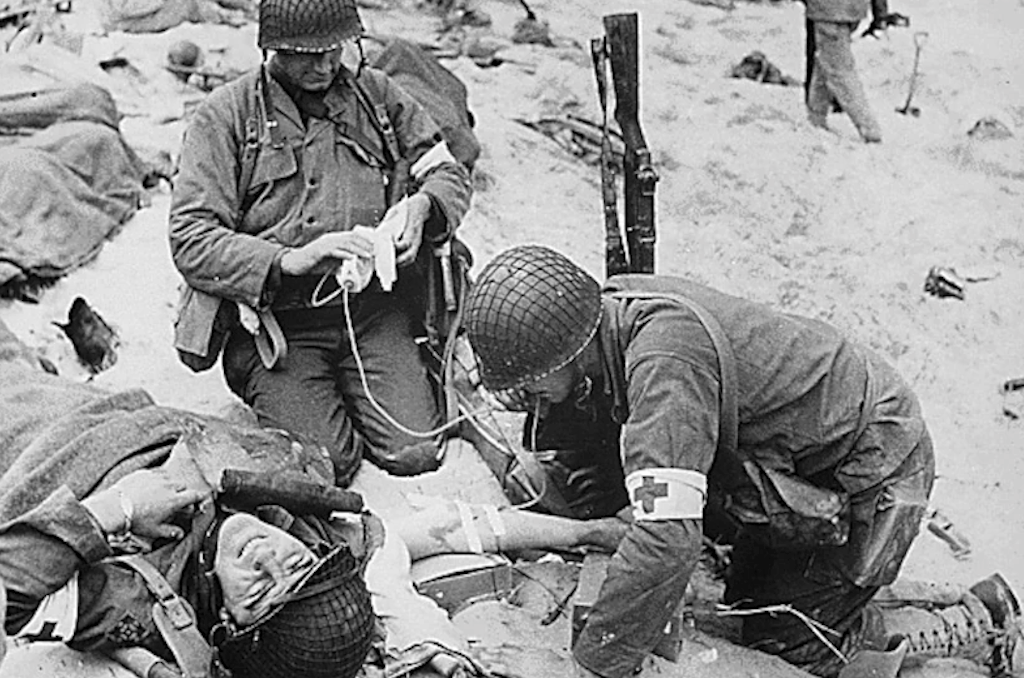
It’s no surprise that medicine and medical practices have improved over time; as abilities and data became better understood, so did professional abilities to treat a variety of ailments. But what may come as a surprise is the reasoning behind those advancements, namely, war.
For instance, the Civil War standardized anesthesia and made it safer and more widespread, enabling soldiers to receive treatment for procedures or recoveries that would’ve otherwise been performed while they were awake. World War I facilitated the development of blood transfusions, as well as the use of ambulances that could transport the wounded to centralized locations, enabling quicker and more efficient care.
Each war has brought its own surge of innovations, including those based in modern medicine, but none more notable than World War II. During this infamous war, the number and level of injuries called for some of the biggest treatments used to this day.
Medical advancements of World War II
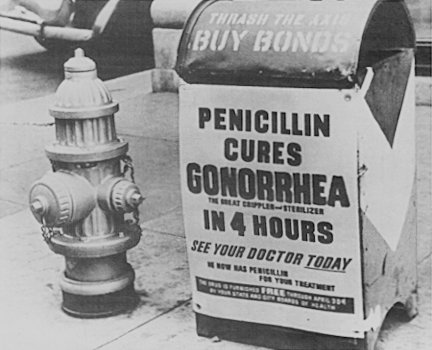
The most famous—and most frequently used—World War II medical advancement is that of antibiotics. Penicillin was developed in 1928 and gained mainstream recognition with the establishment and growth of pharmaceutical companies. The first was Sulfa Drugs in 1935. Before antibiotics were readily available, infection had been the most significant cause of war-related death (and death otherwise) throughout the world.
After World War II, the survival rate for those who were sick or injured was just 4%. However, with the spread and use of antibiotics, along with improved safety equipment, that number grew to 50%.
World War II also saw the use of metal plates for bone healing. By carefully placing pins or plates and attaching them to bones, doctors had better control of how bones would reattach, where, and could create added stability for patients. Metal plates were found among German soldiers when examining prisoners of war; the plates were discovered via X-ray. Medical staff soon reported that, with the help of metal plates, soldiers could return to work in half the time of those healing from the same injury on their own. America soon began adapting the practice to its own soldiers as well.
Throughout World War II, air evacuations also became available, allowing the seriously injured to receive faster care. Dead tissue removal also became a common surgery, even on the battlefield, which significantly reduced the need for amputation. Soldiers also received a series of vaccines and/or medications, depending on their location of deployment. They were inoculated against diseases such as malaria, smallpox, typhoid, tetanus, cholera, typhus, yellow fever, and even the bubonic plague.
Perhaps the most understated medical advancement of all is the development of chemotherapy to treat cancer cells. It was soon found that healthy cells were killed by poisonous gases. Researchers began to capture that movement and adapt it toward malignant cells, rather than healthy ones. This took time and plenty of research, but chemotherapy still traces its roots back to WWII.
Notably, many of these advancements are still in use today and have been updated and refined as modern medicine and medical technologies have continued to evolve.