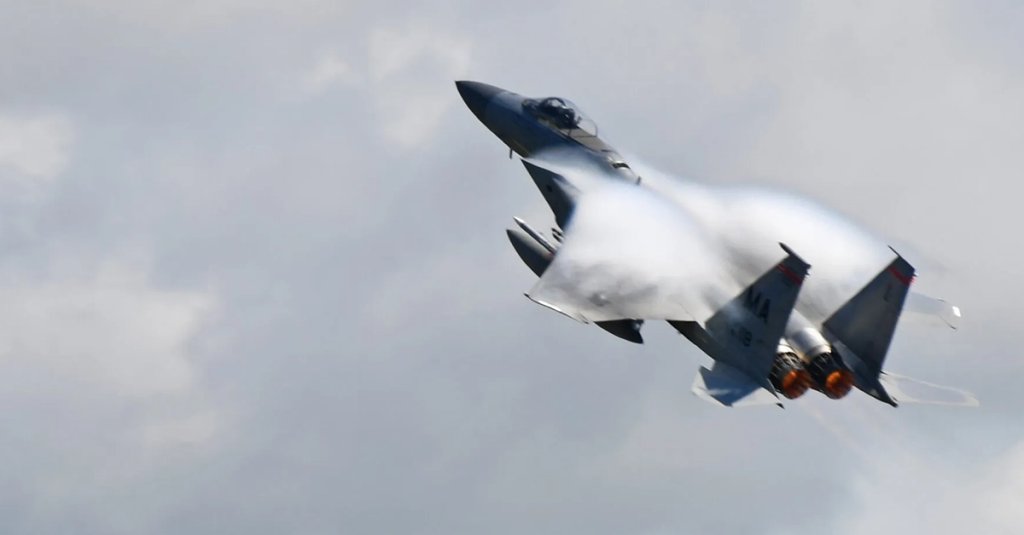
The McDonnell Douglas F-15 Eagle is a long-lived fighter jet that has served the U.S. Air Force since 1974. Over the decades, the F-15 has been upgraded to its current Boeing F-15EX Eagle II variant (Boeing acquired McDonnell Douglas in 1997). With a digital fly-by-wire control system, a digital electronic warfare system, and a revised wing structure to increase service life, the F-15EX can match modern jet fighters and has the longevity to remain in service for years to come.
Related: The complete hater’s guide to the F-15 Eagle
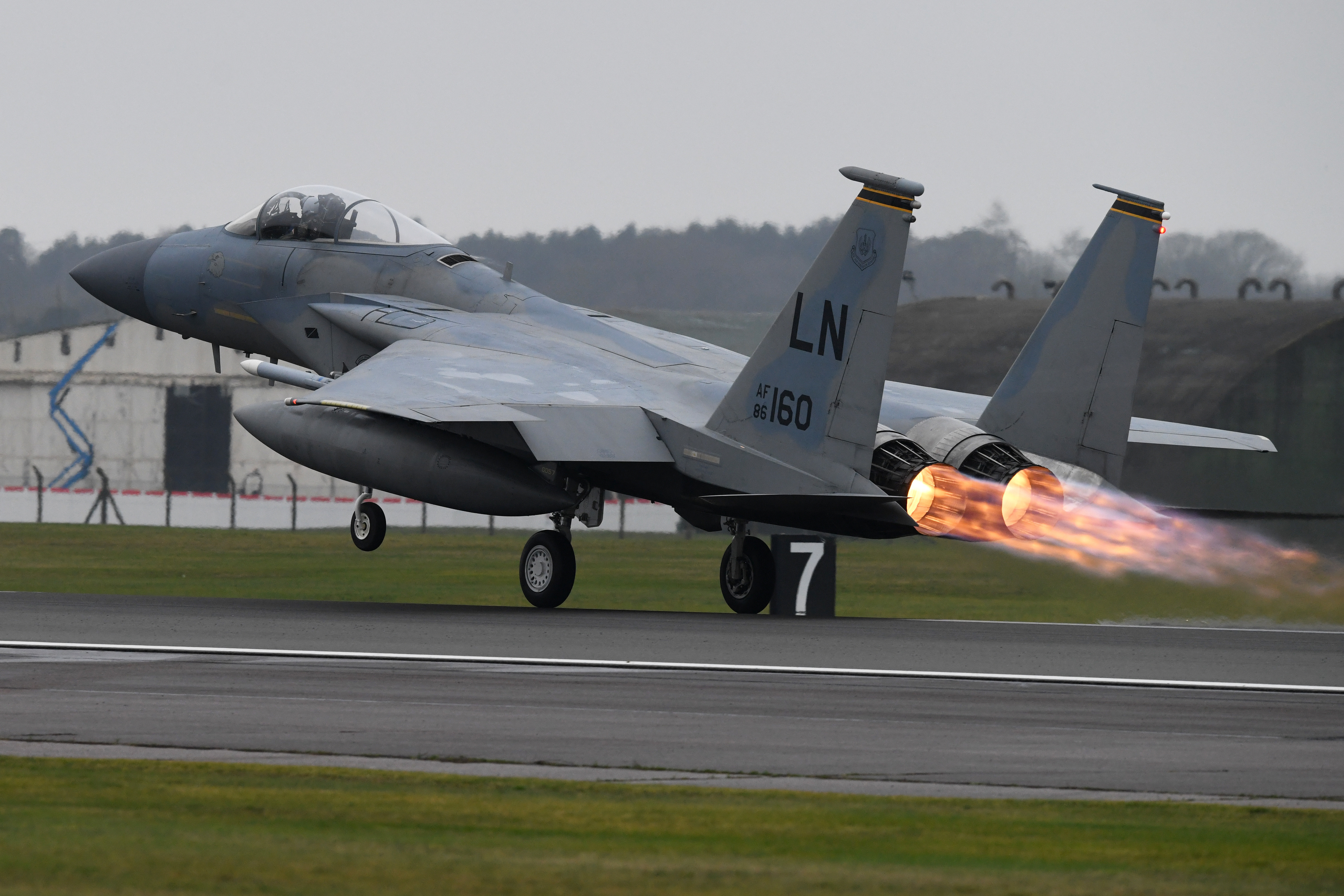
One of the most important upgrades to the F-15EX is the full integration of the General Electric F110-GE-129 engines. The Eagle II’s dual engines each produce 17,155 lbf of thrust dry, and 29,500 lbf with afterburner. Together, they give the F-15EX a high altitude top speed of Mach 2.5.
At full afterburner takeoff, the engines produce approximately 149-152 decibels. At close proximity, this is loud enough to cause an immediate eardrum rupture. While residents of central Illinois were not close enough to suffer an injury, they did experience an F-15EX sonic boom that caused mass panic.
On the morning of Dec. 21, 2021, an F-15EX took off from St. Louis Lambert International Airport in Missouri. The aircraft was conducting a test flight and was slowly making its way over central Illinois when a course correction at 11:20 caused it to inadvertently break the sound barrier. Flight trackers showed the F-15EX’s speed as 1,100 mph, or about Mach 1.4.
Down below, the sonic boom created by the fighter jet sent civilians into a frenzy. 911 calls were made from the outskirts of St. Louis and up through Springfield, with callers attributing the noise to everything from a gas main rupture to a chemical plant explosion. Reports came in of windows rattling and floors shaking; some even thought it was an earthquake.
911 calls prompted immediate investigation by fire officials. “I went up on the roof of Station One after we heard it and looked around but didn’t see any smoke or anything,” Decatur Fire Department Deputy Chief Dan Kline told The Herald & Review.
The widespread reports across the state prompted an investigation by the Illinois Emergency Management Agency. IEMA collaborated with local, federal, and other state officials to identify the culprit as an F-15EX. The agency issued its official statement the next day, stating that no damage was caused by the incident. In contrast, sonic boom testing over Oklahoma City resulted in broken glass and cracked plaster.
Notably, the F-15EX also underwent ground and flight acoustic tests to create a baseline noise level. This digital, in-depth acoustic sound testing helped develop improved hearing protection standards and update environmental impact models based on older, analog data. Ironically, the legacy data was collected in the 1970s when the F-15 Eagle was first introduced.