
Ronald Reagan avoided combat during World War II because of severe nearsightedness. Instead, he narrated about 400 preflight training films while in the Army Air Forces.
It was a natural fit. An actor by trade, Reagan was comfortable in front of a camera. Blessed with a distinctive, grandfatherly voice, he was also a gifted public speaker.
Also Read: This Navy aviator escaped his captors during the Vietnam War and lived to tell about it
As a two-term president during the 1980s, Reagan delivered some of his most memorable speeches on Memorial Day. On May 28, 1984, Reagan arrived at Arlington National Cemetery to observe the interment of a soldier from the Vietnam War into the Tomb of the Unknowns.
“We write no last chapters,” Reagan told the assembled crowd. “We close no books. We put away no final memories. An end to America’s involvement in Vietnam cannot come before we’ve achieved the fullest possible accounting of those missing in action.”
The remains of the Vietnam Unknown joined those from World War I, World War II, and the Korean War in the Tomb of the Unknowns. They remained there for more than a decade until a surprising discovery caused them to be removed.
The Unfair Treatment that Vietnam Vets Endured
The scar tissue remained.
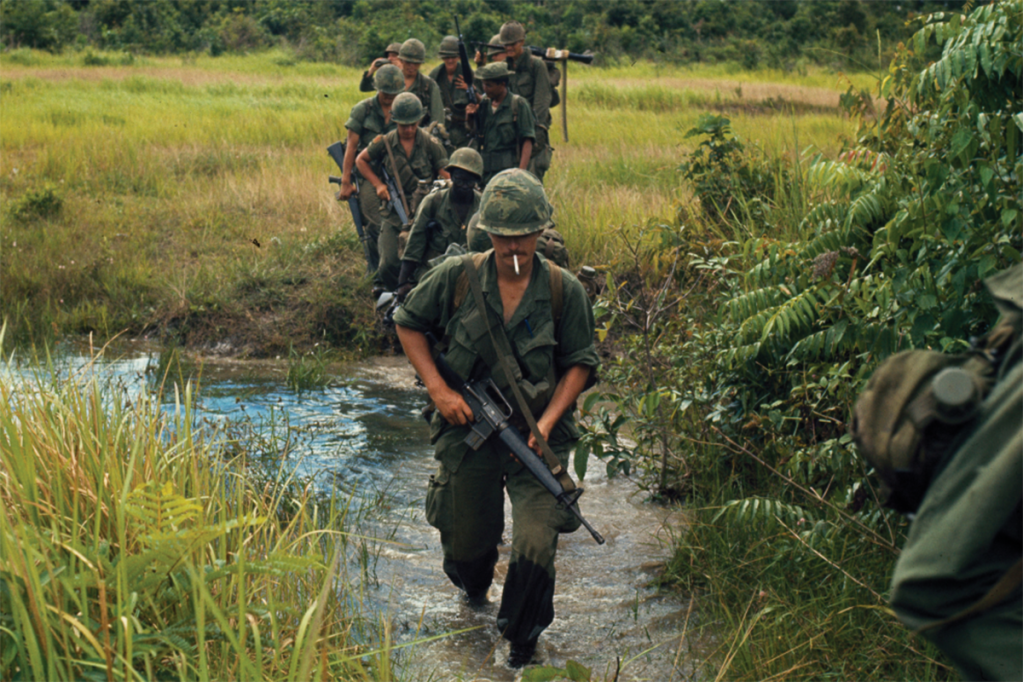
A decade after the final U.S. troops left Vietnam on March 29, 1973, some service members who fought in Southeast Asia couldn’t forget the harsh treatment that fellow Americans heaped upon them. Some were spat on while others received the middle finger or were called “baby killers.” They served their country and were blamed for the United States not defeating the North Vietnamese.
Reagan realized old wounds can’t go unattended. Two years after the dedication of the Vietnam Veterans Memorial in Washington, D.C., Reagan used his oratorical gifts to promote a better understanding of what Vietnam veterans endured.
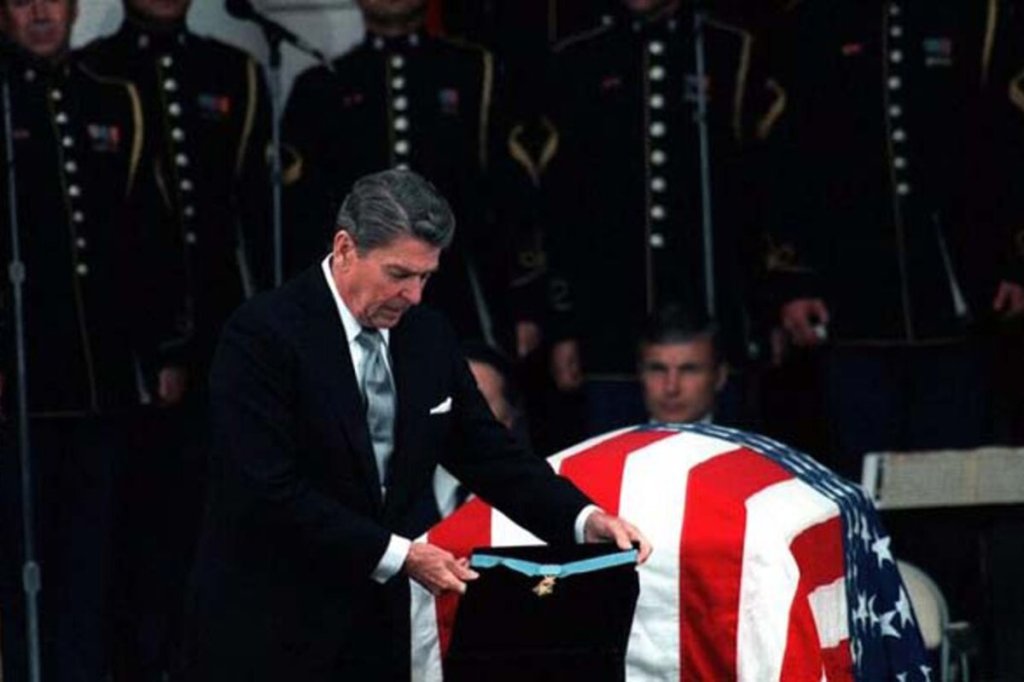
The president continued a tradition from past wars and awarded the Medal of Honor to the Vietnam Unknown. That nice moment was not enough for Reagan. He reached out to military families residing in a continual, painful limbo because of a loved one MIA. Reagan told them that a grateful nation understood their plight.
“They live day and night with uncertainty, with an emptiness, with a void that we cannot fathom,” Reagan said.
“Thank You, Dear Son”
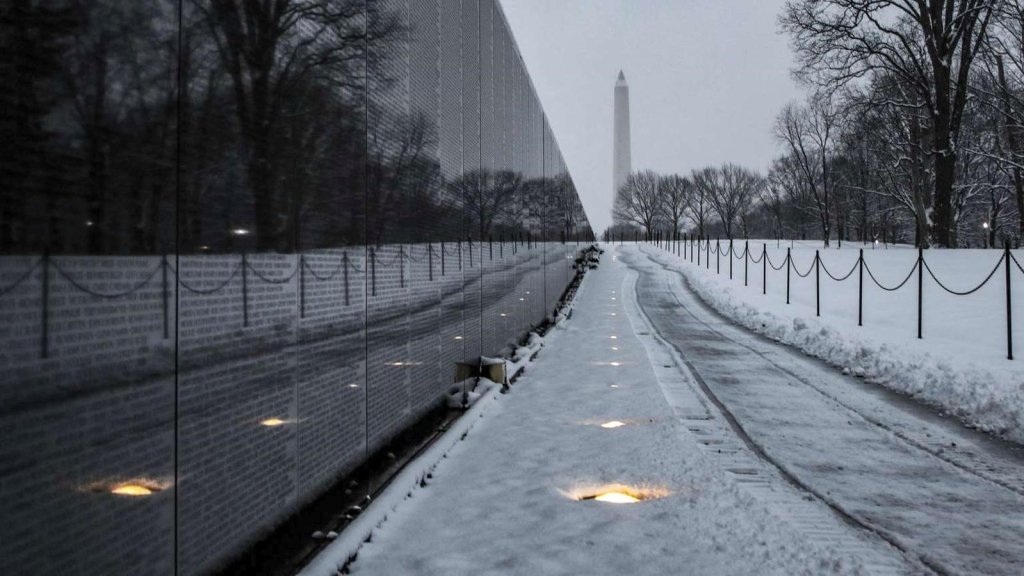
Reagan included references to President Abraham Lincoln’s Gettysburg Address and how volunteers read the nearly 58,000 names on the Vietnam Veterans Wall in 1982. That moving tribute lasted three days, the president mentioned, and was part of a weeklong salute to Vietnam vets.
Reagan referenced a newspaper article that recounted a dinner involving several former Marines. A group of college students, some of them likely still in diapers when the first U.S. troops arrived in Vietnam in 1965, were in the restaurant. The two groups, seemingly with little in common, mingled.
When the vets left the restaurant, the students bid them farewell with hearty applause.
“The whole week, it was worth it just for that,’” Reagan, reading from the article, told the crowd of one Marine’s response.
The Vietnam Unknown never heard such cheers. In so many ways, wars never end for those who knew someone MIA. So many unanswered questions remain, threatening to expose a deep sense of loss always lingering just below the surface.
In 1984, Reagan was acutely aware of that.
“Today we pause to embrace him and all who served us so well in a war whose end offered no parades, no flags, and so little thanks,” Reagan remarked.
“…. A grateful nation opens her heart today in gratitude for their sacrifice, for their courage, and for their noble service. Let us, if we must, debate the lessons learned at some other time. Today, we simply say with pride, ‘Thank you, dear son. May God cradle you in His loving arms.”
Identity of Vietnam Unknown Confirmed
Approximately, 1,500-plus U.S. service members from the Vietnam War remain missing or unidentified, according to the Defense POW/MIA Accounting Agency.
For more than a decade after Reagan’s Memorial Day speech, the Vietnam Unknown remained part of that statistic. That began to change in 1994, however, when Vietnam vet Ted Sampley contacted the family of Air Force 1st Lt. Michael Joseph Blassie.
Sampley believed Blassie, whose aircraft went down 60 miles north of Saigon (now Ho Chi Minh City) on May 11, 1972, was the Vietnam Unknown in the Tomb of the Unknowns. Four years later, a CBS report claimed the Defense Department tried to keep Blassie’s identity hidden for years. The Blassie family petitioned the military to exhume the Vietnam Unknown’s remains. After they were, testing matched DNA found in the remains with those of Blassie’s mother and one of his sisters.
Blassie’s remains were relocated to Jefferson Barracks National Cemetery in his home state, Missouri. He was 24 years old at the time of his death.
The Medal of Honor was revoked, a move that concerned the Blassies very little. At long last, they had their son and brother back. Nothing mattered more than that.
Don’t Miss the Best of We Are The Mighty
• The shortest soldier in American history was a Green Beret who fought in Vietnam
• How to get a name rubbing from the Vietnam Veterans Memorial Wall
• Did you know this president served on active duty during WWII?
Featured
Loading comments…
Comments couldn’t be loaded. Please refresh the page.