Boeing did not make the first jetliner.
However, it has the longest jetliner legacy with its massive 777 and cutting-edge 787, tracing its shared lineage back to the 707. First flown in 1957, the 707 was Boeing’s first jetliner and flew for classic Jet Age airlines like Pan Am and TWA.
Related: The military is the reason for the Boeing 747’s iconic bump
With its single aisle and four engines, the 707 is antiquated by modern standards. It flew its last U.S. carrier flight in 1983. However, its older sister remains in active service with the U.S. Air Force.
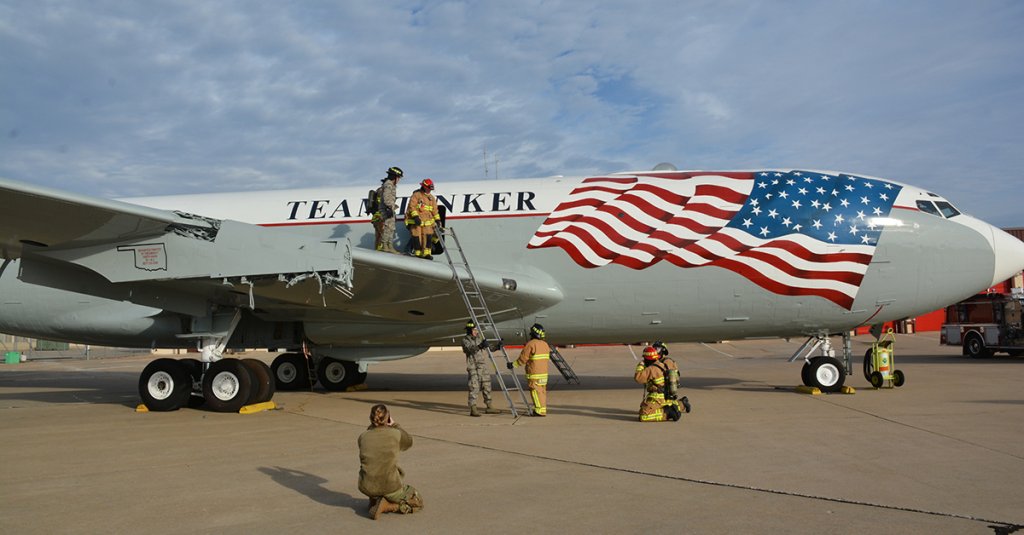
Introducing the KC-135 Stratotanker
The 707 was developed from Boeing’s 367-80. Known as the Dash 80, it was a prototype built to demonstrate the use of jet power in commercial aviation. From the Dash 80, Boeing developed a proposal for the Air Force’s first jet-powered aerial refueling tanker.
Predating the 707, the KC-135 Stratotanker is visually similar to its airliner sibling. However, the tanker is shorter and has a narrower fuselage. Despite both planes being derived from the Dash 80, the KC-135 and 707 are structurally different.
In 1954, the Air Force placed its first order for 29 KC-135s. The first aircraft flew in August 1956, a year before the 707. Less than a year later, in June 1957, the first production model was delivered to Castle Air Force Base, California.
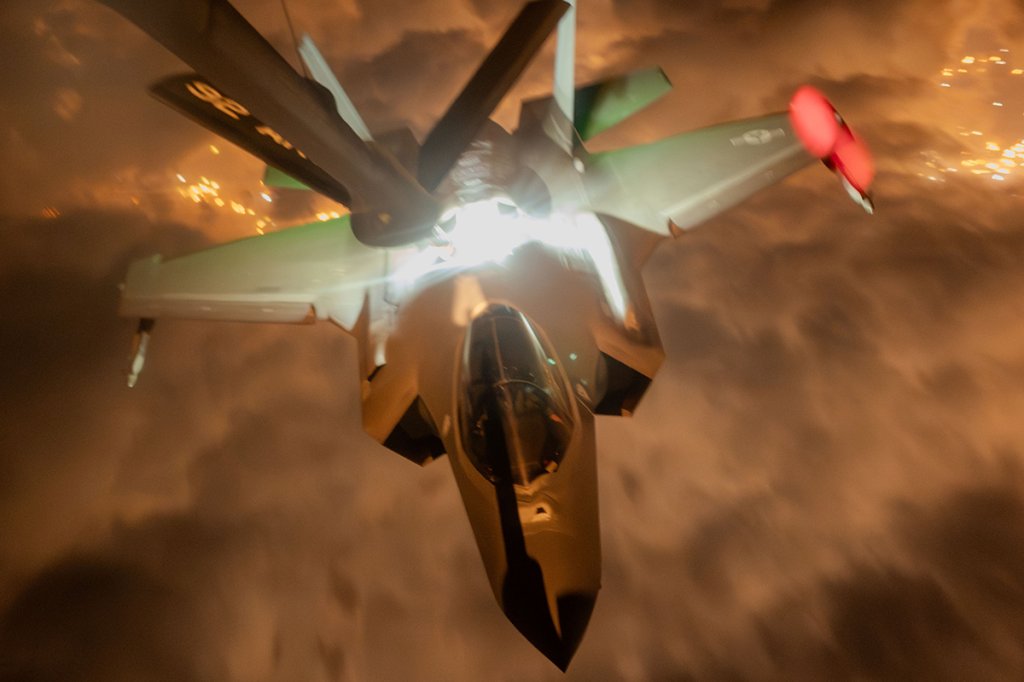
The KC-135 was initially designed to support Strategic Air Command’s long-range bombers. However, its versatility saw it refueling fighter jets like the F-4 Phantom II and F-105 Thunderchief over Southeast Asia during the Vietnam War. Capable of locking onto Air Force jets, the Stratotanker could tow damaged aircraft and feed them fuel to get them back to base safely.
Air Force Seeks a Sixth-Gen Tanker Aircraft
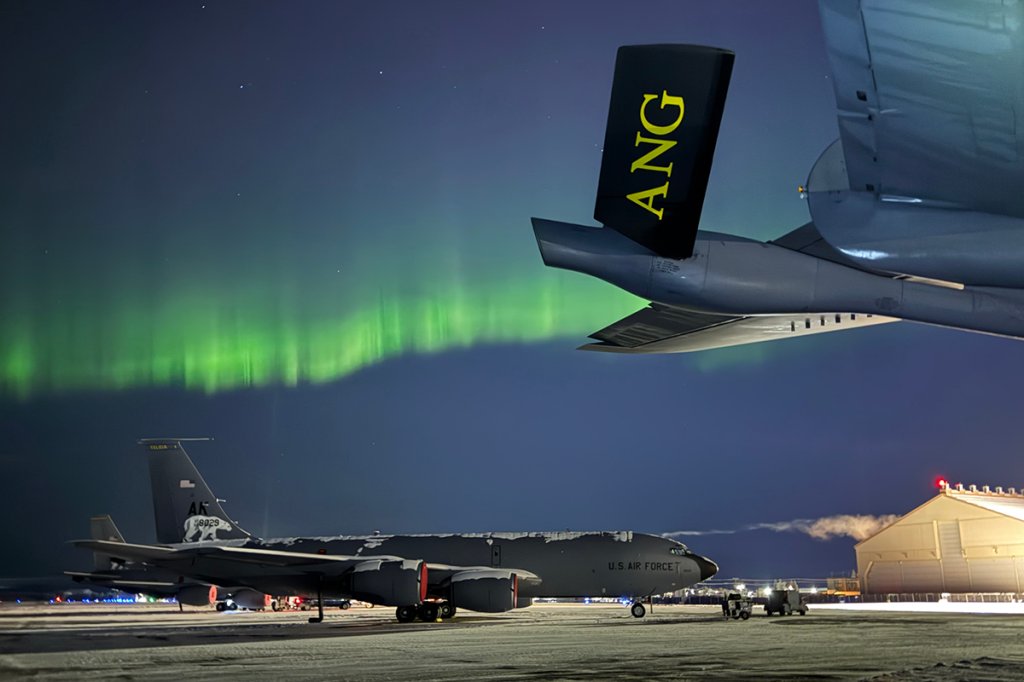
The KC-135 continued to serve through the turn of the 21st century.
It was critical in supporting the air campaign during Operations Desert Storm, Iraqi Freedom and Enduring Freedom. Strategic Air Command operated the Stratotanker until 1992 when the command was inactivated and replaced by U.S. Strategic Command.
Afterward, Air Mobility Command took over the refueling mission and continues to fly the KC-135 today, including in the joint U.S.-Israel military operations against Iran that began on February 28, 2026. Although the Air Force has adopted the Boeing 767-derived KC-46 Pegasus to partially replace the Stratotanker, the KC-135 may stay in service for the foreseeable future as the service assesses the possibilities for its sixth-generation tanker aircraft.