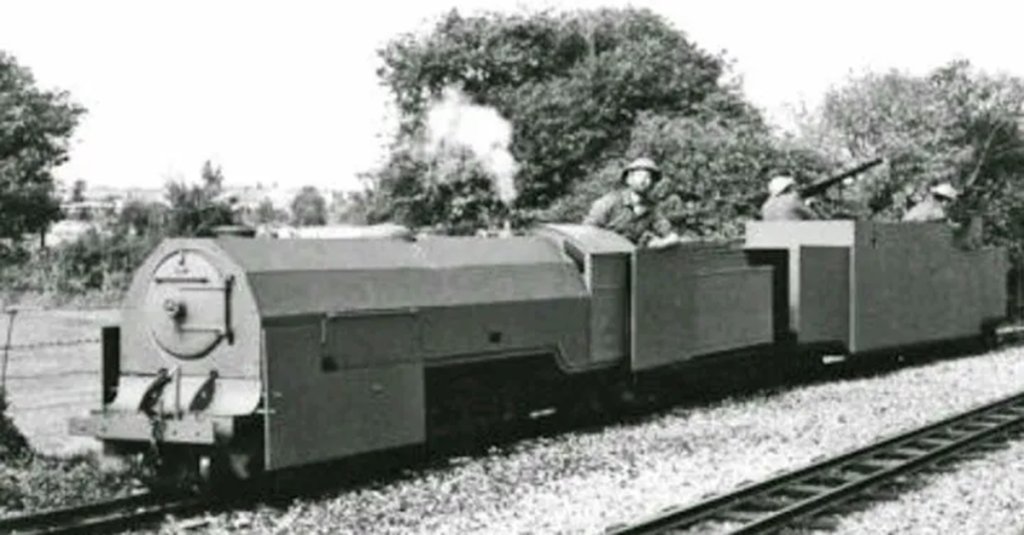
The holder of the Guinness world record for the smallest armored train wasn’t some novelty act.
Far from it, the function of the miniature armored train run by Britain’s Romney, Hythe, and Dymchurch Railway wasn’t to attract curiosity seekers. It was to cause trouble for the Germans during World War II, and in that regard, it was an unqualified success.
Read Next: Japan’s invasion of Alaska and the only World War II land campaign on American soil
That little train that could is credited with shooting down perhaps the Luftwaffe’s best fighter, a Messerschmitt Bf 109. It also is believed to have taken out two bombers.
Armored Trains Date to the Civil War
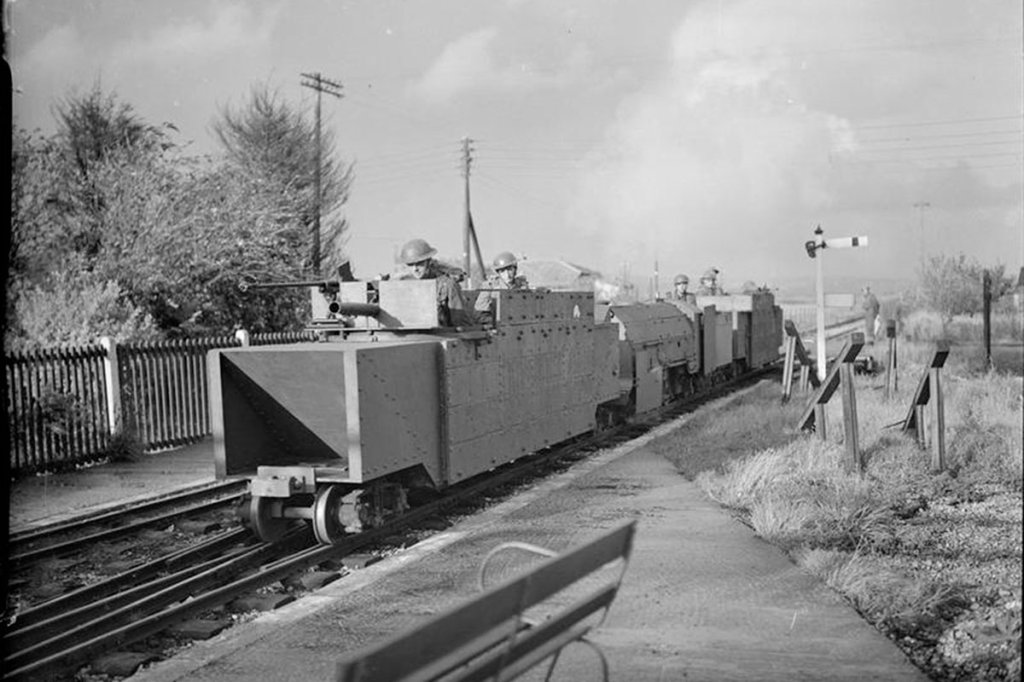
Armored trains were first used during the Civil War.
Back then, they must have seemed like a technological marvel and were certainly preferable and less time-consuming than soldiers huffing it on foot or relying on horses, mules, and oxen to carry supplies.
As the years progressed, armored trains were involved in other conflicts, including the Franco-Prussian War and the Boer War. They also came into play during World War I. Concerns about a possible coastal invasion prompted Great Britain to construct two primary armored trains: the HMT Norna and HMT Alice. Protected by a half-inch armored plate, they were impressively built locomotives that carried a lot of firepower.
Neither the Norna nor the Alice got the opportunity to fire a single shot during the war, however.
Armored Trains Come into Play During WWII

Every Armored Train Used in WWII
Fast forward to World War II, and several countries relied on armored trains then as well. The Germans did, as did Poland, the Soviet Union, Italy and even Canada.
Britain was no different. Under the omnipresent threat of Adolf Hitler and the Nazis, the British invested more heavily in armored trains during World War II than they did in WWI.
It made perfect sense. The German Luftwaffe relentlessly attacked England from the air during the Battle of Britain in 1940. Not only that, but after the fall of France, the British military and government were concerned about what a possible land invasion would mean for their country’s future.
As part of its defense, the Brits ordered the construction of 13 armored locomotives.
Equipping Armored Trains
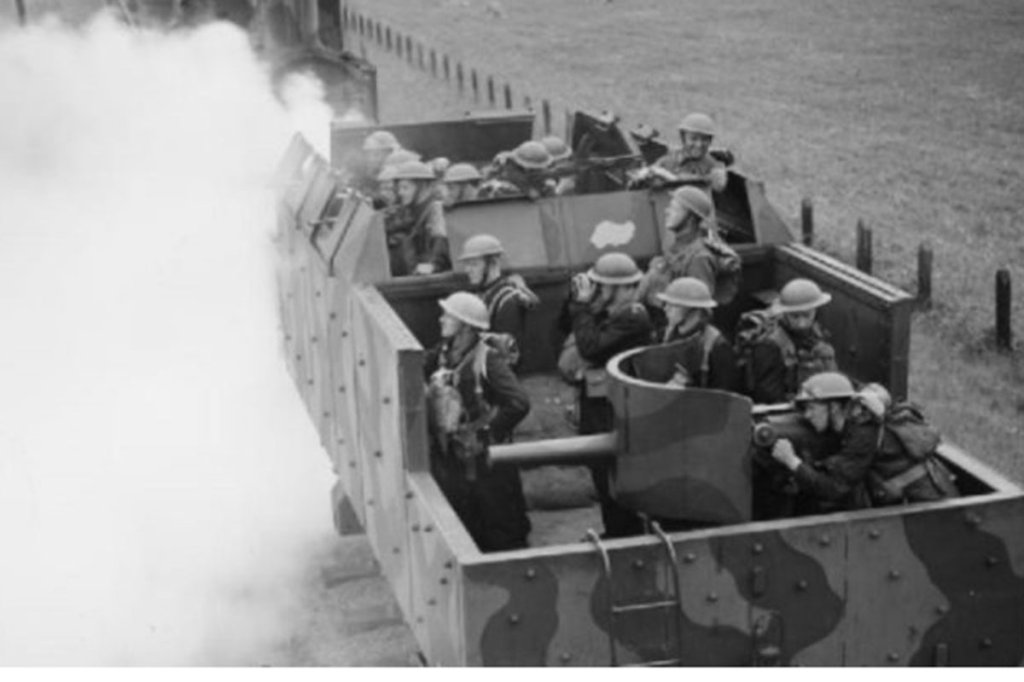
The layout of these trains followed a similar pattern. A locomotive sat in the middle between two armed and armored train cars, usually repurposed steel coal wagons with added armor. Additional train cars carried extra ammunition.
The standard armament for the gun cars was a QF 6 pounder Hotchkiss gun and a Vickers or Lewis machine gun. The soldiers who crewed the trains were also heavily armed with Bren light machine guns and Thompson submachine guns to complement their standard Lee-Enfield rifles.
That configuration did not work for one of those trains, though. Because the Romney, Hythe, and Dymchurch Railway (RH&DR) was considered a narrow gauge, or light, railway, that meant its tracks could not support heavier loads. Some accommodations had to be made, and what they devised was a miniature armored train.
That would fix the problem.
Lighter, but Still Powerful Weapons
The 6th Battalion, Somerset Light Infantry operated the mini-train, which was supplied with lighter weapons such as two .55-inch Boys anti-tank rifles and four Lewis guns. Those weapons still could do damage, which the Germans found out when their Messerschmitt Bf 109 was shot down. Britain’s mini-armored train also took out a couple of Luftwaffe bombers: a Heinkel He111 and a Dornier Do 17.
Hitler never succeeded in his goal of invading Britain, and in November 1944, the last British armored train was taken out of service. Most have been largely forgotten to history, except for the one with a world record. It’s a record that likely will never be broken.
Don’t Miss the Best of We Are The Mighty
• German intelligence was working against Adolf Hitler for all of World War II
• The friendly rivalry between ‘Hollywood Marines’ and Parris Island Marines
• A new era of robotic systems is here, and it’s not Skynet