By the time Operation Desert Storm ended in 1991, it had blown the Soviet Union’s communist collective mind. Soviet planners watched the precise, overwhelming, systematic destruction of an Iraqi army that was fighting with Soviet doctrine: Soviet gear, Soviet training, and a Soviet-style air defense concept.
The Russians had expected Baghdad to be a stress test for U.S. air power and its all-volunteer force. It hoped for a preview of how a U.S. coalition (like NATO) might be bled in a big, messy land war. They wanted to see how a war between East and West in Europe might go, and they wanted Iraq to make the U.S. pay a heavy price to liberate Kuwait.
Also Read: 21 Facts about the First Gulf War
Instead, the Coalition launched a massive, sustained air campaign and then wrapped the ground war up in about 100 hours. To the Soviet military, it wasn’t just that their client state got a beatdown. The USSR’s whole model of modern war got exposed for the entire world to see.
The U.S.-led coalition didn’t just beat Saddam Hussein’s army. It made a public demonstration of how wars would be fought after the Cold War. The Soviets didn’t see Iraqi conscripts in burning tanks, they saw what could have been Russian conscripts in burning tanks during a war against NATO. And the Soviet general staff, already dealing with a collapsing economy and a dying political system, had nothing to do but sit and take notes.
The Meat Grinder Never Materialized
On paper, Iraq appeared to be a formidable opponent. It had a large army (the fourth-largest in the world), extensive armor, robust air defenses, and years of experience fighting Iran. Much of its gear and training had Soviet fingerprints all over it. The generals watching from Moscow could reasonably believe this would turn into a long, bloody grind once the ground war started.
To the Soviets, the war to oust Iraq from Kuwait could’ve taken weeks. Maybe months.
Nope.

Russian thinking contended that air power could hurt or slow down an army, and generally make an enemy rethink strategy, but it couldn’t decide the entire war by itself. The decisive moment would have to come in a ground war, and that campaign (the Russians believed) would punish an all-volunteer American force.
That belief was a doctrine rooted in how the Red Army was designed to fight NATO. The model was a system of armor and infantry massed and protected by air defenses, backed by artillery, with enough depth to take punishment and keep moving. So when early reports suggested Iraqi formations were unraveling fast, it was easy to dismiss them as confusion, exaggeration, or wishful thinking. And in a fast-moving conflict, both sides always claim the other one is panicking.
Like a plan not surviving first contact with the enemy, Moscow’s long-standing theory didn’t survive first contact with the reality of modern combat. The ground war began on Feb. 24, 1991, and it was essentially over by the 28th. The famous 100 hours number wasmore than just a headline.
Soviet observers watched Iraqi air defenses get blinded and dismantled. They saw armored formations get shredded (sometimes literally), sometimes without ever seeing what hit them. And they watched a massive Coalition force move fast through open desert, at night, in bad weather, then show up on Iraq’s flank as if it had teleported.
The “Left Hook” Landed
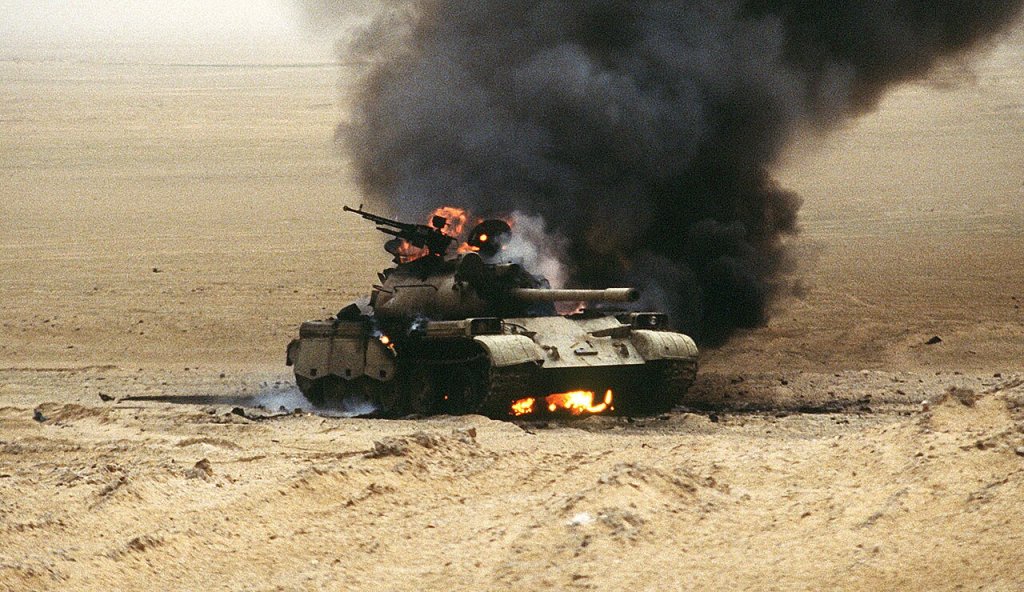
The Coalition’s main ground move should’ve looked familiar to Soviet planners and obvious to the Iraqis. It was a huge left hook through the desert, a deep envelopment that punished an opponent who expected the main blow to land elsewhere. It happened with a tempo and coordination that Iraq didn’t match (and couldn’t match) for many reasons.
U.S. forces pushed wide, moved quickly, and kept units aligned across featureless terrain in bad visibility, operating at night and in poor weather (which is why the Battle of 73 Easting is named after coordinates, and not a city). The Iraqis didn’t respond like a force built and trained to fight a mobile, combined-arms campaign. They reacted late, inconsistently, or not at all, and by the time they realized where the main threat actually was, the Coalition was already inflicting casualties.
For Soviet observers, the shock wasn’t that a left hook happened. It was that it worked so well, so quickly, and alongside an air campaign that had already dismantled the opponent’s ability to see, communicate, and coordinate.
Soviet doctrine was comfortable with a certain kind of war. It assumed time, mass, and a hierarchy that could grind its way through an enemy. Operation Desert Storm was a style of fighting that prevented an opponent from ever getting organized enough to hit back. For a general staff whose fundamental beliefs relied on artillery shells and tank counts, it caused an existential crisis.
The Highway of Death

Desert Storm basically showed the Soviet Union that the Cold War wasn’t a stalemate, and the USSR was lucky to avoid a head-on conflict. Nowhere was that more apparent than in the Iraqi retreat.
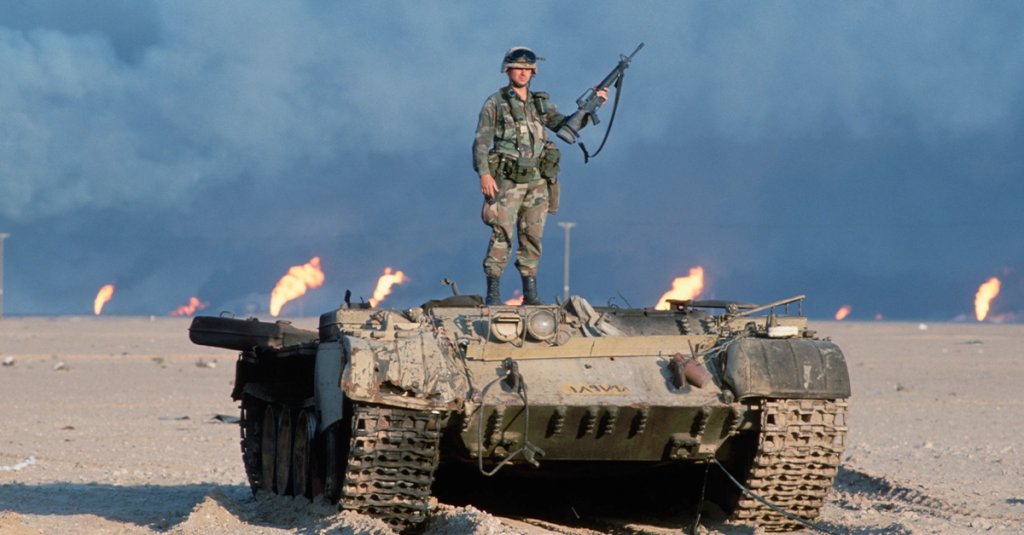
As Iraqi troops and vehicles fled Kuwait City north on Highway 80, American airpower hit the retreating column for hours with surgical precision. When imagery filtered back to Moscow, Soviet analysts saw a massive number of vehicles jammed and incinerated, tanks with turrets blown off, and trucks melted into the road.
Western media called it the “Highway of Death.” Moscow saw what happens when one side can find, track, and hit what it wants, while the other side can’t do anything about it.
The Coalition turned a large movement of units, even those in full retreat, into what looked like a conveyor belt of destruction. Coalition air forces consistently detected movement, shared targeting information quickly, and struck with precision. The old Red Army strategy of massing a large force of armor was suddenly a huge liability.
Hunting Ghosts
Initially, Moscow’s copium was to blame the Iraqis. Iraq must have been incompetent. Iraqi troops were undisciplined. They misused Soviet doctrine. They didn’t fight the way they were supposed to fight. And that’s not entirely wrong. Iraq had major problems in basically everything. Training, leadership, morale, logistics, and initiative. But that assessment misses what Desert Storm showed the world, and the one thing the USSR didn’t want to accept: This wasn’t just a mismatch on the ground, the Iraqis didn’t realize the full scope of the enemy they were fighting.
At first, Soviet analysts looked for a single decisive American advantage: one technology, one superweapon, one electronic trick that blinded radar, one wonder weapon that explained the whole lopsided victory. But if there was one thing that made the swift destruction of the Iraqi Army possible, it was one thing that was actually many things. Iraq was actually fighting a network and didn’t know it.
Victory in the Gulf began with something that might have sounded like science fiction in 1991, but is used today to deliver Chinese food: the Global Positioning System. GPS wasn’t just navigation. It was an enabler that let U.S. forces maneuver at speed, at night, in sandstorms, and hit with accuracy that made older platforms perform like something new. It’s how the Coalition managed to swing through the desert and hit the Iraqis through sandstorms and the black desert night.
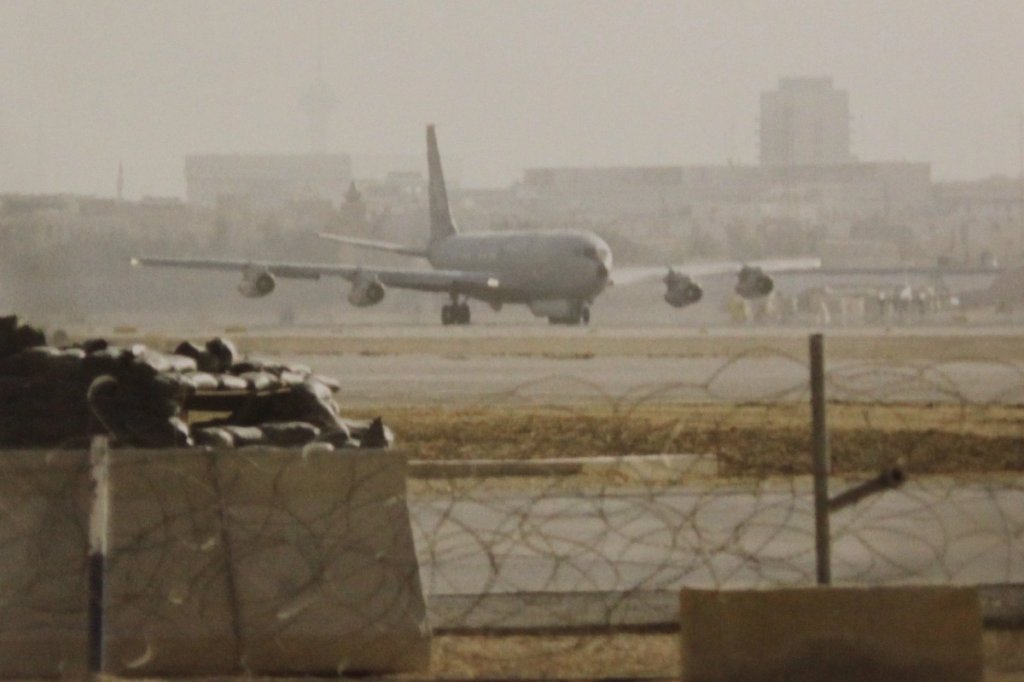
The real gut punch for the USSR was discovering America’s “all-seeing eye,” the E-8 JSTARS, a radar and battle management platform that could scan large swaths of ground and track moving vehicles, then send that data across the force. The Americans could fuse sensors, shooters, and communications into a single integrated system. JSTARS has since been replaced, but 30-some years ago, it was cutting-edge: it saw movement, then passed targets on digitally. AWACS sorted it all out, and attack aircraft arrived on the scene already knowing where to find their targets.
Soviet doctrine was the reverse. Reports went up the chain of command, orders came down the chain, and time lag was baked into the assessments. The Americans were operating a network in which sensor platforms were tools and speed was the real weapon. In a European war, Eastern Bloc units would be destroyed while waiting for orders.
What the Russians Learned
A RAND assessment published in 1992 laid out how Russian military thinkers digested Desert Storm, and the lessons were anything but subtle. First and foremost, they saw Desert Storm as proof that modern war had changed dramatically from the model they’d expected. It didn’t change bits and pieces here and there, the Gulf War changed the foundation of Soviet military thinking.
Although the air war came first chronologically, the USSR saw air power as the main event, not an opening act. The idea that air forces could create victory conditions with relatively low friendly losses hit hard for a military culture raised on mass and attrition. The Soviets also had to confront an ugly truth about tanks and armies that don’t have air superiority. If the other side controls the air, armor becomes an endangered species.
Soviet-style command-and-control was also too rigid for the American optempo. Centralized control might maintain order (which was pretty important to the Red Army), but it also slowed adaptation. Desert Storm highlighted speed, flexibility, and coordination across services and among allies. Most notably, fixed defenses weren’t the comfort blanket they used to be, either. Hardened shelters, static nodes, and predictable infrastructure became targets. Stealth and precision made it harder to hide from the enemy.
And then there was coalition warfare.
Soviet analysts noted the Coalition and how it functioned. They saw victory tied not only to weapon performance, but also to a command system that could coordinate air, land, maritime forces, national goals, and political will. This is why the U.S. military still focuses on interoperability with its allies, decades later.
The Fall of the “Evil Empire”

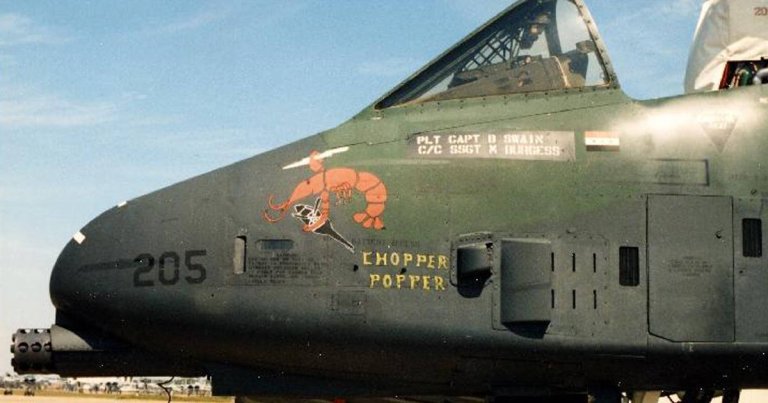
By late 1991, the Soviet Union was nearing its end for reasons bigger than anything that happened on a far-flung battlefield. Desert Storm delivered a clear warning to Russia long before the hammer and sickle flag came down: if you can’t keep up with the pace of information, your armored force is just a list of targets waiting for the enemy network to find them and point them out to an A-10. But many of those lessons were (apparently) lost in the fall of the Soviet Union.
The USSR used similar hardware as the Iraqis did in Kuwait (and had the receipts to prove it), and used some similar concepts of command, some of which the Russians still use today. Victory on the battlefield would henceforth be determined by who sees first, who shares fastest, who decides quickest, and who can keep operating when their networks go down.
The Red Army’s old method of overwhelming an enemy with masses of armor, troops, and firepower (think World War II’s Eastern Front) was just not the way warfare worked anymore. Moscow has been fighting against that reality ever since.
Don’t Miss the Best of We Are The Mighty
• The Coalition destroyed the entire Iraqi Navy in four days
• How the Marines ripped through the Iraqis in Operation Desert Storm
• Navy battleships pulled off the biggest military deception of Desert Storm