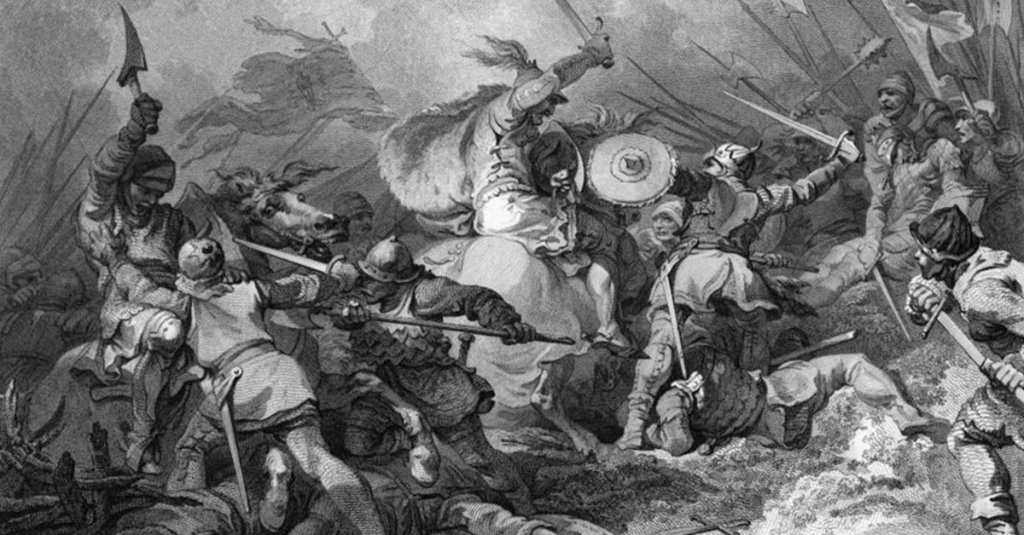
From the late 700s through the 1000s, seafaring raiders and traders from Norway, Denmark, and Sweden pushed across Europe. The lightning strike on the monastery at Lindisfarne in 793 became the headline moment, but the culture behind it was older and stranger than a simple “raiders vs. monks” story. At its heart was a brutally clear idea: die bravely, and the afterlife upgrades you to Odin’s elite.
For Norse warriors, the premium afterlife wasn’t a quiet paradise. It was Valhalla, Odin’s great hall, where the honored dead (the einherjar) feast nightly and fight daily. The point isn’t punishment; it’s preparation.
Related: Til Valhalla: Where the phrase came from and what it means to veterans
The Allfather
To understand Valhalla, one must first understand its ruler: Odin. Odin is the central figure in Norse mythology. He goes by over 200 different names, but is most famously known as The Allfather.
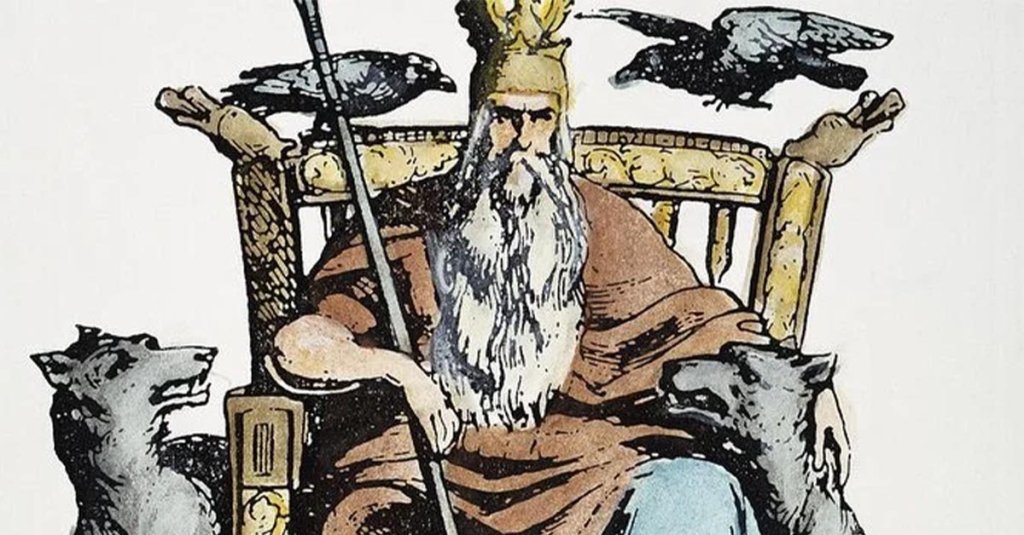
He had two ravens who traveled the world, providing him with information as the world took shape. He sought wisdom wherever he could find it, and his quest led him to the World Tree, called Yggdrasil. He hung himself from its branches, stabbed himself with his spear, and fasted for nine days to learn the secrets of powerful runes—but this was not enough to satiate a god’s curiosity.
Odin is the restless engine of Norse myth: a god who trades comfort for knowledge. His thirst for knowledge turned literal when he heard a giant called Mimir protected an actual well of knowledge. When Mimir drank from the well, he grew wiser. Odin wanted a drink himself and, thankfully, he had something to barter. The Allfather could see all, so he offered one of his eyes to Mimir in exchange for a drink. Without hesitation, Odin plucked out his eye, gave it to the giant, and then drank from the well.
He’s not “all-seeing” because he was born that way—he pays for insight, then uses it to shape a world worth fighting for.
Valkyries Choose Who Gets to Valhalla
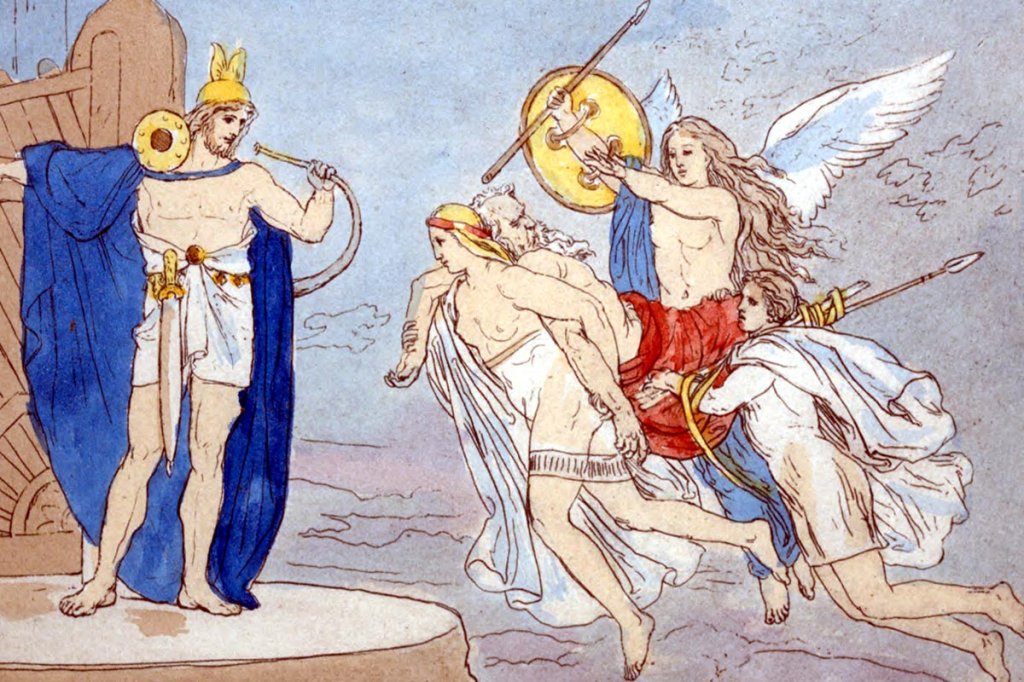
Valkyries, Odin’s battle-choosers, swept fields of war and selected the worthy dead. Half the dead would ride with the Valkyries to Valhalla; the other half go to Fólkvangr, the peaceful field kept by the goddess Freyja. That split matters; It meant a Viking’s last seconds on earth were also an audition.
It was because of this selection process that the Norse welcomed (and often sought) the chance to die a death worthy of Odin’s recognition.
Odin’s Hall in Asgard
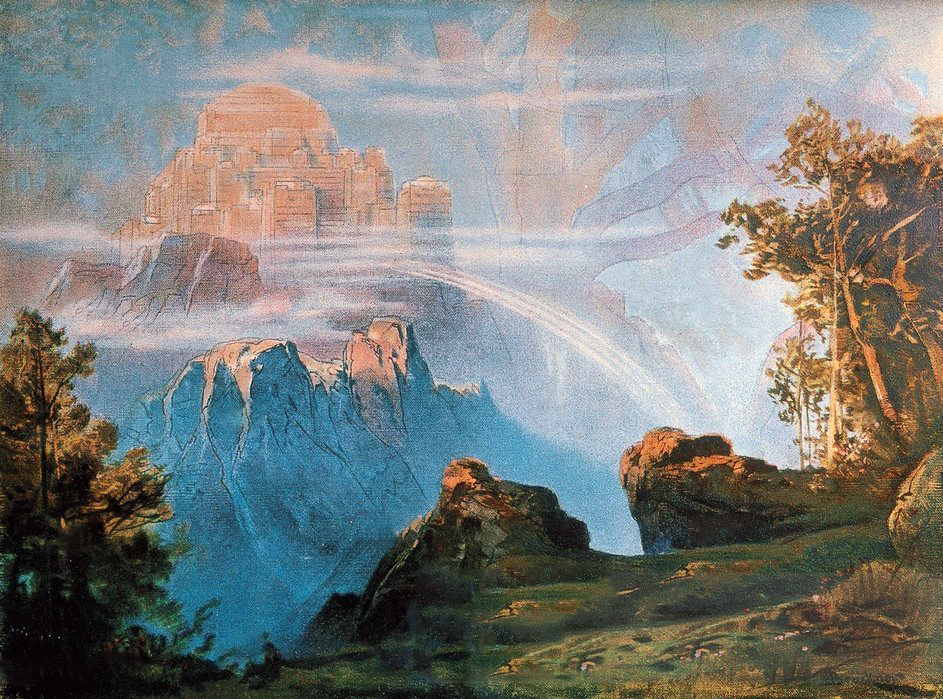
Valhalla stands in Asgard, the realm of the gods. Picture a fortress-banquet hall built from weapons: a roof of golden shields, spear-beamed rafters, mail-lined benches. A glittering tree, Glasir, stands before it, with the rainbow bridge arcing beyond. A stag and a goat graze on the World Tree’s leaves above the roof; the goat’s milk pours like mead. The kitchen boasts a boar that regenerates nightly—slain at sundown, back for breakfast. Odin dines on wine and strategy.
Every day, the fallen warriors gear up, clash until someone drops, then stand back up whole again. It’s not cruelty. It’s conditioning. Odin’s chosen warriors fight each other to train for the end of days. After their ferocious training, they become whole again and dine in the great hall like old friends.
In Valhalla
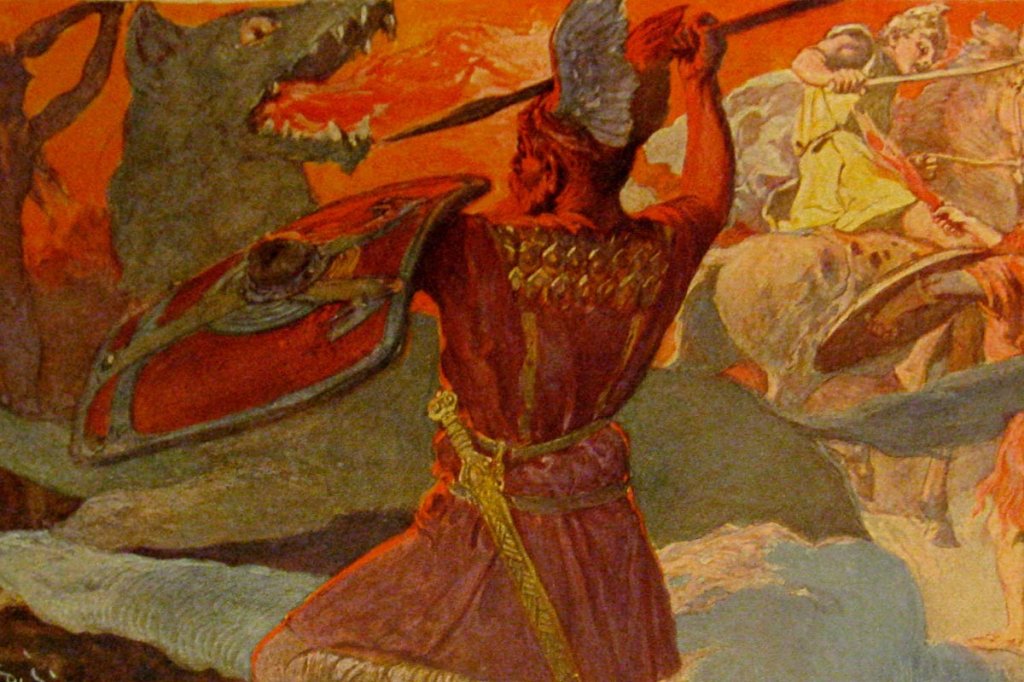
All this training has a deadline: Ragnarök, the end-of-days battle when the cosmic wolf Fenrir breaks free. Odin leads the einherjar in a last stand. The old poems and scholars agree on the big picture: Odin fights bravely and falls to Fenrir; his son Víðarr avenges him by tearing the wolf’s maw and striking the killing blow. Valhalla isn’t a forever party. It’s a war college with a single final exam.
Daniel McCoy, author of “The Viking Spirit: An Introduction to Norse Mythology and Religion,” writes
“Odin will fight Fenrir, and by his side will be the einherjar, the host of his chosen human warriors whom he has kept in Valhalla for just this moment. Odin and the champions of men will fight more valiantly than anyone has ever fought before. But it will not be enough. Fenrir will swallow Odin and his men. Then, one of Odin’s sons, Vidar, burning with rage, will charge the beast to avenge his father. On one of his feet will be the shoe that has been crafted for this very purpose; it has been made from all the scraps of leather that human shoemakers have ever discarded, and with it Vidar will hold open the monster’s mouth. Then he will stab his sword through the wolf’s throat, killing him.”
Strip away the horns on helmets, the fat lady singing, and all the other Viking clichés, and you get a worldview that’s stark and compelling: courage matters, knowledge costs, and glory is rented in sweat, blood, and discipline. Valhalla isn’t about death worship. It’s about living so hard that your story is still useful at the end of the world. With that in mind, it’s not really surprising that it would appeal to veterans.
Don’t Miss the Best of We Are The Mighty:
• 6 reasons the Vikings were so successful at raiding villages
• How a single Viking’s berserker rage changed world history forever
• Why Viking raiders seemed to disappear from history