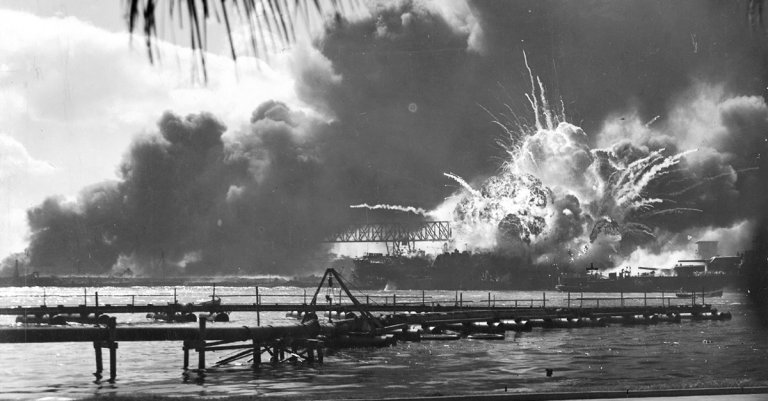
On September 2nd, 1945, the foreign affairs delegation of the Japanese Empire boarded the USS Missouri and signed the Japanese Instrument of Surrender under the guidance of Emperor Hirohito, finally putting an end to the bloodiest war mankind has ever seen. From that moment on, the world and Japan could start to rebuild.
The bombings of Hiroshima and Nagasaki forced Japan into an unconditional surrender, accepting all terms stated by the Potsdam Declaration. Among other stipulations, the terms of surrender meant that Japan must give up all lands outside of the mainland unless allowed by the Allied Forces, disarm their military, remove all obstacles to building a democratic society, and eliminate, for all time, “the authority and influence of those who have deceived and misled the people of Japan into embarking on world conquest.”
Also Read: American civilians donated personal weapons to the British during World War II
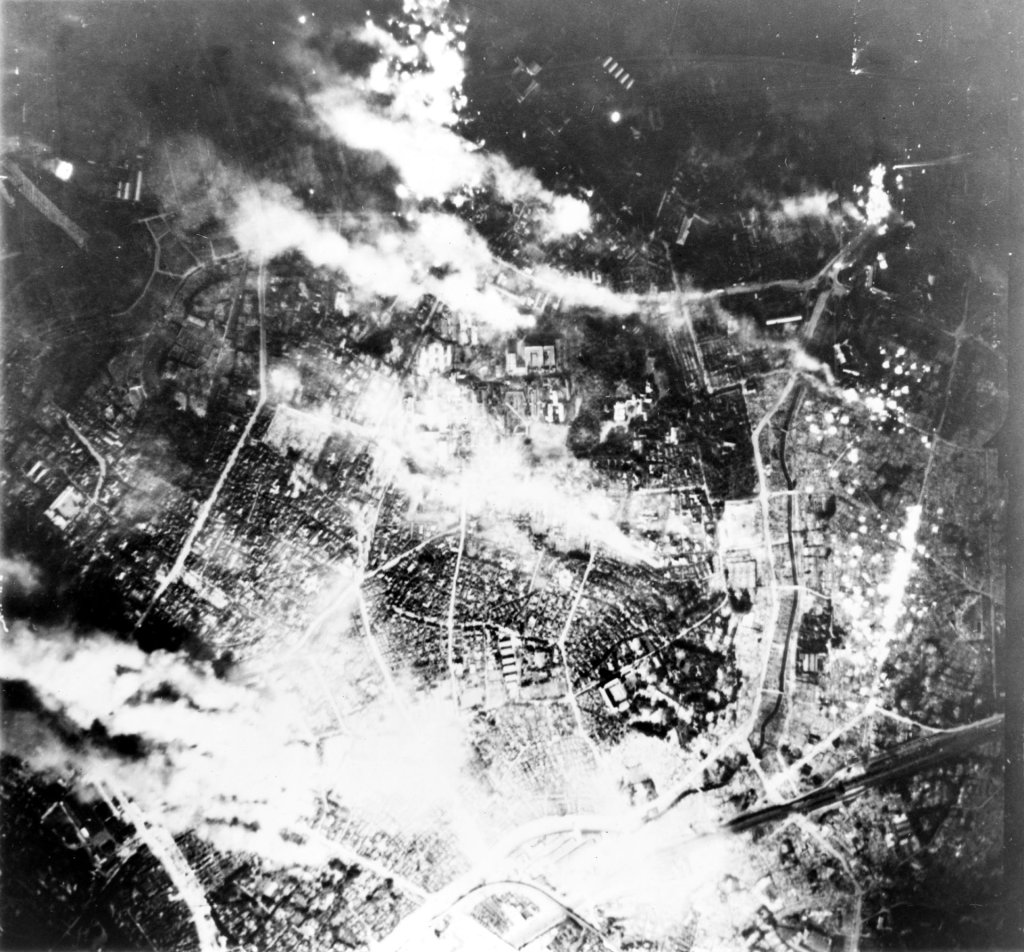
Despite those terms, it was Emperor Hirohito who vowed to maintain the peace, which was met with much disdain by many Americans and Japanese alike, except Gen. Douglas MacArthur.
The International Military Tribunal for the Far East was set up, and those responsible for the many war crimes committed were brought to justice. Prime Ministers Tojo, Hirota, Koiso, and twenty-three others were all found guilty of Class-A war crimes and sentenced to execution. Another 5,700 would be tried for Class-B and -C war crimes. Hirohito and the other members of the Japanese Imperial family were simply exonerated at Gen. MacArthur’s request.
MacArthur knew that Japanese culture was very intertwined with the throne. Since the Japanese throne was willing to cooperate fully, America was able to turn its eyes to the burgeoning communist threat lurking in Asia. This plan could only work, however, if the people of Japan believed the Emperor when he said that peace had been achieved between the two nations.
With the announcement of the newly struck peace came a photo taken by Gen. MacArthur’s personal photographer, Lt. Gaetano Faillace, which captured the general and the Emperor’s first meeting on Sept. 27, 1945.

The Japanese press was reluctant to run the photo, but the Americans insisted. At this point in Japanese history, the people had just fought and died for the Emperor because they saw him as having incarnate divinity. Suddenly, some occupying force stepped in and showed the people a picture of their 5’5″ emperor next to a six-foot-tall American general.
MacArthur knew the significance of the photo. The Japanese people knew the significance of the photo. And yet, Emperor Hirohito gave his blessing for it to be published, affirming his commitment to bringing peace and rebuilding Japan at the expense of the height comparison.
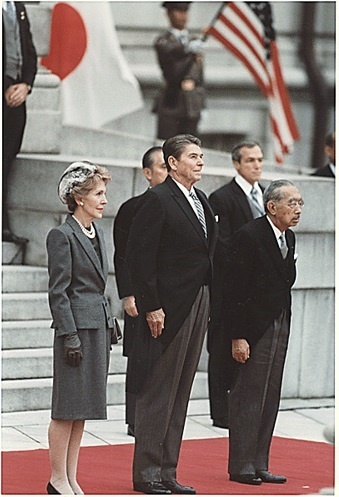
Calls for Hirohito’s abdication were growing among the imperial family. At the same time, most would call for Hirohito’s son, Akihito, to assume the throne when of age; other family members scrambled to make their own cases for the throne. They claimed that Hirohito was, in fact, not divine if he drove the empire into the ground. Many of those claimants could have spelled ruin for MacArthur’s rebuilding process, as some harbored a strong hatred for the United States.
So, the Humanity Declaration was given on New Year’s Day, 1946. In it, the Emperor stated in front of his entire people that the Emperor was not divine and that the Japanese people were no more superior than any other people. MacArthur was pleased because it meant that Japan would move towards more democratization.
The declaration, in essence, meant that Emperor Hirohito went from being a divine imperial sovereign to a regular constitutional monarch.
Emperor Hirohito formalized the 1947 Constitution of Japan—officially an amendment to the Meiji Constitution—and stripped himself almost entirely of political control. In the following years, Hirohito’s commitment to Japan led to significant restructuring and the beginning of an era known as the Japanese Economic Miracle. Japan became the world’s second-largest economy by the time of Hirohito’s death on January 7, 1989.