

There are a lot of words that carry a certain weight when said by the right person at the right time.
And you’ll be sure to remember it if it’s dirty enough.
Related: Patton’s famous speech was way more vulgar than the one in the movie
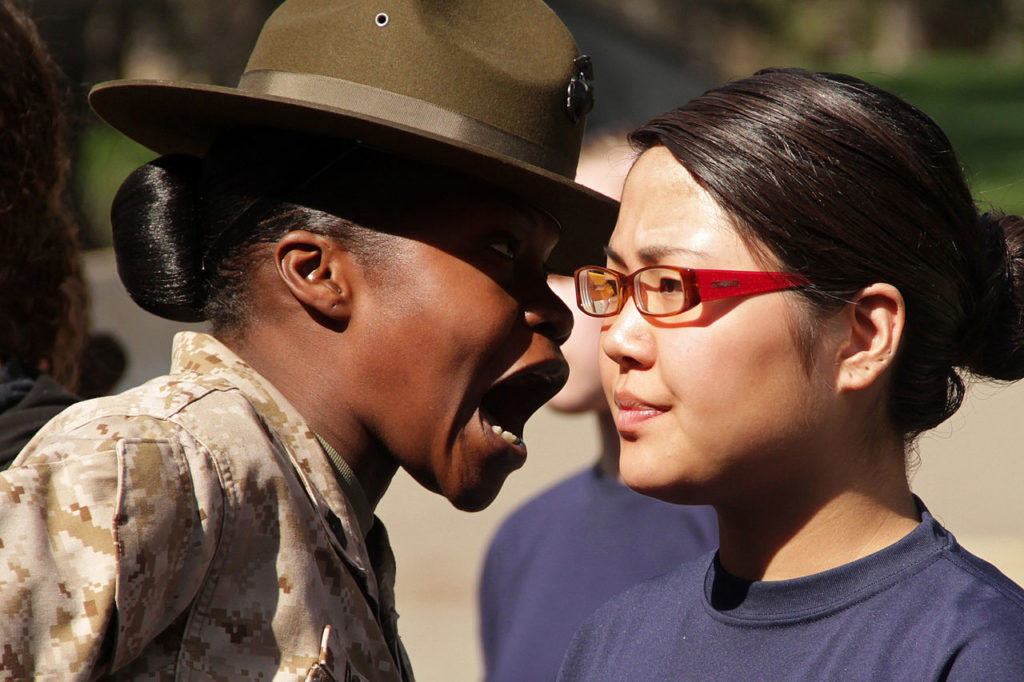
American troops are no exception. The only problem is that from the moment we join the service, we get indoctrinated into a world of shouting and expletives.
It turns out World War I was no different, and it wasn’t even the beginning.
Etymologists – people who study the history of languages and trace word meanings – found it difficult to follow the lineage of the word “f**k” for a long time. The word itself is so taboo in the English language that no one would ever write it down — even for historical documentation.
Luckily for us, the Oxford English Dictionary started following it in 1897, just in time for the First World War.
The OED only followed the word’s history but never included it in its dictionary – it was illegal to print in publications by the Comstock Act of 1873. The law stopped absolutely no one from using it in everyday speech, least of all the military troops in the trenches.
Some of the OED’s research includes this line from John Brophy’s “Songs and Slang of the British Soldier: 1914-1918.”
“It became so common that an effective way for the soldier to express this emotion was to omit this word. Thus if a sergeant said, ‘Get your f—ing rifles!’ it was understood as a matter of routine. But if he said ‘Get your rifles!’ there was an immediate implication of urgency and danger.”
Sometimes what you don’t say really is as important as what you do.
The definition of the word itself survived intact from its initial meaning, “to have sexual intercourse with,” and has been similarly pronounced and spelled since its first appearances in the 16th century.
OED found mention of the word as “fuccant” in a “scurrilous” Latin-Middle English hybrid poem, called “Flen Flyys,” about what local monks did with the wives of the nearby town of Ely, and thus why they did not get into heaven.