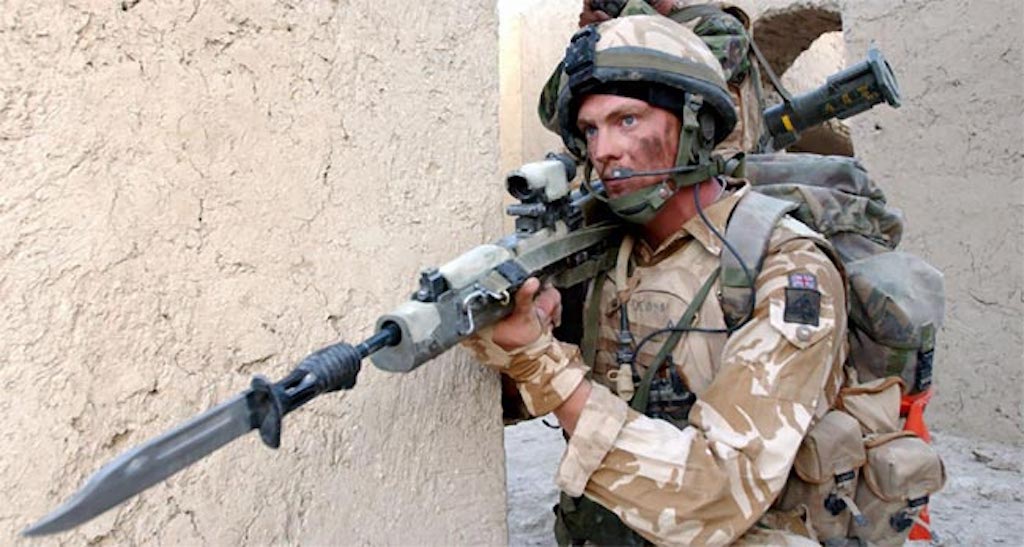
In May 2004, about 20 British soldiers were on the move 15 miles south of al-Amara, near the central city of Basra in Iraq. They were en route to assist another unit that was under fire when a surprise attack hit their convoy. On May 14, 2004, what became known as the Battle of Danny Boy forced soldiers on vehicle checkpoint duty to fix bayonets.
It was the first time since the 1983 Falklands War that British troops fixed bayonets before going into combat.
“Al-Amara is the place to be…” one British soldier told the BBC. “If you were an infantry soldier.”
Shia militias averaged five attacks per day in Basra when the U.K. troops arrived. British soldiers tried to arrest Iraqi cleric Muqtada al-Sadr for supporting the violence, and the locals were not happy about it. The result was a breakout in an unpredictable level of violence. British troops were frequently under assault, suffering an estimated 300 ambushes within three months.
“We were constantly under attack,” Sgt. Brian Wood told the BBC. “If mortars weren’t coming into our base, then we were dragged out into the city to help other units under fire.”
Wood and other troops from the 1st Battalion of the Princess of Wales’ Royal Regiment were on vehicle checkpoint duty when they got a call. The Argyll and Sutherland Highlanders were attacked by 100 militiamen from al-Sadr’s Mahdi Army, and Wood’s unit had to mount up and extract them.
But as they sped along toward their beleaguered comrades, they hit a surprise attack of their own, an L-shaped ambush at close range. As machine gun rounds peppered the unarmored vehicles, they realized the only way to fend off the intense enemy attack was to stop and put an end to it.
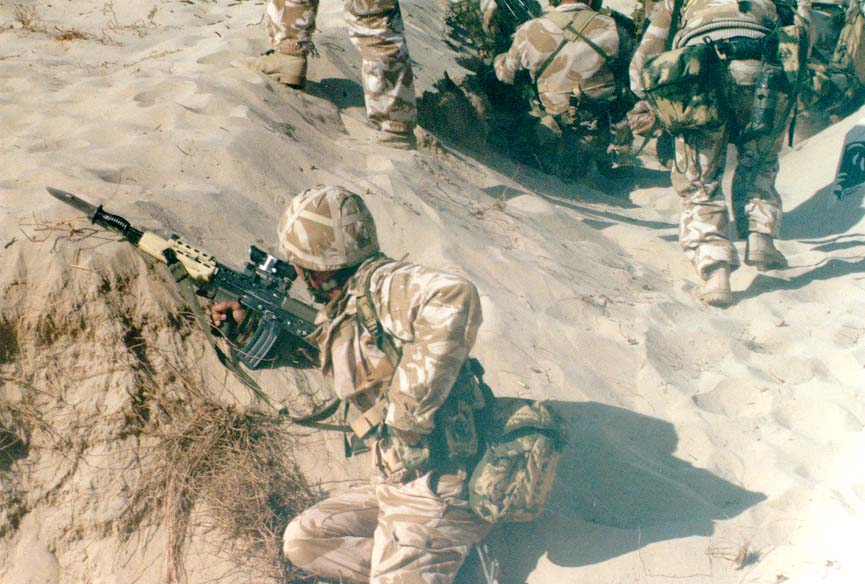
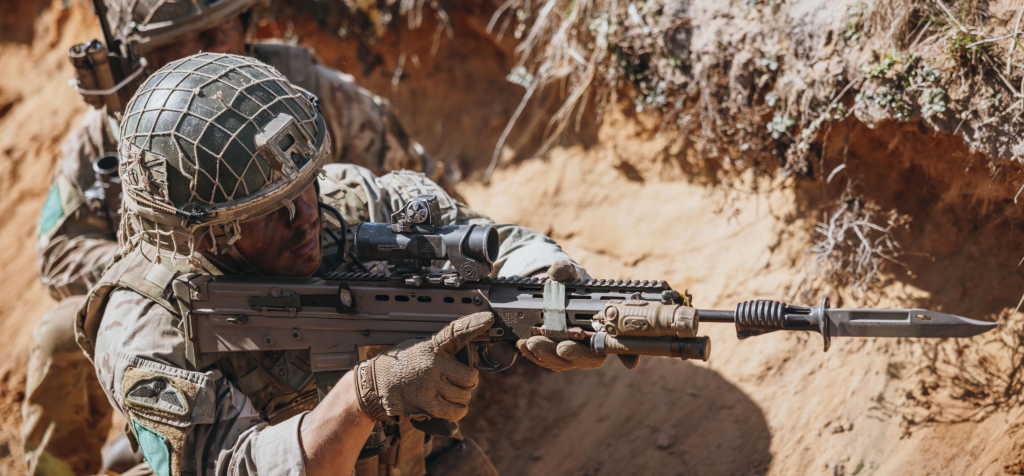
The decision was made. They were ordered to fix their bayonets onto their SA80 rifles and dismount.
“When the order came to dismount and attack, it was just like what we’ve done dozens of times in training,” then-Pvt. Anthony Rushforth told the Sun. They then ran across open ground, dove into a trench, and came face-to-face and hand-to-hand with the enemy.
They ran across 600 feet of that open ground, stopping only to dodge enemy fire. Once on top of the Mahdi fighters, the British bayoneted 30 of the militia. Fierce hand-to-hand combat followed for five hours. The Queen’s men suffered only three injuries.
“We were pumped up on adrenaline — proper angry,” Rushforth told The Sun, a London-based newspaper. “It’s only afterwards you think, ‘Jesus, I actually did that.’ “
What started as a surprise attack on a British convoy ended with 28 dead militiamen and three wounded U.K. troops.
Jihadi propaganda at the time told young fighters that Western armies would run from ambushes and never engage in close combat. They were wrong. Irregular, unexpected combat tactics overwhelmed a numerically superior enemy who had the advantage in surprise and firepower.