Considering joining the Air Force? Well, if you are, you probably have questions about the Air Force ranks in order. Or you might wonder what the difference is between Air Force officer ranks and Air Force enlisted ranks. Even if you’re not considering joining the legions of Airmen who keep America’s skies safe, this post will help you unravel the two, so you always know who you’re addressing.
Air Force enlisted ranks
It’s probably no surprise that enlisted Air Force ranks include three different levels. There’s an accelerated promotion track for airmen who agree to enlist for six years. In this program, airmen are promoted to E-2 after completing basic training. They are promoted to E-3 by the time they graduate from technical school or 20 weeks after completing basic training, whichever comes first.

Airmen Ranks
E-1 Airman Basic (AB) – This is the lowest Air Force rank. An airman basic is just starting out in their USAF career and is learning how to apply Air Force and military knowledge to their professional and personal life.
E-2 Airman (Amn) – Most promotions to E-2 are automatic as long as the Air Force standards are met. E-2s go to Air Force schools to receive specialized technical training for their jobs.
E-3 Airman First Class (A1C) – Being an E-3 means that the airman has fully adjusted to the military way of life and has embraced the culture as well. E-3s have more responsibility than E-2s and serve as role models to junior enlisted airmen.
E-4 Senior Airman (SrA) – As senior airmen, E-4s are on the brink of becoming non-commissioned officers, so they’ll often mentor junior airmen and have more responsibility than the junior ranks.
Non-commissioned Officer (NCO) Ranks
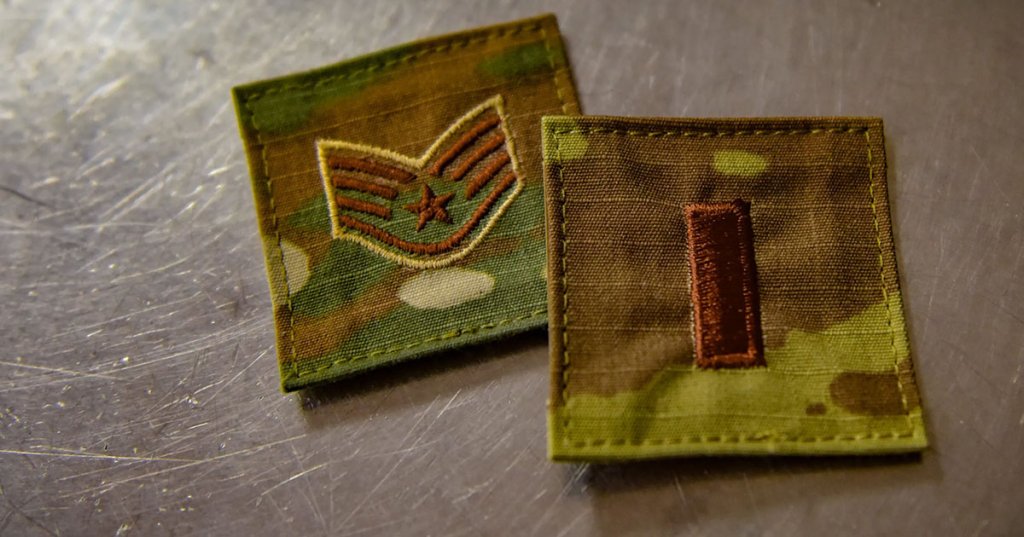
E-5 Staff Sergeant (SSgt) – As a staff sergeant, E-5s are the junior-most NCO in the Air Force. This airman is considered a craftsman in their job and must have a skill level of 5 or 7.
E-6 Technical Sergeant (TSgt) – Tech sergeants ensure that all enlisted airmen have what they need to succeed. Most often, a Tech (slang for technical sergeant) has at least 12 years of time in service and has a 7 skill level at their job.
Senior NCOs
E-7 Master Sergeant (MSgt) – A master sergeant is the lowest of the senior NCO Air Force ranks. The master sergeant is a skilled craftsman in their trade and often holds leadership positions as well. Expect to be in service for at least 17 years to reach E7.
E-8 Senior Master Sergeant (SMSgt) – This middle-of-the-road senior NCO Air Force rank works in a leadership capacity. However, the Air Force only allows 2% of its workforce to be E-8s, so competition for this rank is stiff.
E-9 Chief Master Sergeant (CMSgt) – This is the highest enlisted rank an airman generally achieves. The exception is the Chief Master Sergeant of the Air Force role. E-9s act as advisers and provide senior enlisted leadership.
E-9 Command Chief Master Sergeant (CMC) – A command chief master sergeant is a senior advisor to both unit and base commanders of a wing. CMCs make up just 1% of the total Air Force workforce!
Chief Master Sergeant of the Air Force (CMSAF) & the Air Force Chief of Staff
Like other DoD branches, the CMSAF works with the Air Force Chief of Staff to provide direction for the branch. Speaking of the Air Force Chief of Staff, did you know the first chief of staff snuck to the frontlines during WWI?
Air Force officer ranks
Just like the Marines and the Army, Air Force officer ranks are categorized. The Air Force divides their officer corps into company, field grade, and general officers.

Company grade
O-1 Second Lieutenant (2nd Lt) – When a person commissions as an Air Force officer, they automatically earn the rank of second lieutenant.
O-2 First Lieutenant (1st Lt) – A first lieutenant usually has the same responsibilities as a second lieutenant, but they get paid more. They’re also given more responsibility.
O-3 Captain (Capt) – A captain is the highest company-grade Air Force rank. Captains have proven their commitment to the Air Force and usually have authority over an entire flight.
Field grade
O-4 Major (Maj) – A major is the lowest field grade rank. Typically, Air Force majors operate as staff officers and generally have about 12 years of time in service.
O-5 Lieutenant Colonel (Lt Col) – This is the middle-of-the-road field grade rank. Lieutenant colonels usually command a support group, squadron, or medical group. Sometimes they’ll also direct operations.
O-6 Colonel (Col) – This Air Force rank is the highest field grade rank. Colonels can serve in several ways, but are usually part of the command elements of a wing. Sometimes, they’re heads of staff in Air Force agencies.
General officers
O-7 Brigadier General (Brig Gen) – This is the lowest general officer rank in the Air Force. The president chooses officers, and then those officers undergo a rigorous selection process. Fun fact: Brigadier generals have to retire after 30 years of service or five years in rank if they don’t pick up their second star.
O-8 Major General (Maj Gen) – To become a two-star general, an officer has to go through a serious selection process. It’s a lot like becoming a one-star, but there’s more on the line.
O-9 Lieutenant General (Lt Gen) – The president selects three-star generals from an existing pool of two-stars.
O-10 General (Gen) – This is the highest possible rank an officer can achieve. A four-star general holds the highest military position at the Pentagon. They’re also in command of major areas of responsibility.
Frequently Asked Questions
What are the high ranks in the Air Force?
The absolute highest ranks are the Chief Master Sergeant of the Air Force and the Air Force Chief of Staff.
What rank will I be in the Air Force with a bachelor’s degree?
If you commission right after college, you’ll enter the Air Force as a second lieutenant. However, you might be eligible to enter as a first lieutenant. If you enlist, you might get to be an airman 1st class after graduating from basic training.
What is the lowest rank in the Air Force?
The most junior enlisted rank is airman basic.
Is it hard to rank up in the Air Force?
As with all military careers, the more time and effort you put into earning your next rank, the easier your path will be. Ready to find out more? Speak with a recruiter today.