If there’s a best insider’s look at the beginning of the end of the Civil War, look no further than that of General Ulysses S. Grant. The former commander of the Union Army penned his memoirs shortly before his death in 1885, and they include a sharp recollection of the days that ended the war, along with what took place at Appomattox Court House.
When Grant left his tent on April 9, 1865, he was unsure of where the day would take him or the Union Army. He had been chasing Lee and the Army of Northern Virginia across Virginia, forcing it to give up the Confederate capital at Richmond. Grant believed Lee’s army was now in a place where it could not escape, and would be forced to fight its way out or surrender.
Related: 12 strange and surprising facts about the Civil War
The past few days saw the Union Army advancing on Lee, capturing Confederate supply wagons and taking enemy prisoners. The consensus among captured enemy officers was that the southern cause was lost and that more fighting would be nothing short of murder. Grant was of a similar mind and wrote to Gen. Lee on April 7, asking whether Lee would consider terms of surrender.
Grant didn’t truly believe Lee would be ready to surrender so soon. Leaving his tent on April 9, he was ill and was thus wearing the uniform of a private and did not carry a sword. The only thing he wore to indicate that he was the highest-ranking officer in the Union Army was his lieutenant general’s shoulder straps.
Hashing Out the Terms of Surrender
Lee and Grant had been in communication for two days about conducting a meeting about the surrender of Lee’s army. Grant’s surrender demand was that the officers and men of the Army of Northern Virginia should be disqualified from continuing their roles in the war until they could be properly exchanged.
Grant states in his memoirs that Lee’s army was slowly falling apart. The men who had enlisted in the army were now near their homes, and with their enlistments up and the army “crumbling,” they had begun returning to those homes. Still, on the morning of April 9, Confederate forces attacked the Union forces to attempt one last breakout, believing there was only light Union cavalry in their way.
Instead of Philip Sheridan’s cavalry, the Confederates were facing an entire Corps and the Army of the James at Appomattox Court House. The Union infantry pushed forward rapidly and forced the Confederates back. Grant woke up with a migraine, not expecting to negotiate Lee’s surrender, which explained his shabby appearance. Given the assault of the morning, Sheridan and Gen. George G. Meade thought the white flag Lee sent to the Union was a ruse. But when Grant received Lee’s request for surrender, the Union commander’s headache disappeared.
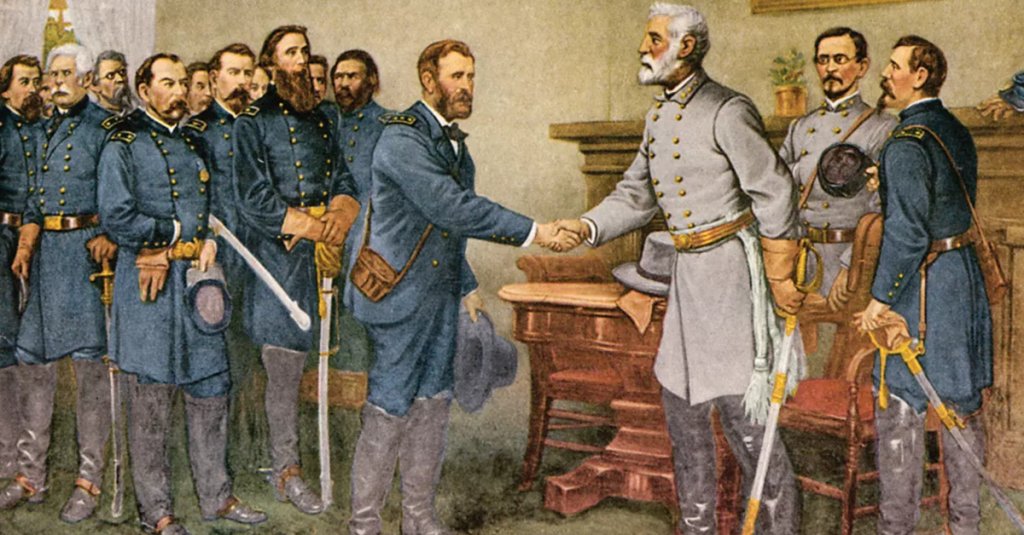
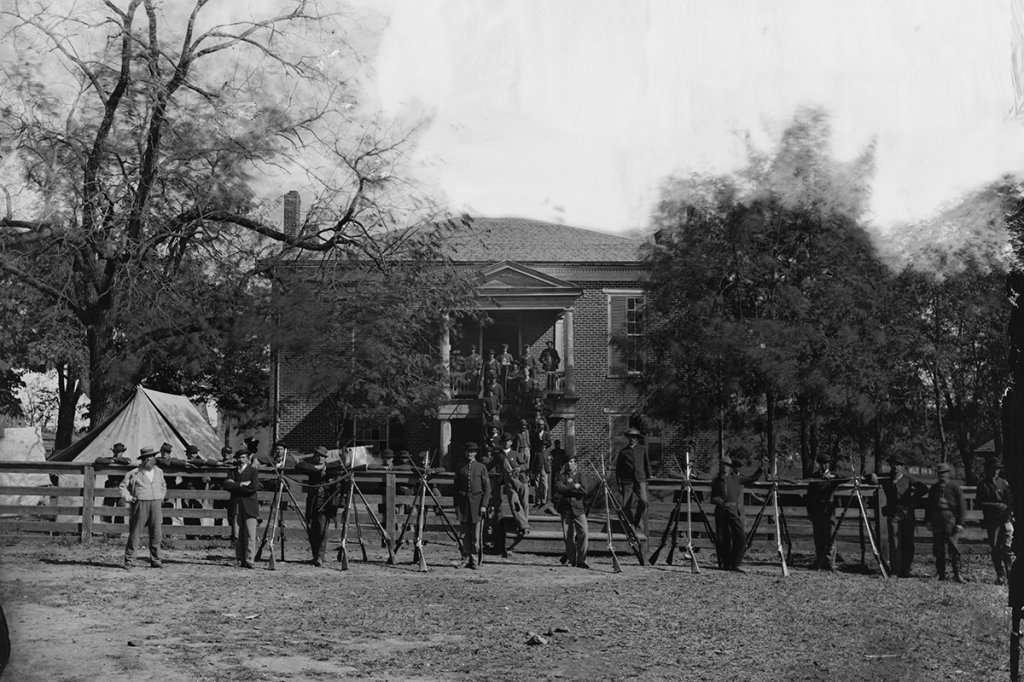
Lee arrived at the home of Wilmer McLean for the meeting first. Grant soon followed with his staff. Lee was dressed resplendently, with a full uniform and a new sword that Grant supposed was ceremonial and presented to him by the state of Virginia. Grant knew his own appearance was shabby in contrast.
Grant “Sad and Depressed” at Negotiations
The two men greeted each other with a handshake and sat down to begin negotiations. Grant called Lee’s demeanor “impassable” and had no idea what his feelings on the situation were. They began by talking about the “Old Army” and the Mexican War, their time at the U.S. Military Academy at West Point, New York, and colleagues they knew. Grant could not hide his emotions, however.
“My own feelings, which had been quite jubilant on the receipt of his letter, were sad and depressed. I felt like anything rather than rejoicing at the downfall of a foe who had fought so long and valiantly, and had suffered so much for a cause, though that cause was, I believe, one of the worst for which a people ever fought, and one for which there was the least excuse. I do not question, however, the sincerity of the great mass of those who were opposed to us… Our conversation grew so pleasant that I almost forgot the object of our meeting.”
Terms of Surrender
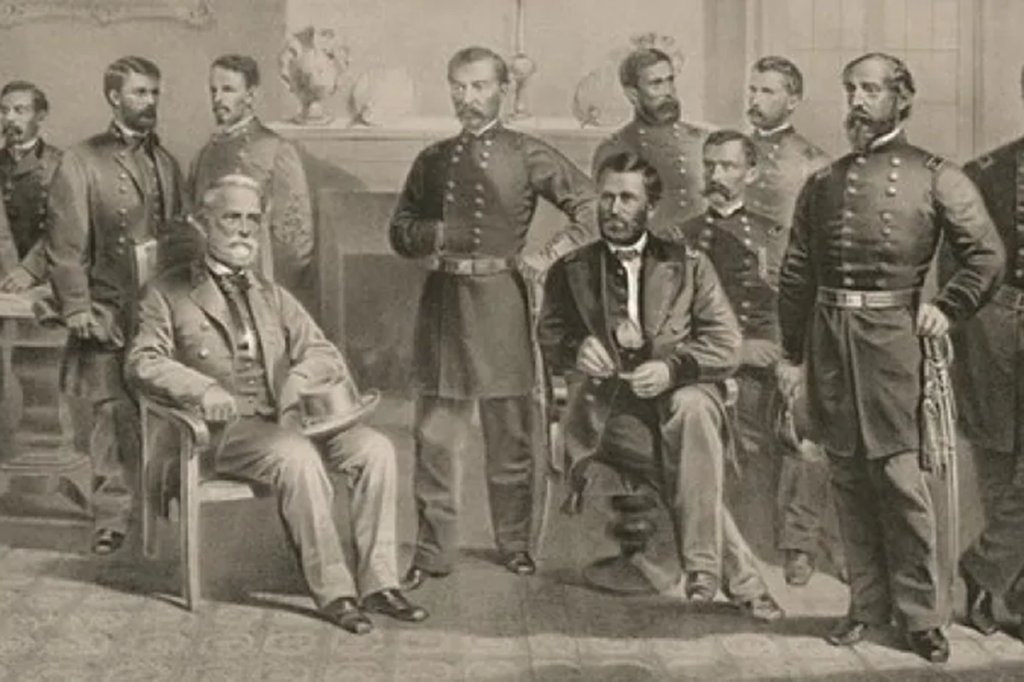
When Lee reminded Grant why they were meeting, Grant reiterated his terms.
The Army of Northern Virginia should lay down its arms and go home. Officers would be allowed to keep their personal possessions, including horses and sidearms. Grant even allowed farmers who owned animals to keep them so they could work their fields upon returning home.
After these simple terms were put to paper, the men went to leave.
Grant remarked that Lee never offered his sword and the story about Grant returning the sword to Lee was “pure fiction.” What happened is that Lee told Grant his men were lacking food and asked for rations to be distributed, which Grant agreed to do.
The two men then left “as cordially as we met.”