
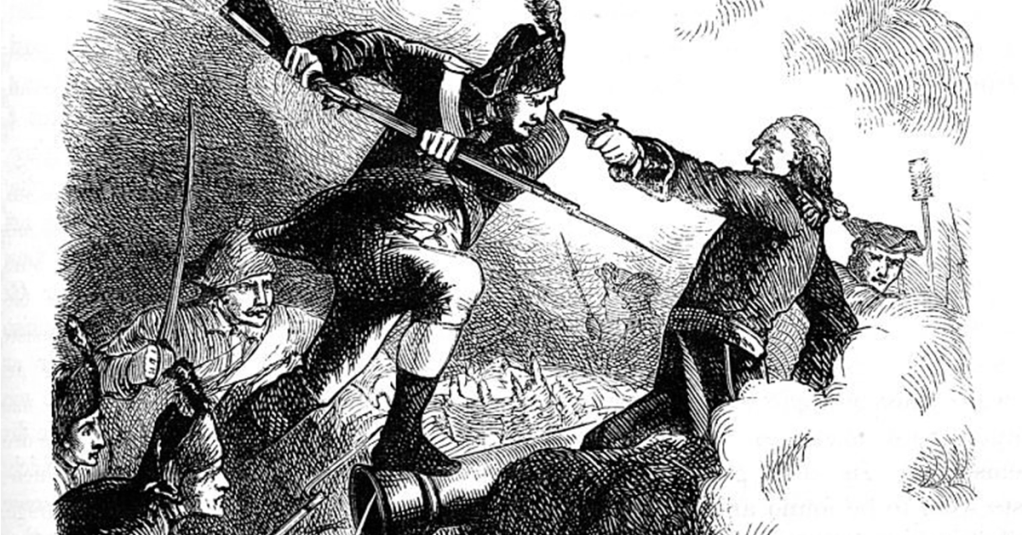
Before Baron Friedrich Wilhelm von Steuben arrived to train the Continental Army, they were a largely unorganized, untrained group of men who lacked the skill, but not the spirit, of professional soldiers. That all changed at Valley Forge.
When Steuben took over responsibilities for training Gen. George Washington’s men in the ways of fighting a war, they may not have turned into pros overnight, but the training sure paid off in a big way. Washington would appoint Baron von Steuben a major general and appoint him Inspector General of the Army.
The Baron had his work cut out for him.
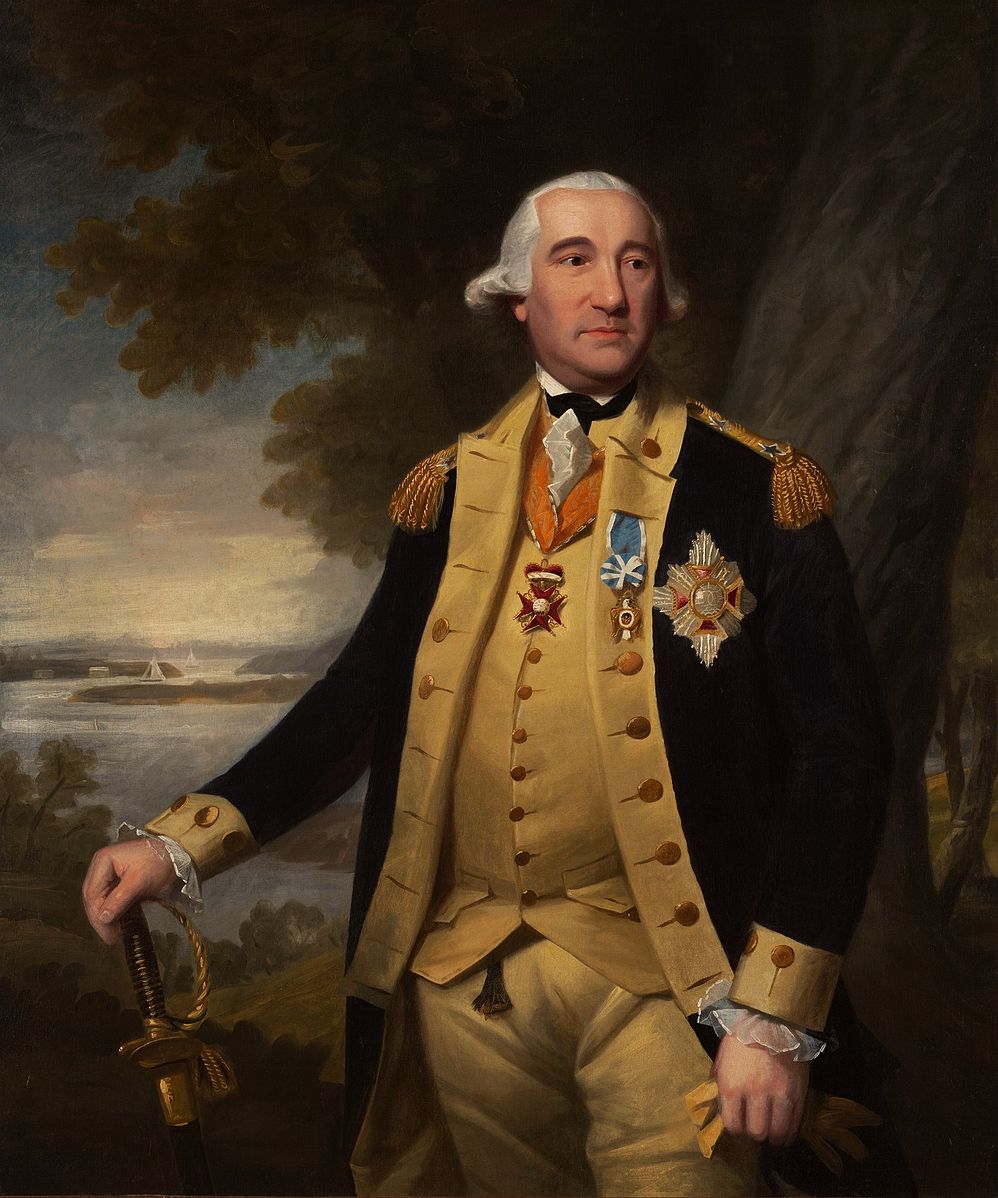
It was his task to train the volunteers who enlisted from their previous professions. He had to teach them to become soldiers, fighting the best troops on the planet at the time: the British. Until von Steuben arrived, every new recruit in the Continental Army was simply handed off to a regiment that trained those men to fight the way its commander believed they should train, not according to any organized doctrine. And each colony had its own drills and training standards.
Instead, von Steuben established a training regimen in which specialized noncommissioned officers would train new recruits using a doctrine he prepared, with translations from Steuben’s native German into English. The training program included European-style marching formations and training with the weapons that were actually issued to them, particularly the bayonet.
Before Steuben arrived to train the Continental Army, the men used their bayonets primarily as a cooking tool, most often as a kind of skewer. The Continentals didn’t trust the bayonet in combat, despite seeing the British troops use it effectively to break American lines at Bunker Hill. And many other places.
“The American soldier, never having used this arm, had no faith in it, and never used it but to roast his beefsteak, and indeed often left it at home,” Steuben wrote.
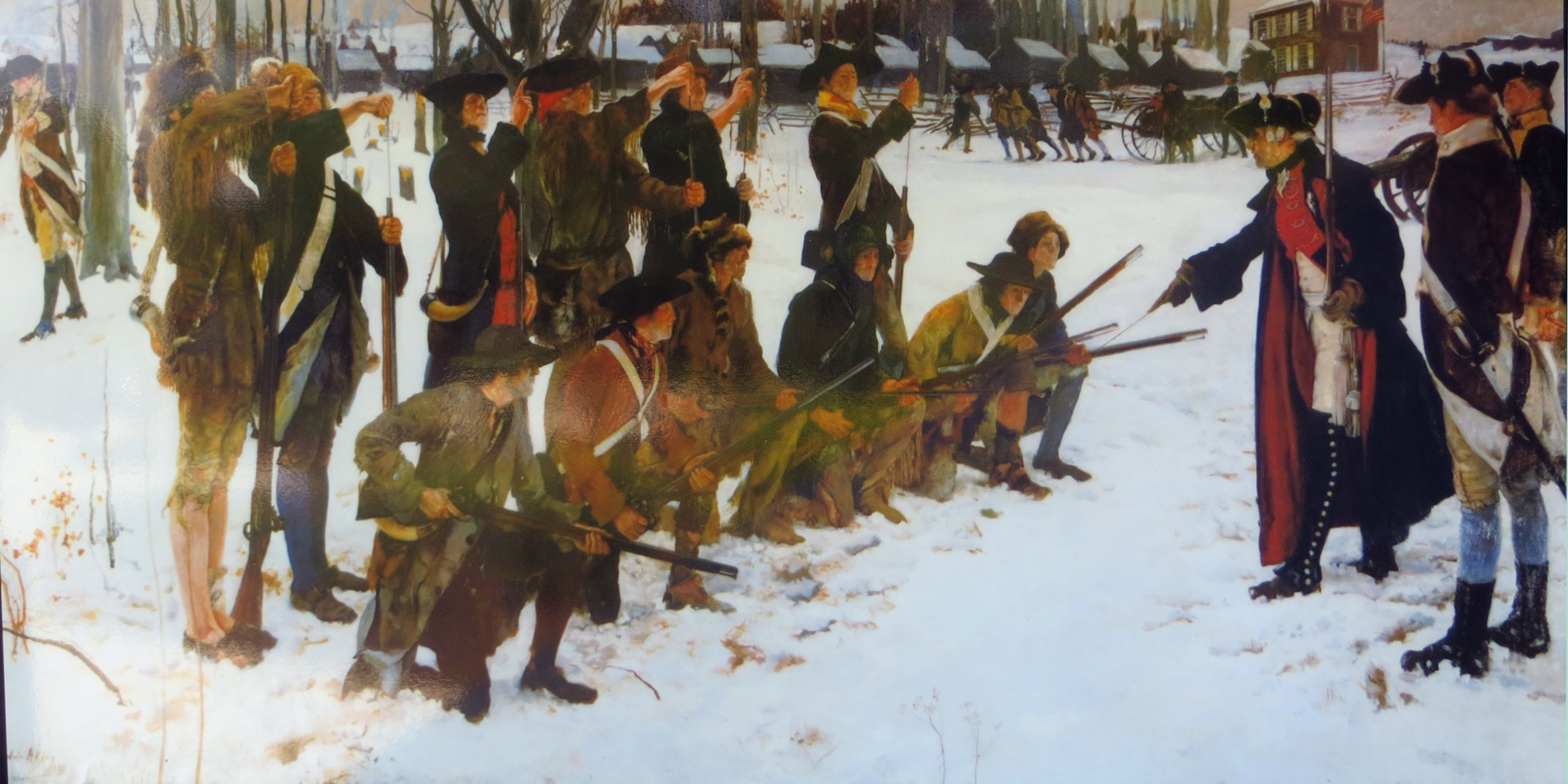
The Americans depended on their muskets for success in combat, which is probably the reason they hadn’t seen much success in combat up until this point. In Steuben’s mind, the musket was too unreliable when firing in combat and took too long to reload. It was necessary to go into a fight with a loaded rifle, of course, but once the fight devolved into a brawl, he believed, the bayonet would decide the victor.
The bayonet was a solid weapon, and he taught the Continental Army to use it. He would know, because he had spent much of his life up to that point fighting in European wars with the Prussian army.
He drilled the Americans constantly, imposing strict discipline and forcing them to conform to a regimented mode of warfare. He crafted the Army’s first field manual, “Regulations for the Order and Discipline of the Troops of the United States, Part I.” In 1779, von Steuben’s newly trained Continental Army would get a chance to show off their new skills with the bayonet at the Battle of Stony Point.
The plan was basically quiet violence. Stony Point is a steep, rocky peninsula that juts into the Hudson River, with marshy ground around it and a narrow land connection to the mainland. In other words, it’s the kind of terrain that makes attackers miserable and defenders smug. The British fortified it with earthworks and obstacles like abatis, because nature hadn’t already done enough.
In May 1779, British Gen. Sir Henry Clinton tried to force George Washington into a big, decisive battle by grabbing and fortifying Stony Point, threatening West Point and the Hudson Highlands, but Washington did not feel like obliging Clinton’s preferred script. Instead of marching into the kind of set-piece fight the British wanted, Washington planned something more annoying: a surprise assault that would wreck the post, capture the garrison, and spike British confidence.
Washington picked Brig. Gen. Anthony Wayne and the specially trained Corps of Light Infantry. These were selected soldiers pulled from regular units and trained for aggressive, irregular-style fighting. The plan called for three columns. Two were the killers: they’d move through the marsh on the north and south, climb up the slopes, and go in with fixed bayonets. A third force would attack more directly as a diversion, firing to draw attention.
Washington ordered the main assault troops to advance with unloaded muskets. No accidental shots, no early alarm, no heroic idiot giving the whole thing away. The whole point was to be on top of the defenses before the British could react. The Americans also stuck white paper in their hats so they could tell friend from foe once the fighting turned into a dark, close-up mess.
The actual fight was just 25 minutes of chaos. Wayne’s men slogged through marsh water, then surged up the steep ground into the fortifications. British sentries fired, and British artillery turned out to be less helpful than advertised because the guns could not easily depress to hit attackers coming up close beneath them.
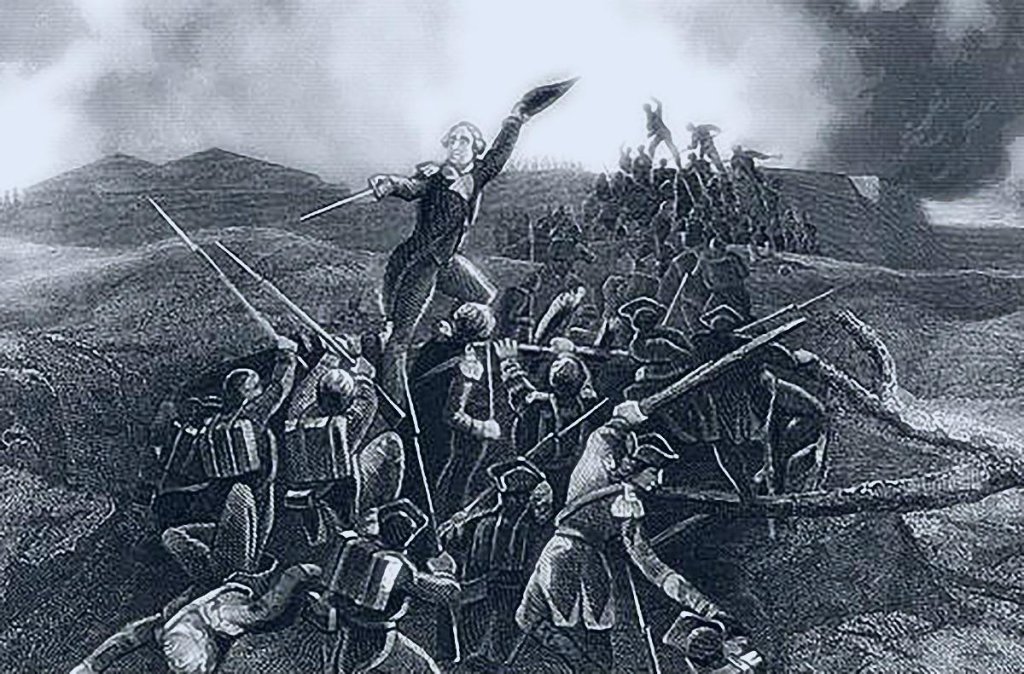
The diversion did its job. The British commander, Lt. Col. Henry Johnson, pulled troops toward the noisy threat, which made the flank attacks hit even harder. For a few minutes, the place was a blur of musket flashes, shouting, and yes, those bayonets. It was exactly what Washington wanted: confusion, speed, and no time for the defenders to organize.
Casualties tell you how lopsided it was. The Americans lost 15 killed and 83 wounded. The British losses included 20 killed, 74 wounded, and 472 captured, with hundreds taken prisoner in one fell swoop.
Stony Point was not a giant strategic land grab. It was something better for where the war stood in 1779: a fast, embarrassing British setback, a prisoner haul, and a reminder that the Continental Army could still run a professional raid when it needed to. In a war full of long suffering and slow logistics, that kind of crisp win was a pain in the ass for the British, and a shot in the arm for the Americans.
The Continental Army didn’t try to hold Stony Point, though. That wasn’t objective in the first place. It was more of a proof-of-concept. Washington showed he could plan and execute a disciplined night assault with elite troops, strict control, and violence at close range, then leave before the British could make him pay for it. The discipline instilled by Baron von Steuben and the trust he placed in the infantry bayonet were crucial to its success.
Don’t Miss the Best of We Are The Mighty
• 4 Revolutionary War ghosts that refuse to die
• Nathanael Greene: The Revolutionary War’s most underrated leader
• How the British ‘southern strategy’ ultimately cost them the Revolutionary War
Loading comments…
Comments couldn’t be loaded. Please refresh the page.